
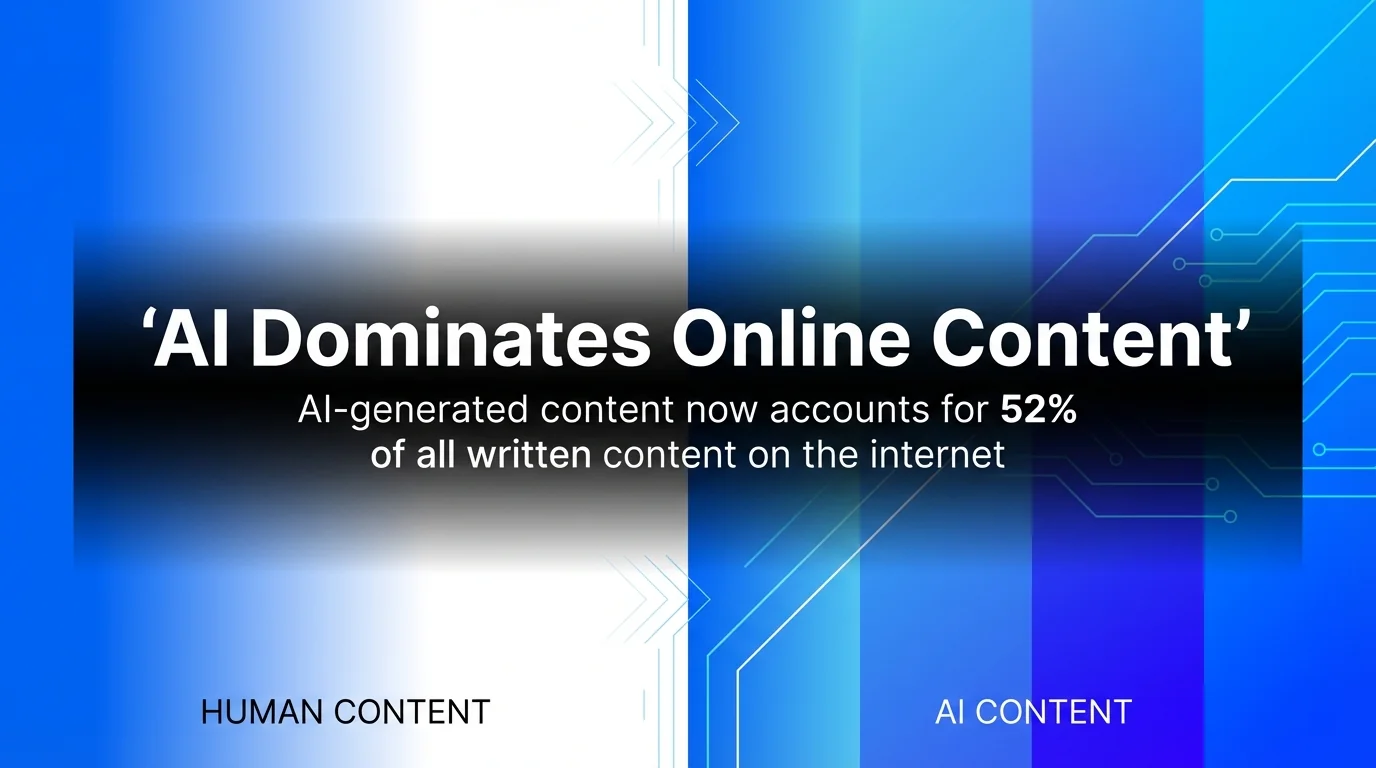
Generative AI has fundamentally reshaped how content gets created, distributed, and consumed. AI-generated content now accounts for 52% of all written content on the internet, marking a seismic shift in the digital content environment. This isn’t a distant future prediction. It’s happening right now across every platform, industry, and content type you can imagine.
What makes this moment particularly significant for content marketers is the dual nature of this shift. AI tools promise unprecedented efficiency and scale, whilst simultaneously raising critical questions about authenticity, trust, and human connection.
Marketing professionals face a complex decision framework. Deploy AI tools to compete on volume and speed, or double down on human creativity to stand out in an increasingly automated content environment. The reality? Most successful content strategies will require both.
This guide examines the most significant AI content generation trends shaping 2026. You’ll discover how leading marketers balance automation with authenticity, which AI tools deliver genuine ROI, and practical strategies for integrating generative AI into your workflow without sacrificing brand voice or audience trust.
The State of AI Content Generation in 2026
The content creation environment has reached a turning point. More than half of all online articles now originate from AI systems rather than human writers. This represents a fundamental shift in how information gets produced and distributed across the internet.
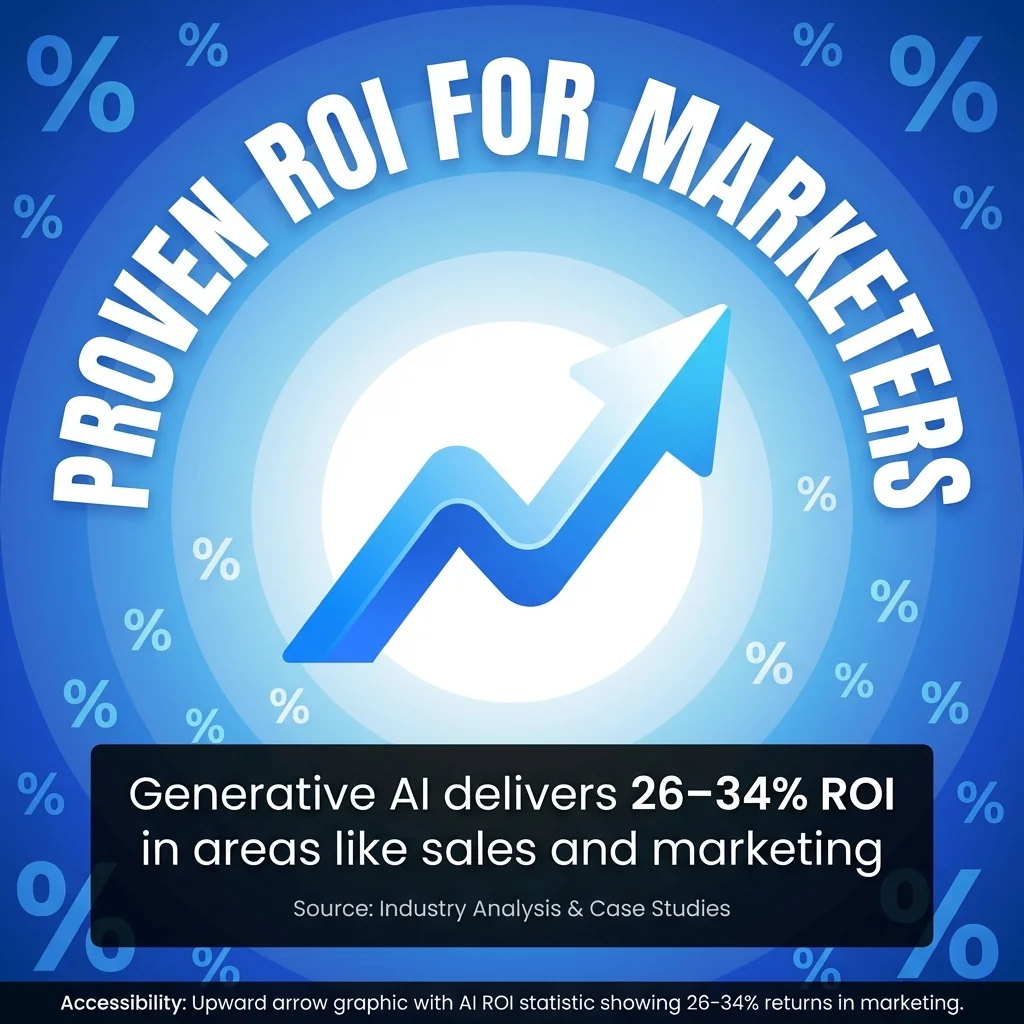
Generative AI delivers 26–34% ROI in areas like sales and marketing, validating the business case for AI adoption. Marketing teams report significant efficiency gains, particularly in drafting social media posts, creating email campaigns, and developing content variations for A/B testing.
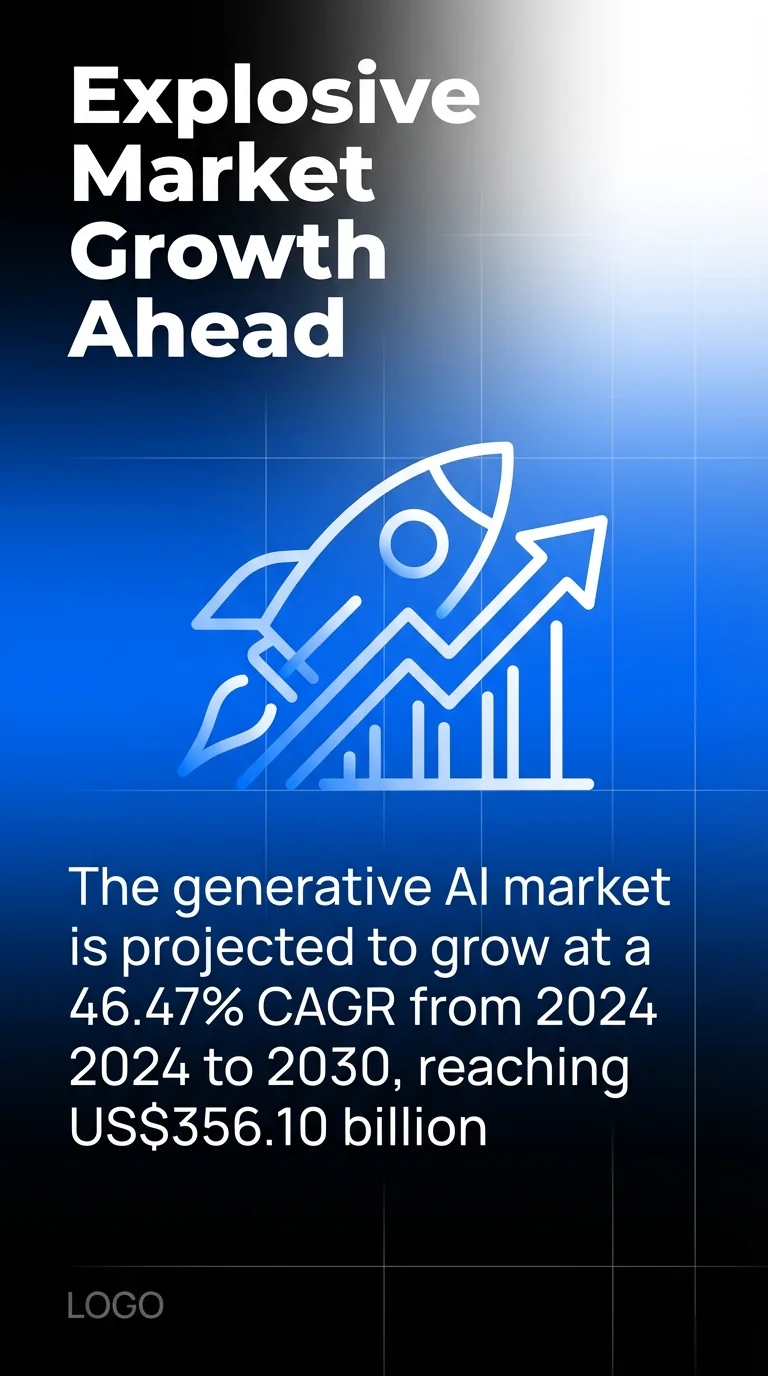
The market reflects this momentum. The generative AI market is projected to grow at a 46.47% CAGR from 2024 to 2030, reaching US$356.10 billion. This explosive growth signals sustained investment and expanding capabilities across content creation platforms.
Enterprise Adoption Accelerates
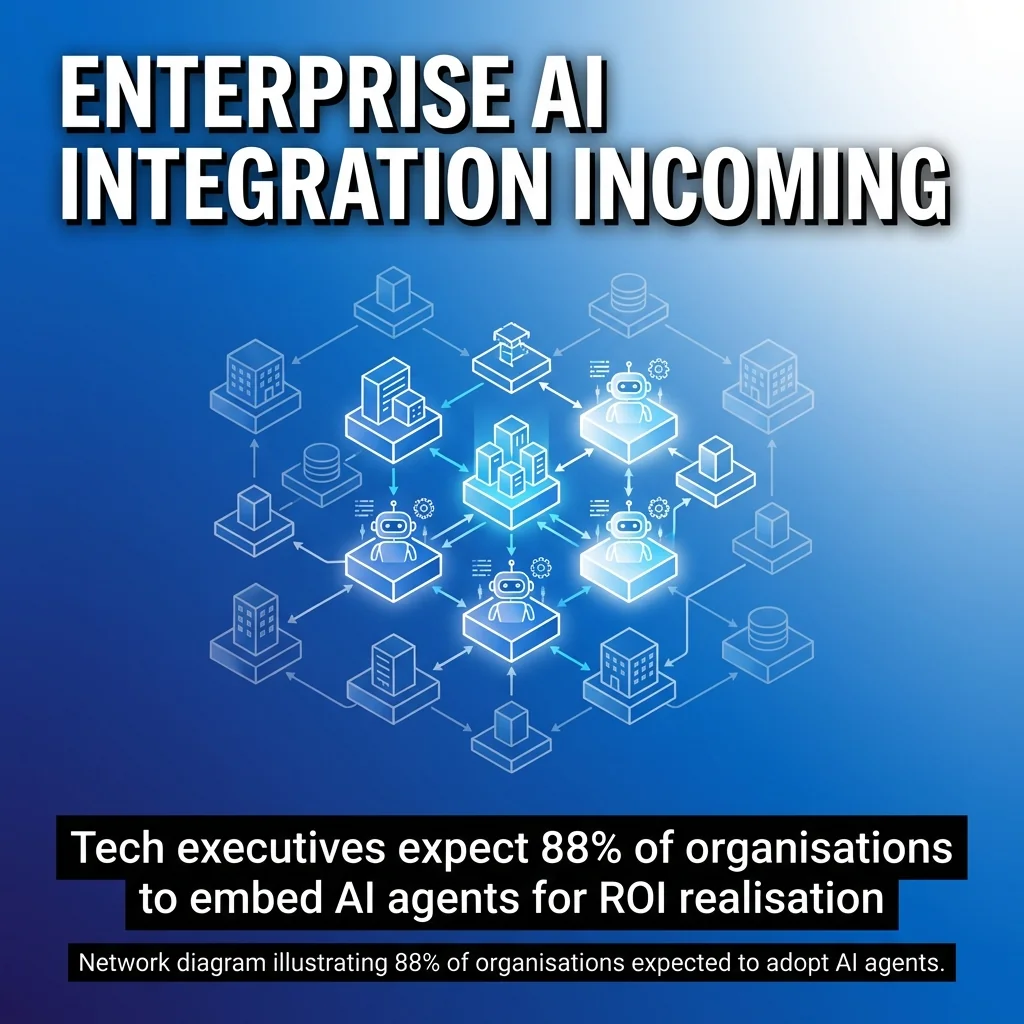
Large organisations have moved beyond experimental pilots. Tech executives expect 88% of organisations to embed AI agents for ROI realisation. This widespread adoption creates new expectations around content production speed and personalisation capabilities.
Marketing departments face pressure to match competitor output whilst maintaining quality standards. AI tools offer a solution, enabling smaller teams to produce content volumes previously requiring much larger resources.
The Quality Versus Quantity Debate
Higher output doesn’t automatically translate to better marketing results. The internet now faces a content saturation problem, with AI-generated articles flooding search results and social feeds.
Consumers increasingly struggle to distinguish between thoughtfully crafted content and formulaic AI output. This has sparked renewed interest in content that demonstrates clear human insight, original research, and authentic brand voice.
Successful content marketers recognise that AI excels at certain tasks whilst falling short on others. The strategic question isn’t whether to use AI tools, but where they add genuine value versus where human creativity remains essential.
AI as a Productivity Multiplier: Automation and Efficiency Trends
Building on the widespread enterprise adoption we’ve just examined, let’s explore how AI tools actually function within content workflows. The productivity gains aren’t theoretical. Marketing teams report tangible time savings across multiple content creation tasks.
Automation now handles repetitive content tasks that previously consumed hours of creative team bandwidth. Drafting social media captions, generating email subject line variations, and creating initial content outlines have become largely automated processes.
Workflow Integration Patterns
The most effective implementations embed AI tools directly into existing content management systems. Rather than switching between platforms, content marketers access AI capabilities within their familiar workflow environment.
ChatGPT remains the dominant tool for text generation, but specialised platforms have emerged for specific content types. Video script generation, podcast show notes, and long-form article drafting each have dedicated AI solutions.
Marketing teams typically adopt AI tools in phases. Initial experiments focus on low-risk content types like social media posts. As confidence grows, teams expand AI assistance to email campaigns, blog drafts, and eventually higher-stakes content like landing pages.
Time Savings Across Content Production
The efficiency gains concentrate in specific areas. First draft creation speeds up dramatically when AI handles initial ideation and structure. What previously took hours now requires minutes of prompting and light editing.
Content repurposing has become particularly efficient. A single long-form article can generate dozens of social media posts, email newsletter segments, and short-form video scripts through AI transformation. This multiplier effect allows content marketers to extract maximum value from research and creative effort.
Personalisation at scale represents another major efficiency gain. AI tools generate customised email variants, landing page copy adjusted for different audience segments, and targeted social media content without requiring manual creation of each version.
Where Automation Falls Short
Despite impressive capabilities, AI tools struggle with strategic thinking and brand differentiation. Determining content strategy, identifying unique angles, and developing distinctive brand voice all require human judgement.
Complex research synthesis remains challenging for current AI systems. Whilst they excel at summarising existing information, developing original insights from multiple sources still demands human analysis.
Understanding this division helps content marketers deploy AI tools effectively. Use automation for execution speed, but retain human oversight for strategic decisions and quality control.
The Authenticity Imperative: Human Connection in an AI Environment
As AI tools handle more content production tasks, a countertrend has emerged. Audiences increasingly value content that demonstrates clear human authorship and authentic perspective. This creates both a challenge and an opportunity for content marketers.
The saturation of AI-generated content has made authenticity a competitive differentiator. Readers can often detect generic AI output, leading them to seek content that reflects genuine expertise and personal insight.
Consumer Preference for Human-Created Content
Recent research shows consumers actively prefer content created by humans over AI-generated alternatives. This preference intensifies for content involving personal recommendations, creative expression, and trust-dependent topics like health or financial advice.
Social media platforms see particular resistance to AI content. Audiences follow creators for their unique perspectives and personalities. AI-generated posts lack the authentic voice that builds follower relationships and drives engagement.
Marketing campaigns that lean too heavily on AI risk appearing impersonal and disconnected. Brands that maintain human touchpoints throughout their content strategy report stronger audience relationships and higher trust scores.
Balancing Efficiency With Authenticity
The solution isn’t abandoning AI tools entirely. Instead, successful content marketers use AI for efficiency whilst preserving human elements that create connection.
A hybrid approach works well. AI handles initial drafts, research compilation, and format variations. Human creators then add brand voice, unique insights, and personal examples that resonate with specific audiences.
This division of labour maximises both efficiency and authenticity. Content production accelerates without sacrificing the human elements that build trust and differentiation.
Maintaining Brand Voice Consistency
One significant challenge with AI tools involves brand voice consistency. Generic AI output often sounds interchangeable across brands, lacking the distinctive tone that makes content immediately recognisable.
Sophisticated content marketers address this through detailed brand voice documentation and custom AI training. Feeding AI tools with examples of on-brand content helps them generate drafts that better match desired tone and style.
However, human editing remains essential. Even well-trained AI tools occasionally drift from brand guidelines or miss subtle tone requirements. Final review by someone who deeply understands brand voice ensures consistency across all published content.
Hyper-Personalisation at Scale: Data-Driven Content Strategies
With authenticity established as a key differentiator, let’s examine how AI enables a seemingly contradictory capability: mass personalisation. This represents one of generative AI’s most powerful applications for content marketers.
Traditional personalisation required significant manual effort, limiting most brands to basic segmentation. AI tools now enable truly individualised content at scale, tailoring messages to specific customer behaviours, preferences, and contexts.
Dynamic Content Generation
AI systems analyse customer data to generate customised content variations automatically. Email subject lines adjust based on recipient engagement history. Landing page copy changes based on traffic source and user behaviour patterns.
This goes beyond simple merge fields or basic segmentation. Modern AI tools craft entirely different narratives, emphasise different benefits, and adjust tone based on individual customer profiles.
Marketing campaigns can now deliver thousands of content variations without requiring manual creation of each version. This level of personalisation was previously feasible only for the largest enterprises with substantial creative resources.
Predictive Content Optimisation
AI tools increasingly predict which content elements will resonate with specific audience segments. Machine learning models analyse historical performance data to recommend optimal headlines, imagery, and calls to action.
This predictive capability extends beyond simple A/B testing. AI systems identify subtle patterns in content performance, discovering which combinations of elements drive results for different audience types.
Content marketers use these insights to inform both AI-generated and human-created content. Understanding what resonates with specific segments helps teams craft more effective messages regardless of creation method.
Privacy Considerations and Data Ethics
Hyper-personalisation raises important privacy questions. Consumers increasingly scrutinise how brands collect and use their data. Overly personalised content can feel invasive rather than helpful.
Responsible AI use requires transparency about data collection and clear value exchange. Customers accept personalisation when it genuinely improves their experience and when they understand and control data usage.
Marketers must balance personalisation capabilities with privacy respect. The most effective strategies deliver relevant content without crossing into territory that feels uncomfortable or manipulative.
AI Tools and Platforms Reshaping Content Creation
Understanding how personalisation works at scale sets the foundation for exploring the specific tools enabling these capabilities. The AI tools environment has expanded rapidly, with platforms emerging for nearly every content creation need.
Text generation tools lead the market, but AI capabilities now extend to image creation, video production, audio synthesis, and multimodal content combining multiple formats.
Text Generation Platforms
ChatGPT remains the most widely adopted tool for written content. Its versatility allows marketers to generate everything from social media posts to long-form articles. Recent updates have improved context understanding and reduced generic output patterns.

Claude offers strong performance for longer documents and complex instructions. Content marketers particularly value its ability to maintain consistent tone across extended pieces.
Google Gemini integrates deeply with Google Workspace, making it convenient for teams already using Gmail and Google Docs. Its search integration helps ground generated content in current information.
Visual Content AI Tools
Midjourney produces high-quality images for social media, blog posts, and marketing campaigns. Its recent versions generate increasingly realistic and stylistically consistent visuals.
DALL-E 3 excels at following detailed prompts and creating images that match specific brand aesthetics. Integration with ChatGPT streamlines workflows combining text and image generation.
Canva has embedded AI capabilities throughout its platform, enabling quick design variations and automated layout suggestions. This makes professional-looking visual content accessible to marketers without design backgrounds.
Video and Multimedia Platforms
Video creation tools have advanced dramatically. Platforms now generate short-form video content, create talking head videos from scripts, and even produce entire marketing videos from text descriptions.
Synthesia creates AI presenter videos without filming. Marketing teams use it for training content, product explanations, and personalised video messages at scale.

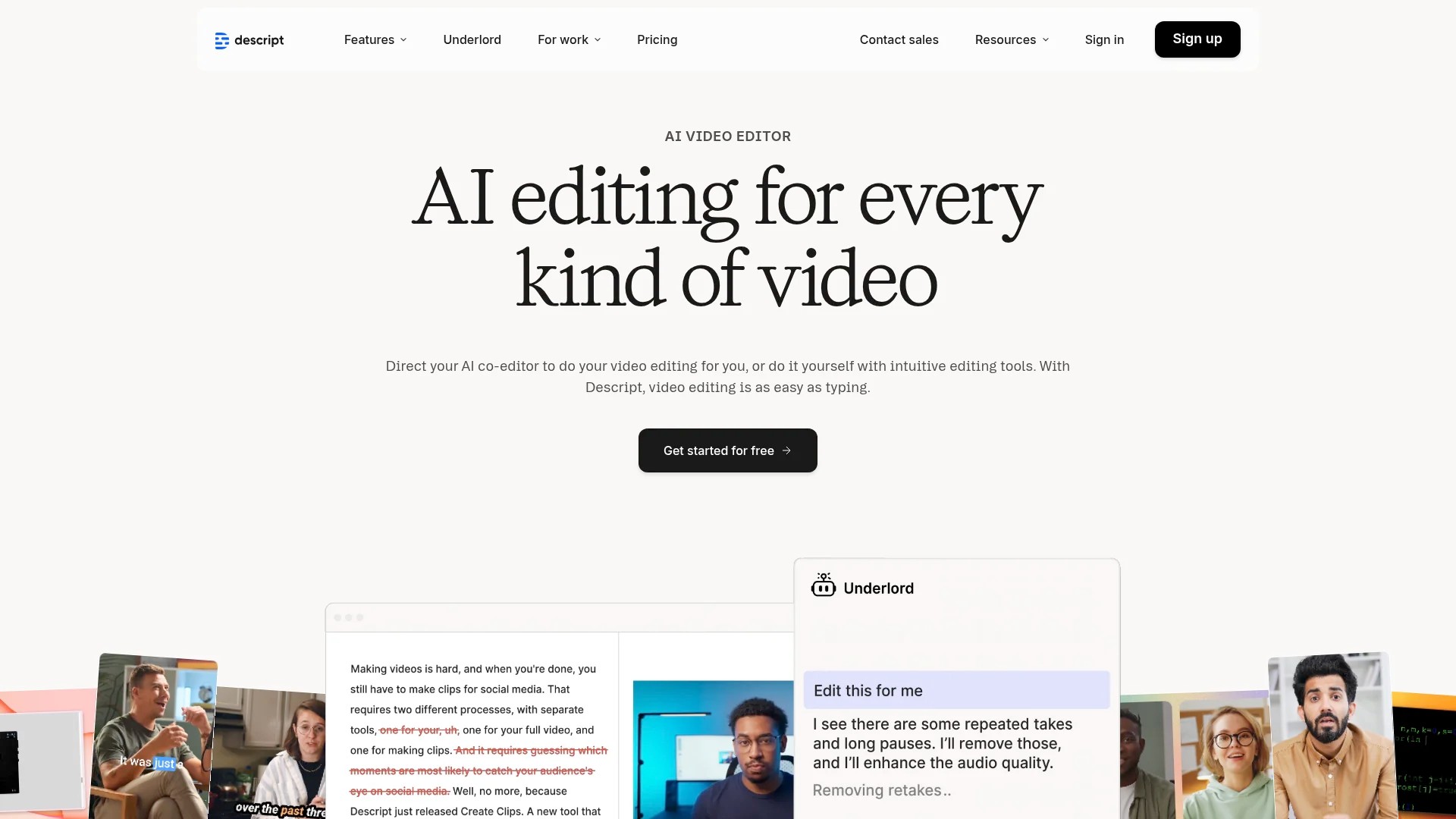
Descript transforms video editing through AI-powered features like automatic transcription, filler word removal, and voice cloning. This dramatically reduces video production time for content marketers.
Content Management Integration
The most effective implementations integrate AI tools directly into content management workflows. Rather than standalone platforms, AI capabilities embedded within CMS platforms and marketing automation systems deliver the smoothest user experience.
WordPress plugins now offer AI writing assistance, SEO optimisation, and automated content formatting. This brings AI capabilities to the millions of websites using the platform.
HubSpot and similar marketing platforms have integrated AI features for email generation, blog ideation, and social media scheduling. These native integrations eliminate context switching and streamline content workflows.
Content Quality Versus Quantity: Navigating the AI Saturation Era
With powerful AI tools now accessible to virtually every content creator, we face a new challenge: content saturation. The ease of generating content has led to volume increases that threaten to overwhelm audiences and dilute message effectiveness.
Search engines and social media feeds now contain vast quantities of AI-generated content. Much of it is technically competent but lacks distinctive value or original insight.
The AI Content Saturation Problem
The internet faces a signal-to-noise crisis. As more creators deploy AI tools to increase output, distinguishing valuable content from generic filler becomes increasingly difficult.
This saturation affects search rankings, social media visibility, and email engagement. Audiences develop resistance to content that feels formulaic or derivative, regardless of technical quality.
Content marketers who compete solely on volume find diminishing returns. Publishing frequency matters less when audiences actively tune out generic content.
Quality Markers That Cut Through Noise
Certain content characteristics help break through the saturation. Original research and proprietary data immediately differentiate content from AI-generated summaries of existing information.
Specific examples and detailed case studies demonstrate genuine expertise. Whilst AI can describe concepts generally, human creators provide the nuanced details that prove real-world experience.
Strong perspective and argumentation also signal quality. AI tools tend toward balanced, non-controversial output. Content that takes clear positions and backs them with evidence stands out in crowded feeds.
Strategic Content Planning in an AI Era
Successful content strategies now emphasise quality metrics over quantity targets. Rather than publishing daily AI-generated posts, effective marketers focus on fewer pieces with genuine value and differentiation.
This requires honest assessment of content purpose. Does each piece serve audience needs or merely feed algorithmic requirements? Content that exists only to maintain publishing schedules rarely delivers meaningful results.
Resource allocation shifts accordingly. Instead of spreading effort across numerous mediocre pieces, concentrate creative energy on flagship content that showcases expertise and provides genuine utility.
Content marketing strategies that prioritise audience value perform better than those focused purely on volume metrics.
Ethical Considerations and Responsible AI Use
As content marketers navigate quality concerns, ethical questions about AI use become increasingly important. The capabilities of generative AI raise significant issues around transparency, accuracy, and responsible deployment.
Marketing professionals face decisions about disclosure, fact-checking, and appropriate use cases. These choices affect both audience trust and brand reputation.
Transparency and Disclosure Practices
Should content marketers disclose when AI tools contributed to content creation? Industry consensus continues evolving, but transparency generally builds trust whilst secrecy risks backlash if discovered.
Some brands prominently label AI-assisted content. Others view AI as simply another production tool, no different from spell-checkers or grammar assistants. The appropriate approach often depends on content type and audience expectations.
Heavily AI-generated content in trust-dependent contexts like financial advice or health information warrants clear disclosure. Light AI assistance for social media scheduling or email formatting likely requires less explicit acknowledgement.
Accuracy and Hallucination Risks
AI-generated content can include fabricated information presented as fact. These “hallucinations” pose serious risks when content requires factual accuracy.
Responsible AI use demands rigorous fact-checking. Never publish AI-generated content without human verification of claims, statistics, and references. This applies particularly to regulated industries and topics where misinformation causes harm.
Marketing teams need clear policies around AI content review. Who verifies accuracy? What checking process ensures reliability? These protocols protect both audience trust and brand credibility.
Bias and Representation Concerns
AI systems reflect biases present in their training data. This can manifest in stereotypical language, limited representation, or problematic assumptions about audiences.
Content marketers must actively review AI output for bias. Does generated content make assumptions about gender, race, or background? Does it represent diverse audiences appropriately?
Human oversight remains essential for identifying and correcting bias that AI systems might introduce. This responsibility cannot be automated away.
Environmental and Resource Considerations
Training and running large AI models consumes substantial energy and computational resources. Whilst individual content generation requests have modest impact, aggregate usage across millions of queries raises sustainability questions.
Some organisations factor environmental impact into AI adoption decisions. This might involve choosing more efficient models, limiting frivolous usage, or offsetting computational carbon costs.
Content strategy decisions increasingly consider sustainability alongside effectiveness.
Industry-Specific AI Applications: From Marketing to Media
Having established ethical frameworks for responsible use, let’s examine how different industries apply AI content generation to their specific needs. Implementation patterns vary significantly across sectors.
Marketing and Advertising Applications
Marketing teams use AI tools extensively for campaign development. Ad copy variations, email sequences, and landing page alternatives all benefit from AI-assisted generation.
Time-efficient content creation approaches help marketing teams maintain consistent output without expanding headcount.
Social media management represents particularly strong AI adoption. Platforms like Buffer and Hootsuite now incorporate AI features for post scheduling, caption generation, and engagement optimisation.
Programmatic advertising increasingly relies on AI-generated creative. Systems test thousands of ad variations, automatically generating and optimising creative elements based on performance data.
Media and Publishing Trends
News organisations experiment cautiously with AI tools. Some use them for data journalism, generating reports from structured datasets like earnings reports or sports statistics.
Others deploy AI for content personalisation, tailoring article recommendations and email newsletters to individual reader interests. This increases engagement without requiring manual curation at scale.
Publishing workflows increasingly incorporate AI assistance for tasks like headline optimisation, summary generation, and social media promotion. These applications augment rather than replace editorial teams.
E-commerce and Retail Content
Online retailers use AI extensively for product descriptions, category pages, and personalised recommendations. Generating unique descriptions for thousands of products would be prohibitively expensive without AI assistance.
Customer service content, including FAQ responses and chatbot interactions, relies heavily on AI-generated text. This enables 24/7 support without proportional staffing increases.
Email marketing in retail benefits particularly from AI personalisation. Product recommendations, promotional messaging, and cart abandonment emails all adapt automatically based on individual browsing and purchase behaviour.
Professional Services and B2B Marketing
Professional services firms use AI tools for thought leadership content, white papers, and industry analysis. These applications require substantial human oversight to ensure accuracy and demonstrate genuine expertise.
B2B marketing often involves complex, technical content. AI tools help draft technical documentation, create sales enablement materials, and generate nurture email sequences.
AI-driven marketing approaches continue evolving as tools improve and best practices emerge across industries.
| Industry | Primary AI Applications | Key Benefits |
|---|---|---|
| Marketing & Advertising | Ad copy, email campaigns, social media | Rapid variation testing, personalisation at scale |
| Media & Publishing | Data journalism, content recommendations | Efficiency in routine reporting, reader personalisation |
| E-commerce & Retail | Product descriptions, customer service | Scalable unique content, 24/7 support |
| Professional Services | Thought leadership, technical documentation | Faster drafting of complex content |
Looking Forward: Content Marketing in the AI Age
AI content generation has fundamentally altered the marketing profession. The changes we’ve examined represent just the beginning of a longer transformation that will continue reshaping how content gets created, distributed, and consumed.
The most successful content marketers will be those who thoughtfully integrate AI tools whilst preserving the human elements that create genuine connection. This isn’t about choosing between human creativity and AI efficiency. It’s about strategically deploying both.
Practical Next Steps
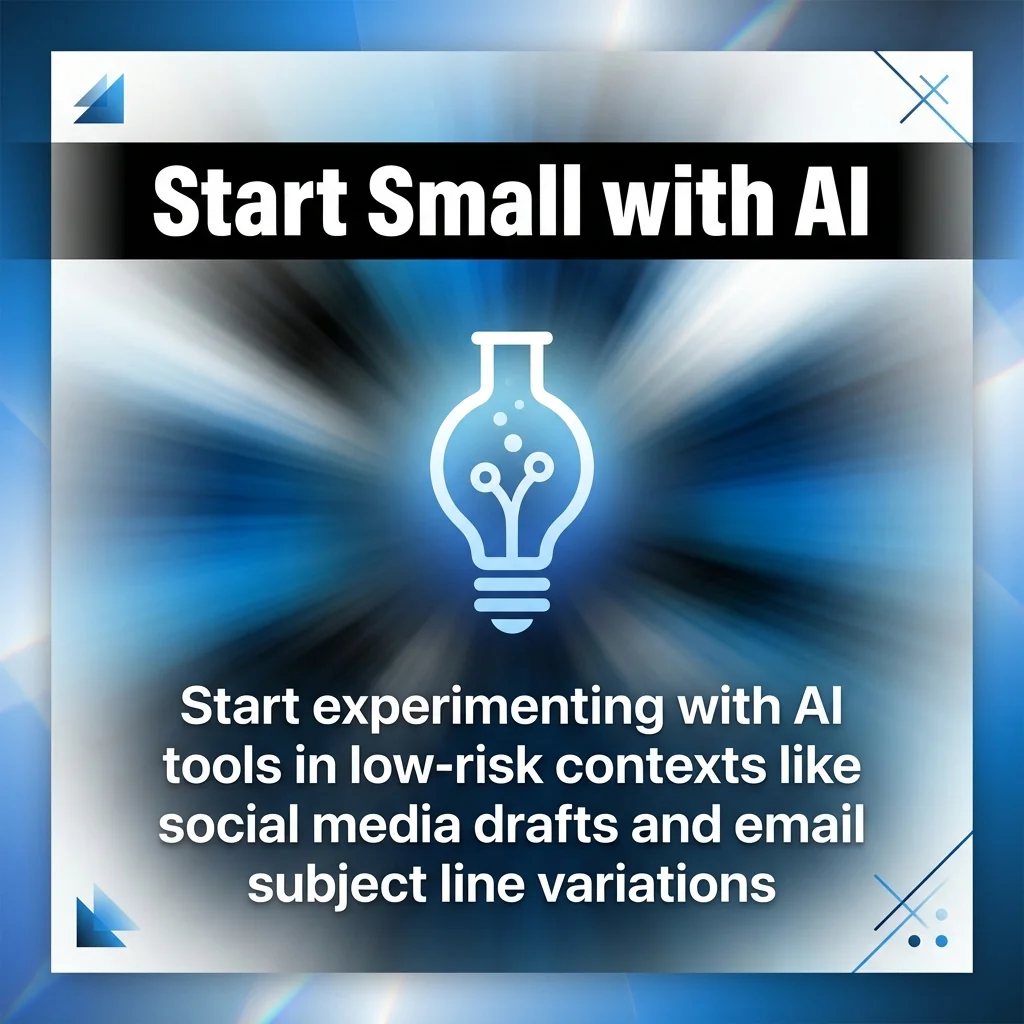
Start experimenting with AI tools in low-risk contexts. Use them for social media drafts, email subject line variations, or content outline generation. Build familiarity before deploying AI for higher-stakes content.
Develop clear guidelines around AI use within your team. Which tasks suit AI assistance? Where does human creativity remain essential? What review processes ensure quality and accuracy?
Automated solutions work best when thoughtfully integrated into existing workflows rather than bolted on as separate processes.
Skills for the AI Content Era
Content marketers need evolving skill sets. Prompt engineering becomes increasingly valuable as AI tools improve. Understanding how to elicit quality output through effective instructions separates average users from power users.
Strategic thinking grows more important as tactical execution becomes automated. Determining what content to create, which audiences to prioritise, and how to differentiate your brand cannot be outsourced to AI systems.
Quality assessment skills remain crucial. As AI handles more content generation, human judgement around what constitutes valuable, on-brand, accurate content becomes the essential discriminator.
Maintaining Competitive Advantage
As AI tools become universally accessible, competitive advantage shifts. Simply using AI provides no differentiation when competitors have identical access.
Advantage comes from distinctive application. How you deploy AI tools, which aspects of content creation you automate versus preserve for human creativity, and how effectively you maintain brand voice through AI assistance all matter more than tool access.
Solid content marketing strategies provide the foundation that makes AI tools force multipliers rather than replacements for strategic thinking.
Focus on building genuine expertise and original insights. These remain difficult to automate and provide lasting differentiation in increasingly crowded content environments.
The organisations that thrive will be those that view AI as an enhancement to human creativity rather than a replacement for it. Use these tools to amplify your best work, not to churn out content that adds to internet noise.