Building evergreen content queues transforms how you manage social media by automating the continuous circulation of timeless content across your platforms. A category queue is an organised system that schedules posts by topic categories, automatically recycling them back into rotation after publishing to maintain consistent engagement without manual reposting. This approach combines content categorisation with scheduling automation to create self-sustaining posting systems that deliver value year-round, not just once.
Think of category queues as content libraries sorted by theme—blog posts, quick tips, testimonials—each rotating through your social channels on predetermined schedules. When a post publishes, it moves to the back of its category queue, ensuring fresh variety whilst preventing overexposure. This method requires initial setup effort but rewards you with hands-free content distribution that keeps audiences engaged with your best material repeatedly.
The strategic advantage lies in matching content longevity with automation efficiency. Evergreen topics answer persistent questions and address stable needs, making them perfect candidates for continuous recycling. By organising these assets into category-based queues, you build posting systems that run independently, freeing your time for creating new material or engaging directly with your community.
This guide walks you through the complete process—from understanding what makes content truly evergreen to configuring automated queue systems that maintain social presence whilst you focus on strategic growth. You’ll learn how to identify recyclable content, structure effective category systems, implement queue automation, and optimise performance over time.
What Is an Evergreen Content Queue?
An evergreen content queue is a scheduling system that automatically rotates timeless content through your social media channels based on category organisation. Unlike one-time posting or manual scheduling, queues continuously recycle published posts back into future posting slots, creating perpetual content circulation without repetitive manual work.
The system works by grouping content into thematic categories—educational posts, customer testimonials, product tips, industry insights—each with its own posting schedule and rotation rules. When a post from the “blog articles” category publishes on Monday, the queue automatically adds it back to the end of that category’s line, ensuring it will appear again after all other blog posts cycle through.
This differs fundamentally from traditional scheduling approaches where each post exists as a single calendar entry requiring manual rescheduling for future sharing. Category queues treat content as reusable assets that automatically repurpose themselves according to rules you define once during setup.
How Category-Based Organisation Works
Category queues rely on content tagging and bucket systems to maintain organisation. You assign each piece of content to one or more categories based on topic, format, or purpose. The queue then draws from these categorised buckets according to your posting schedule—perhaps two educational posts weekly, three promotional posts, and daily quick tips.
SocialBee’s Bootstrap plan starts at $29 monthly and includes content recycling, custom posting schedules, and multi-platform publishing, demonstrating how affordable tools have made category queue automation accessible to businesses of all sizes.
The categorisation provides two key benefits: balanced content mix and simplified management. Your audience receives varied post types naturally distributed across time, whilst you manage entire categories instead of individual posts.
The Automation Layer
Automation transforms static category organisation into dynamic posting systems. Once configured, the queue automatically selects the next post from the appropriate category when a time slot arrives, publishes it across designated platforms, then moves it to the back of the queue for future recycling.
CoSchedule’s ReQueue tool automates resharing of high-performing evergreen content, keeping social calendars filled effortlessly without manual intervention. This exemplifies how modern queue systems handle the entire posting lifecycle automatically.
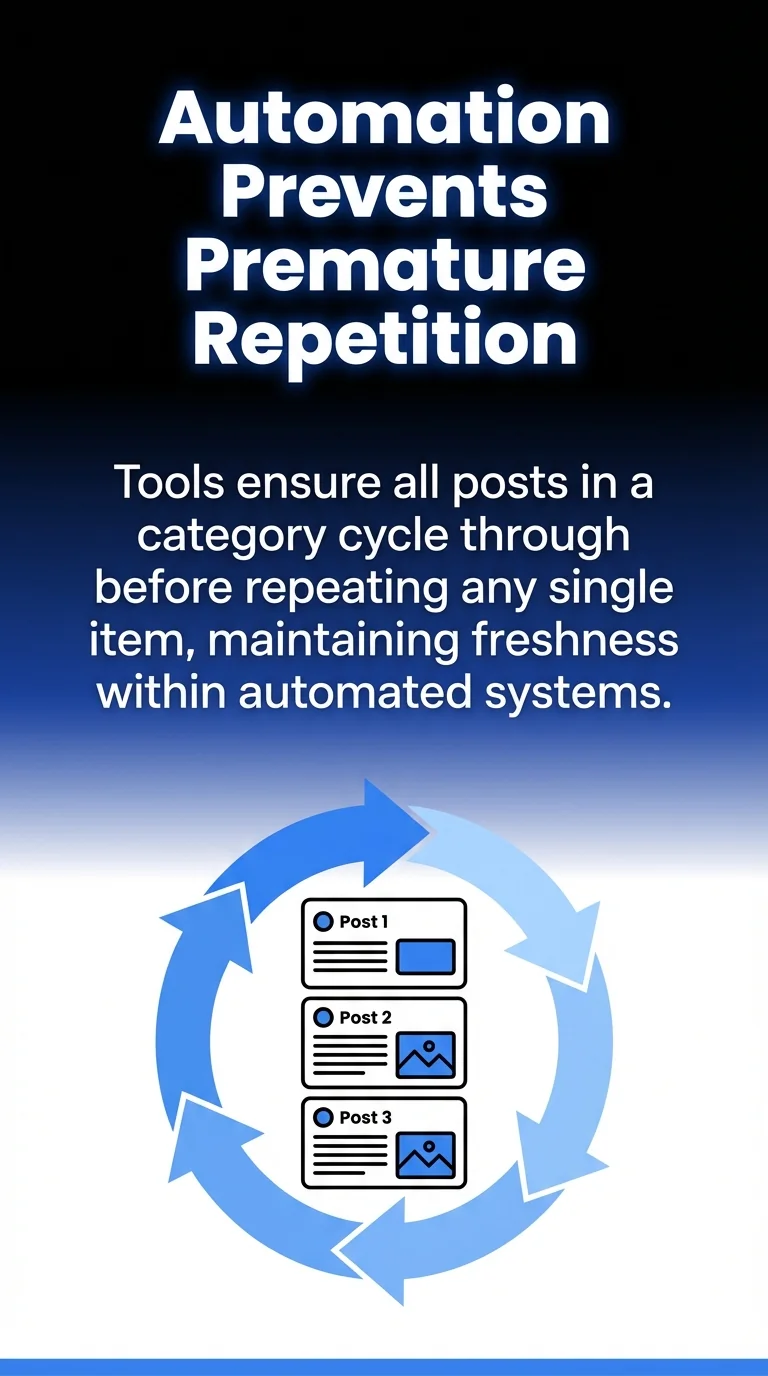
The automation includes intelligent cycling that prevents premature repetition. Tools ensure all posts in a category cycle through before repeating any single item, maintaining freshness even within automated systems.
Why Use Category Queues for Evergreen Content
Category queues solve the persistent challenge of maintaining consistent social media presence without exhausting your content library or overwhelming your schedule with manual posting tasks. For marketers managing multiple platforms and accounts, the time savings compound quickly—what requires hours weekly becomes minutes monthly.
The strategic value extends beyond efficiency. Evergreen content retains relevance for months or years, making it ideal for continuous recycling. A comprehensive guide to email marketing best practises remains valuable whether published yesterday or six months ago, unlike time-sensitive news or promotional announcements.
By automating evergreen content circulation, you maximise return on content creation investment. Each piece works repeatedly to drive traffic, nurture leads, and maintain engagement, rather than disappearing after a single appearance.
Content Longevity Meets Automation Efficiency
Evergreen topics address timeless questions and fundamental concepts that audiences search for continuously. How-to guides, definitional content, foundational tutorials, and principle-based advice maintain relevance regardless of publication date.
This permanence makes evergreen material perfect for queue automation. You invest effort once to create quality content, then leverage queues to extract ongoing value through automated resharing. The content’s enduring relevance ensures repeated posts remain useful, not stale.
Category queues amplify this advantage by organising evergreen assets into thematic collections that post strategically. Your queue might rotate educational content Mondays and Wednesdays, testimonials Tuesdays, and quick tips daily—each category drawing from its evergreen library automatically.
Consistency Without Burnout
Manual posting demands continuous attention and creative energy. You must remember to post, select appropriate content, customise messaging for each platform, and track what you’ve shared recently to avoid repetition.
Category queues eliminate this cognitive load entirely. Configure your categories and posting schedule once, populate queues with content, then let automation maintain your presence whilst you focus on strategy, engagement, and new content creation.
For teams managing social media alongside other responsibilities, this consistency proves invaluable. Your social presence continues uninterrupted during busy periods, holidays, or strategic projects that demand full attention elsewhere.
Key Benefits of Category Queues
Category queues deliver multiple strategic advantages that justify the initial setup investment. Understanding these benefits helps prioritise which content types to include and how to structure categories for maximum impact.
| Benefit Category | Primary Advantage | Implementation Impact |
|---|---|---|
| Time Efficiency | Automated posting eliminates manual scheduling tasks | Hours saved weekly on content distribution |
| Content Maximisation | Each piece generates value repeatedly through automated recycling | Higher ROI on content creation investment |
| Consistency Maintenance | Reliable posting schedule continues independently | Uninterrupted social presence during busy periods |
| Strategic Focus | Team attention shifts from posting mechanics to engagement and strategy | Improved community interaction and campaign planning |
| Content Mix Balance | Category rotation ensures diverse post types appear proportionally | Better audience experience and engagement patterns |
Automated Content Recycling
The core benefit of category queues lies in intelligent content recycling that extracts maximum value from each piece. Instead of creating endless new content to maintain posting frequency, you systematically reuse proven material that continues serving audience needs.
SocialBee’s re-queue feature automatically moves published evergreen posts back into their category queue after posting, creating truly hands-free content circulation that continues indefinitely.
This recycling proves particularly powerful for audiences constantly refreshing with new followers who missed original posts. Content that seemed repetitive to long-time followers introduces valuable information to newcomers discovering your brand.
Balanced Content Distribution
Category-based organisation ensures your content mix remains strategically balanced without manual tracking. When you configure queues with specific category allocations—40% educational, 30% promotional, 20% community-focused, 10% entertainment—the system maintains these proportions automatically.
This prevents common pitfalls like accidentally posting too much promotional content or neglecting educational material during busy periods. The queue enforces your content strategy mechanically, delivering the mix you’ve determined serves your audience best.
For brands managing multiple product lines or service categories, this balance extends to ensuring each receives appropriate visibility without manual calendar management.
Scalable Social Media Management
Category queues scale efficiently as your social presence grows. Adding new platforms or accounts requires replicating your existing queue structure rather than multiplying manual posting effort linearly.
A marketing team managing five social platforms manually might spend hours daily on posting tasks. With category queues, the same team configures automated posting across all platforms once, then maintains content libraries rather than managing individual posts.
This scalability proves essential for agencies managing multiple client accounts or brands operating across numerous regional or product-specific social profiles.
How to Set Up a Category Queue Step-by-Step
Setting up effective category queues requires systematic planning before implementation. This structured approach ensures your automated system supports strategic goals rather than simply automating existing chaos.
Step 1: Audit Your Evergreen Content Library
Begin by identifying which existing content qualifies as truly evergreen—material that remains relevant and valuable regardless of publication date. Review blog posts, social media updates, email newsletters, and other content assets to find timeless pieces.
Look for content addressing fundamental questions, explaining core concepts, providing how-to guidance, or sharing enduring principles. Exclude time-sensitive announcements, dated statistics, seasonal material, or trend-dependent content.
Document each evergreen piece with its topic, format, platform suitability, and performance history if available. This inventory becomes the foundation for populating your category queues strategically.
Step 2: Define Content Categories
Establish clear category definitions based on content purpose, topic, or format. Effective categories align with your content strategy and audience needs whilst remaining distinct enough to prevent overlap confusion.
Common category structures include topic-based systems (product education, industry insights, company culture), format-based organisation (blog posts, infographics, video content), or purpose-driven categories (lead nurturing, customer retention, brand awareness).
Limit initial categories to 5-8 to maintain manageability. You can expand later as the system matures and you identify gaps in content distribution.
Step 3: Select and Configure Queue Management Tools
Choose social media management tools that support category-based queue automation. Edgar automatically recycles top-performing content and pulls fresh posts from RSS feeds, exemplifying the automation capabilities to prioritise during tool selection.
Key features to evaluate include category/bucket organisation, automated recycling settings, multi-platform publishing, posting schedule customisation, and performance analytics integrated with queue management.
During configuration, connect your social media accounts, set up category buckets matching your defined structure, and establish posting schedules that align with audience activity patterns and platform best practises.
Step 4: Populate Categories with Content
Import your audited evergreen content into appropriate categories within your chosen tool. Most platforms support bulk uploads via spreadsheet or direct content creation within the interface.
For each piece, specify the category assignment, customise messaging for each platform if needed, add relevant media assets, and configure any platform-specific optimisations like hashtags or mentions.
Tools like SocialBee and Post Planner prevent reposting the same content too frequently by cycling through all other items in the queue or bucket first, ensuring your populated categories maintain variety automatically.
Step 5: Configure Posting Schedules and Queue Behaviour
Establish when and how frequently each category posts. This schedule determines content mix and posting frequency across your social presence.
Define time slots for each category—perhaps educational content posts Monday, Wednesday, Friday at 10am, whilst testimonials post Tuesday, Thursday at 2pm. Configure queue behaviour to recycle content automatically after posting, maintain category rotation order, and pause during specific periods if needed.
Test your schedule with a small content set initially to verify timing, category rotation, and recycling behaviour works as intended before scaling up.
Step 6: Activate Automation and Monitor Performance
Launch your category queues and shift focus from manual posting to performance monitoring and content library maintenance. Track engagement metrics by category to identify which content types resonate strongest.
Regular monitoring reveals opportunities for optimisation—adjusting posting times, rebalancing category proportions, retiring underperforming content, or creating new material to fill identified gaps.
Schedule quarterly reviews of your evergreen content library to refresh outdated information, add newly created assets, and ensure automated circulation continues serving audience needs effectively.
Best Practises for Managing Your Category Queue
Successful category queue management requires ongoing attention despite automation handling posting mechanics. These practises optimise performance and prevent common pitfalls that diminish queue effectiveness over time.
Maintain Content Freshness Through Regular Updates
Even evergreen content requires periodic refreshing to maintain accuracy and relevance. Industry best practises evolve, tools receive updates, and contextual details shift over time.
Establish quarterly content audits to review queue material systematically. Update statistics, refresh screenshots, revise outdated references, and remove content that no longer serves audience needs effectively.
This maintenance ensures automated recycling continues delivering value rather than distributing increasingly stale information that damages credibility.
Balance Automation with Timely Content
Category queues excel at maintaining baseline social presence but shouldn’t replace all manual posting. Reserve space in your content calendar for timely updates, trending topic participation, real-time engagement, and current announcements.
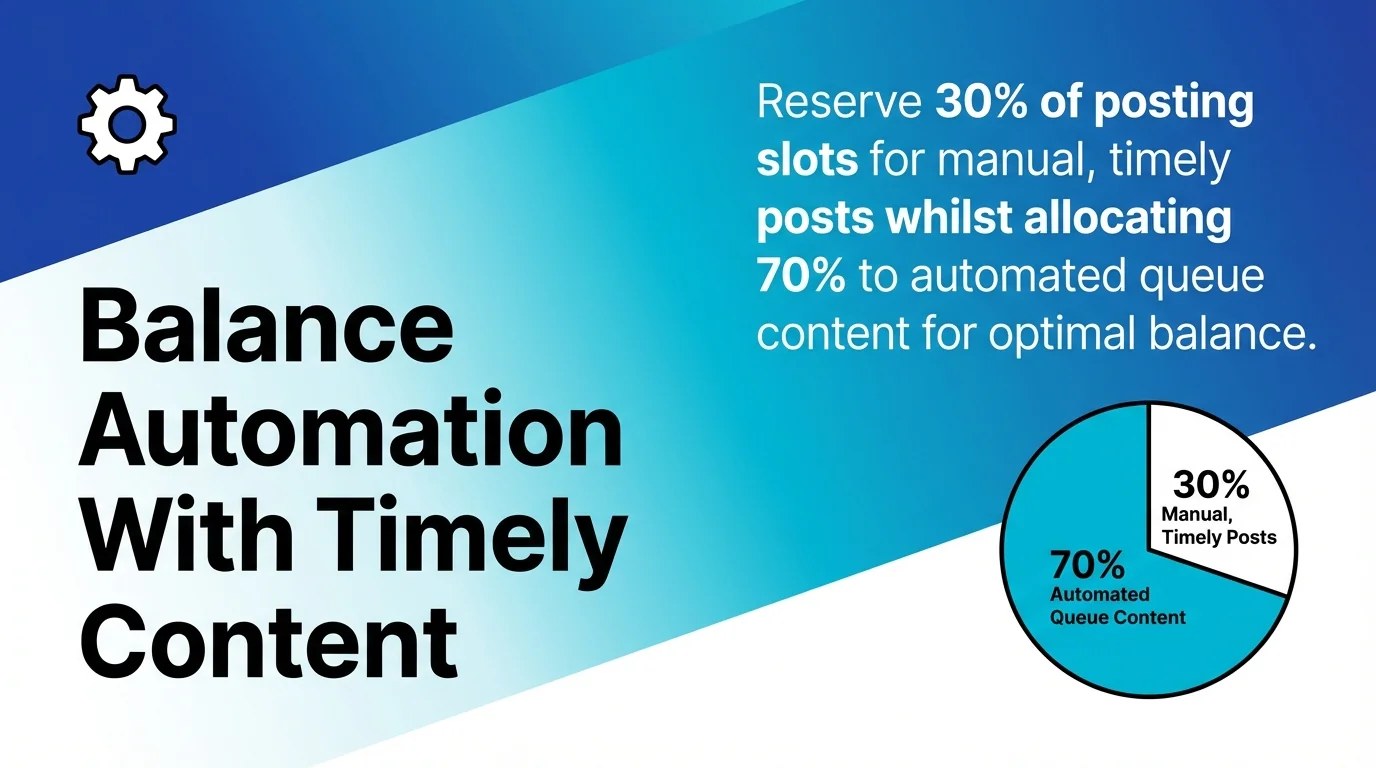
A balanced approach might allocate 70% of posting slots to automated queue content whilst preserving 30% for manual, timely posts that respond to immediate opportunities or audience conversations.
This combination delivers consistency through automation whilst maintaining the authentic, responsive presence audiences expect from brands they follow.
Monitor Performance by Category
Track engagement metrics at the category level to understand which content types drive strongest audience response. This insight guides content creation priorities and category proportion adjustments.
If educational content consistently outperforms promotional material, consider expanding the educational category or increasing its posting frequency. Conversely, categories generating minimal engagement may need content quality improvements or reduced prominence in rotation schedules.
Most queue management tools provide analytics dashboards showing performance by category, making this analysis straightforward during regular reviews.
Implement Pausing and Prioritisation Strategically
Category queues support pausing specific content or entire categories temporarily when circumstances warrant. Use this capability during product launches, crisis situations, or strategic campaigns requiring focused messaging.
Similarly, prioritisation features allow inserting new content at queue front rather than end, ensuring timely material reaches audiences quickly whilst maintaining automated rotation for remaining content.
These controls provide flexibility within automated systems, preventing scenarios where automation conflicts with immediate strategic needs.
Expand Content Libraries Continuously
Whilst recycling maximises existing content value, continuously expanding your evergreen library prevents audience fatigue from seeing identical posts too frequently. Aim to add new evergreen content monthly to each active category.
This expansion extends recycling intervals naturally—a category with 20 posts posting twice weekly cycles completely every 10 weeks, whilst a category with 40 posts extends this to 20 weeks, significantly reducing repetition perception.
For practical guidance on building robust content libraries, explore creating comprehensive social media content calendars that support long-term queue sustainability.
Content Types Perfect for Category Queues
Not all content suits automated recycling equally. Understanding which types thrive in category queues helps populate your system with material that delivers consistent value through repeated sharing.
Educational and How-To Content
Instructional content explaining processes, teaching skills, or demonstrating techniques represents ideal queue material. These pieces answer persistent questions that audiences search for continuously regardless of publication date.
Examples include tutorial blog posts, step-by-step guides, explainer videos, process walkthroughs, and foundational concept explanations. This content serves new audience members discovering your brand whilst providing reference material for existing followers.
Educational content often drives strong engagement and positions your brand as a helpful authority, making it valuable to recycle regularly through automated queues.
Curated Industry Insights and Resources
Third-party content curation—sharing valuable resources, tools, or insights from others in your industry—builds queue depth whilst providing audience value. Curated content demonstrates industry knowledge and generosity, strengthening community relationships.
Learn effective approaches through AI-powered content curation strategies that identify high-quality material worth including in evergreen queues.
Ensure curated content remains relevant over time by focusing on foundational resources rather than trending topics or time-sensitive announcements.
Customer Testimonials and Success Stories
Social proof content including customer testimonials, case study highlights, and success story snippets maintains relevance indefinitely. These pieces build credibility and demonstrate value regardless of when audiences encounter them.
Organise testimonials into categories by product, service, use case, or industry to ensure balanced representation across your automated posting schedule.
This content type often generates strong engagement as audiences relate to customer experiences and envision their own success with your offerings.
Foundational Brand Content
Content explaining your mission, values, unique approach, or company story provides evergreen material that introduces new followers to your brand whilst reinforcing identity with existing audiences.
Include origin stories, philosophy explanations, team introductions, and behind-the-scenes glimpses that humanise your brand. This material remains relevant as long as core aspects of your business remain stable.
For comprehensive planning approaches, review building effective social media content plans that incorporate brand storytelling systematically.
Tips, Quick Wins, and Actionable Advice
Bite-sized practical tips and quick actionable advice make excellent queue content. These short-form posts deliver immediate value, encouraging engagement and shares whilst requiring minimal consumption effort.
Examples include productivity tips, tool recommendations, industry hacks, common mistake warnings, and success principles. The brevity and practical nature suit social media consumption patterns perfectly.
Build substantial libraries of tip content to extend recycling intervals and maintain variety within this high-frequency category.
Common Mistakes to Avoid
Category queue implementation faces predictable pitfalls that diminish effectiveness. Recognising these mistakes helps you avoid them during setup and ongoing management.
Over-Automation Without Strategic Oversight
The most critical mistake involves treating category queues as completely hands-free systems requiring no attention after initial setup. Whilst automation handles posting mechanics, strategic oversight remains essential for effectiveness.
Content becomes outdated, audience preferences shift, platform algorithms change, and competitive dynamics evolve. Queues operating without regular review and adjustment gradually lose effectiveness as automated circulation distributes increasingly irrelevant material.
Establish scheduled review cycles—monthly performance checks and quarterly content audits minimum—to maintain queue relevance and effectiveness over time.
Insufficient Content Library Depth
Implementing category queues with too few pieces per category leads to obvious repetition that audiences notice and disengage from. A category with only 10 posts publishing twice weekly repeats every five weeks—too frequently for most audiences.
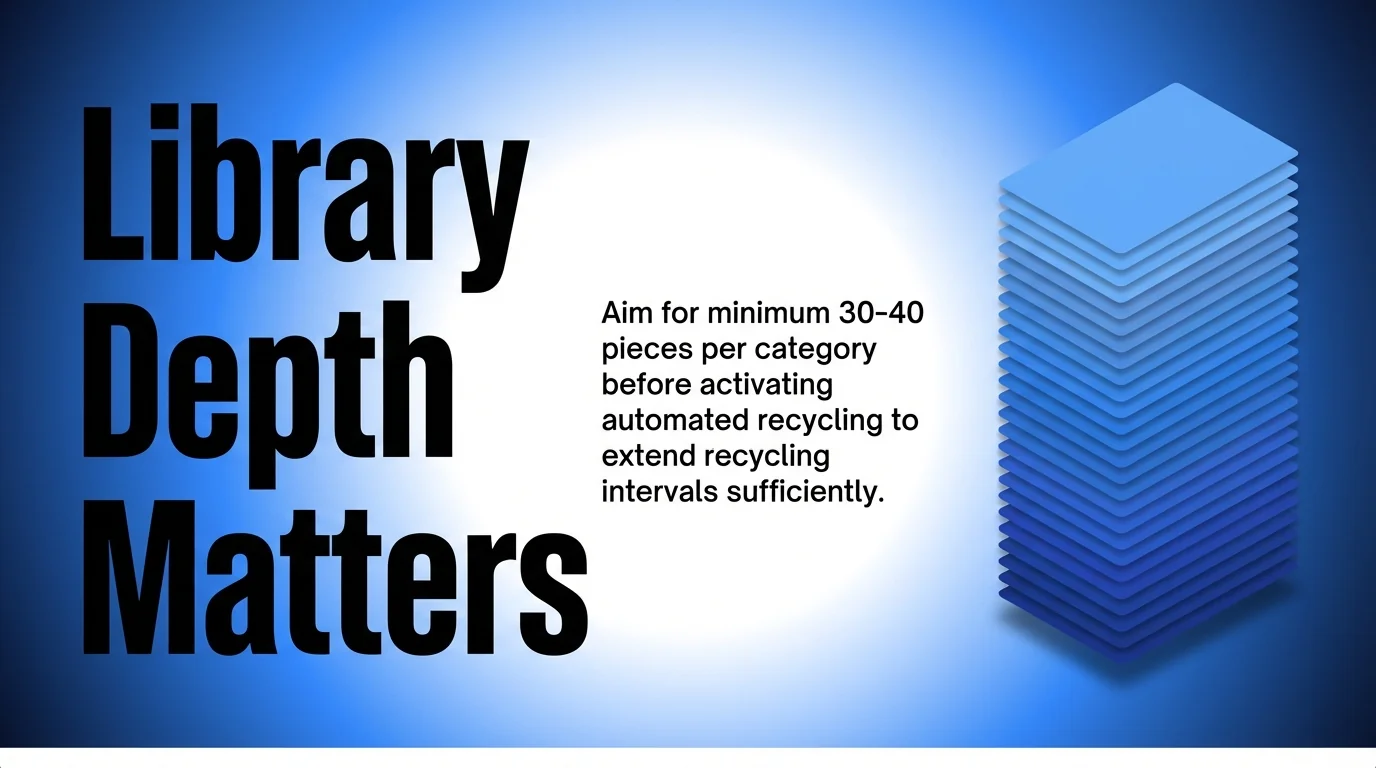
Aim for minimum 30-40 pieces per category before activating automated recycling. This depth extends recycling intervals sufficiently that repeated content feels fresh rather than annoyingly familiar.
If you lack sufficient evergreen content initially, either delay queue activation whilst building libraries or reduce posting frequency to extend intervals until you expand content collections.
Neglecting Platform-Specific Optimisation
Posting identical content across all platforms through automated queues ignores crucial platform differences in format preferences, audience expectations, and optimal messaging styles.
Whilst the core evergreen message remains consistent, customise presentation for each platform—adjust copy length, modify hashtag usage, optimise media formats, and tailor tone to match platform culture.
Most queue management tools support platform-specific variations of queue content, enabling this customisation without abandoning automation benefits.
Failing to Monitor and Respond to Engagement
Automation handles posting but cannot replace authentic human engagement with audience responses. Queues that publish content automatically but ignore resulting comments, questions, or conversations damage relationships rather than building them.
Pair automated posting with dedicated engagement time to respond to comments, answer questions, and participate in conversations your queue content generates. This combination delivers consistency through automation whilst maintaining the responsive presence audiences value.
For approaches balancing automation with authentic engagement, explore maximising social media efficiency through strategic automation that preserves human connection.
Mixing Evergreen and Time-Sensitive Content
Including time-sensitive content in evergreen queues creates embarrassing situations where automated systems share outdated announcements, expired promotions, or irrelevant seasonal content months after relevance expires.
Maintain strict separation between evergreen queues designed for continuous recycling and manual posting slots reserved for timely content with clear expiration dates.
If certain content has limited relevance windows, either post manually or configure queue systems to automatically expire content after specified dates, preventing inappropriate automated sharing.
Quick Answers to Common Questions
What does it mean when content is evergreen?
Evergreen content refers to material that remains relevant, valuable, and appealing over extended periods—months or years—rather than becoming outdated quickly like news or trends. It addresses timeless topics, persistent questions, and foundational concepts, continuing to attract traffic long after publication.
What is an evergreen content strategy?
An evergreen content strategy involves creating, optimising, and maintaining timeless content that addresses persistent audience questions to generate sustained traffic and value over years. It prioritises depth, SEO optimisation, periodic updates, and repurposing across platforms for compounding returns and organic growth.
How often should evergreen content be recycled in queues?
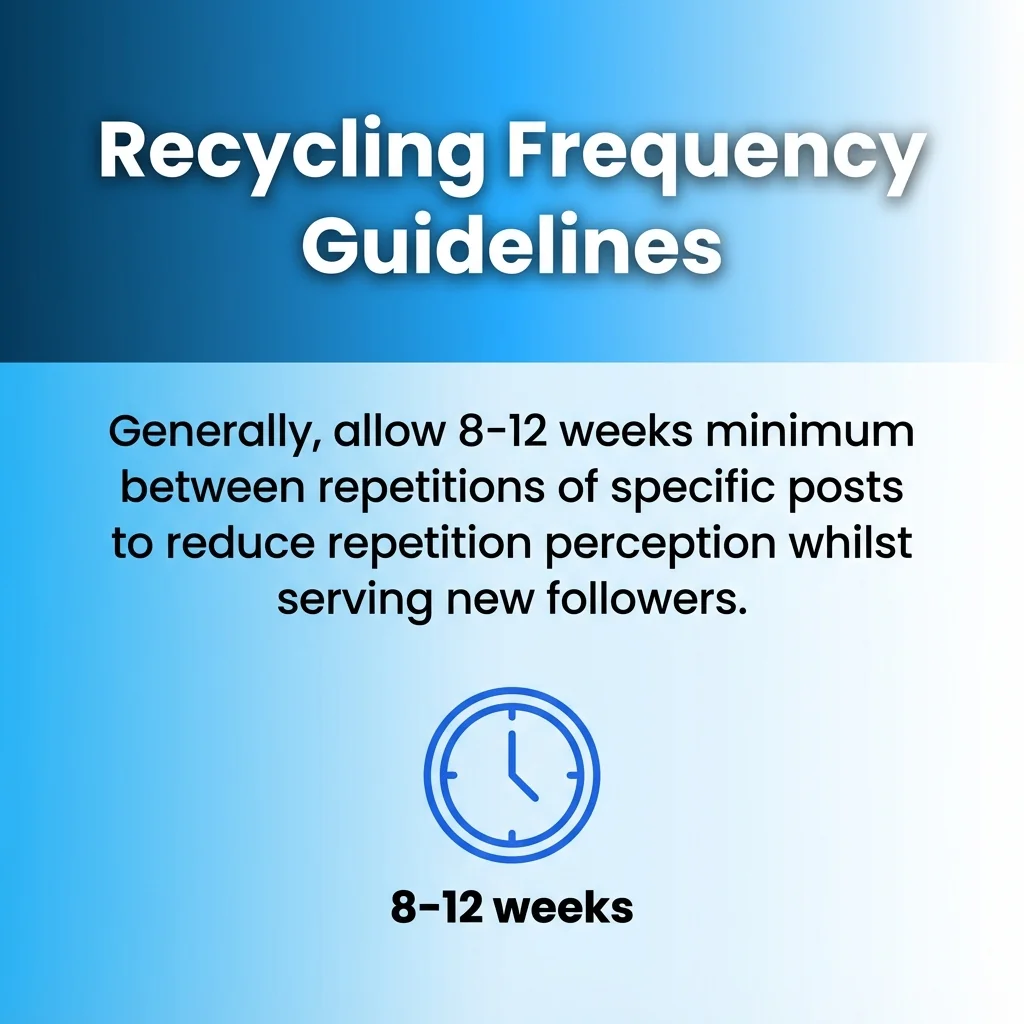
Optimal recycling frequency depends on content library size and audience growth rate. Generally, allow 8-12 weeks minimum between repetitions of specific posts. Larger libraries enable longer intervals, reducing repetition perception whilst continuously serving new followers discovering your brand.
Can category queues work for multiple social media platforms simultaneously?
Yes, most queue management tools support multi-platform publishing with platform-specific customisation. Configure one category queue that publishes across selected platforms with variations in copy length, formatting, or media optimised for each platform’s unique characteristics and audience expectations.
What happens to newly created content in established queues?
Newly added content typically joins the end of its assigned category queue unless you use prioritisation features to insert it at the front. This ensures immediate posting of time-sensitive evergreen content whilst maintaining systematic rotation of existing queue material.