Digital marketing agencies face a persistent challenge: proving ROI whilst juggling client deliverables, content creation, and campaign management. Social media amplification often gets pushed to the bottom of the priority list.
That’s where strategic automation enters the picture.
This case study examines how one mid-sized agency used Quuu Promote to systematically increase their content visibility. We’ll explore the implementation process, cost analysis, and measurable outcomes across a 90-day promotion period.

The results demonstrate how content promotion platforms can complement organic strategies. More importantly, we’ll break down whether the investment made financial sense for a small business operating on limited marketing budgets.
Understanding Quuu Promote: Platform Mechanics and Review Process
Quuu Promote operates as a content amplification service connecting publishers with real social media users who share quality content in specific categories.
The platform functions through a straightforward submission and distribution model. Marketers submit their blog posts, articles, or resources to Quuu Promote for consideration. Each submission undergoes manual review by an editorial team who evaluate content quality, relevance, and value to readers.
This approval process distinguishes Quuu Promote from automated sharing networks. Real people assess whether your content meets quality standards before it reaches their network of users.
Once approved, your content gets distributed to Quuu users who have selected relevant categories for their social sharing queues. These users receive content suggestions through the Quuu platform, which they can then share to their connected social profiles including Twitter, Facebook, and LinkedIn.
The Manual Review Advantage
The editorial approval process serves as quality control. Every piece of content submitted to Quuu Promote requires human review before entering the distribution network.
This manual review typically takes 24-48 hours. The editorial team evaluates factors like content originality, depth of information, formatting quality, and overall value to readers in that category.
Approval rates vary by content quality and category competition. Well-researched, professionally formatted content in established categories tends to pass review more consistently than promotional material or thin content.
Content Categories and Targeting
Quuu Promote organises content into specific interest categories. When submitting content, you select the most relevant category for your piece.
This categorisation determines which users see your content suggestions. A user interested in “Digital Marketing” won’t receive content tagged as “Personal Finance” in their suggestion queue.
The targeting occurs at the category level rather than through detailed demographic filtering. Your content reaches users who actively want to share material in your topic area, regardless of their follower count or profile size.
Agency Context: The Business Behind This Test
The agency in this case study operates as a small digital marketing consultancy serving 12-15 active clients at any given time. Their team consists of four full-time staff members handling content strategy, social media management, and paid advertising campaigns.
Client industries span professional services, B2B software, and local retail businesses. Most clients maintain modest social media followings between 500-5,000 followers across platforms.
Like many small agencies, they faced the perpetual challenge of demonstrating value beyond immediate conversion metrics. Clients wanted to see engagement growth, brand awareness expansion, and consistent content performance.
Resource Constraints and Time Limitations
The agency’s content production schedule generated 8-12 blog posts monthly across all client accounts. Each piece required research, writing, editing, and optimisation before publication.
After publication, social promotion consumed additional hours. The team manually shared content across client profiles, scheduled repeat posts, and monitored engagement.
This manual promotion process limited reach. Even with scheduled posting, content typically received one or two shares per platform over its lifespan.
Budget Realities for Small Business Marketing
Marketing budgets for the agency’s clients ranged from £500 to £3,000 monthly. These budgets needed to cover multiple channels including paid social advertising, content creation, and promotional activities.
Facebook Ads consumed the largest portion of paid promotional budgets. The agency typically allocated £300-£1,000 monthly per client for social advertising.
Cost per click through Facebook Ads varied by industry and targeting, generally falling between £0.50 and £2.50 for their client base. This benchmark became crucial when evaluating Quuu Promote’s cost effectiveness.
Strategic Motivation: Why We Tested Quuu Promote
The agency needed a solution that extended content reach without proportionally increasing time investment. Manual social sharing delivered inconsistent results and consumed hours that could support other client deliverables.
Quuu Promote presented an interesting proposition: systematic content amplification through real users rather than bot networks or fake engagement.
Three specific factors drove the decision to test the platform.
Authentic Social Shares vs Artificial Engagement
The agency had experimented with various engagement-boosting services in the past. Many promised social shares but delivered questionable results from suspicious accounts with no genuine followers.
Quuu Promote’s manual review process and curated user network suggested a different approach. The platform emphasised real users choosing to share content rather than automated bots executing programmed actions.
This distinction mattered for client reporting. Shares from authentic accounts with actual followers carried more value than inflated metrics from fake profiles.
Time Efficiency and Automation Benefits
The agency calculated approximately 3-4 hours weekly spent on manual social promotion across all client accounts. This included scheduling posts, creating social copy variations, and monitoring initial engagement.
Quuu Promote promised to automate this distribution whilst maintaining quality standards. Submit content once, undergo approval, then receive systematic shares over a 90-day promotion timeline.
The time savings could redirect towards content creation, strategy development, or client communication. These activities generated more direct value than repetitive posting tasks.
Cost Per Click Comparison Analysis
The agency wanted to understand Quuu Promote’s cost effectiveness relative to their existing paid promotional channels. Facebook Ads delivered predictable traffic but required ongoing budget allocation and management overhead.
Quuu Promote operates on a different pricing model. You pay upfront for promotion credits rather than bidding for ad placement. Each content submission costs a set amount depending on promotion duration and category competitiveness.
The hypothesis: if Quuu Promote could deliver clicks at a lower cost per click than Facebook Ads whilst requiring less management time, it represented a viable addition to their promotional toolkit.
Implementation Process: Setting Up Quuu Promote
The agency began their Quuu Promote test in early 2024. They allocated a £300 budget for their initial 90-day evaluation period.
Account creation took approximately 10 minutes. The platform required basic business information, connected social profiles for verification purposes, and payment details.
Content Selection Strategy
The agency selected 15 existing blog posts from their content library for promotion. These pieces represented their strongest performing content based on organic traffic and engagement history.
Content types included how-to guides, industry analysis articles, and comprehensive resource lists. Each piece exceeded 1,500 words and included supporting visuals or data.
They deliberately avoided promotional content, product announcements, or thin articles. The goal was to test Quuu Promote with content most likely to pass editorial review and resonate with users.
Category Assignment and Submission
Each content piece required category selection during submission. The agency matched articles to the most relevant available categories within Quuu Promote’s taxonomy.
Most submissions fell into “Digital Marketing,” “Social Media,” or “Small Business” categories. These categories aligned with the agency’s expertise areas and client industries.
The submission process took 5-7 minutes per article. This included writing a compelling description, selecting the category, and confirming the promotion duration.
Approval Timeline and Feedback
Approval notifications arrived within 24-48 hours for most submissions. Out of 15 submitted articles, 13 received approval for promotion.
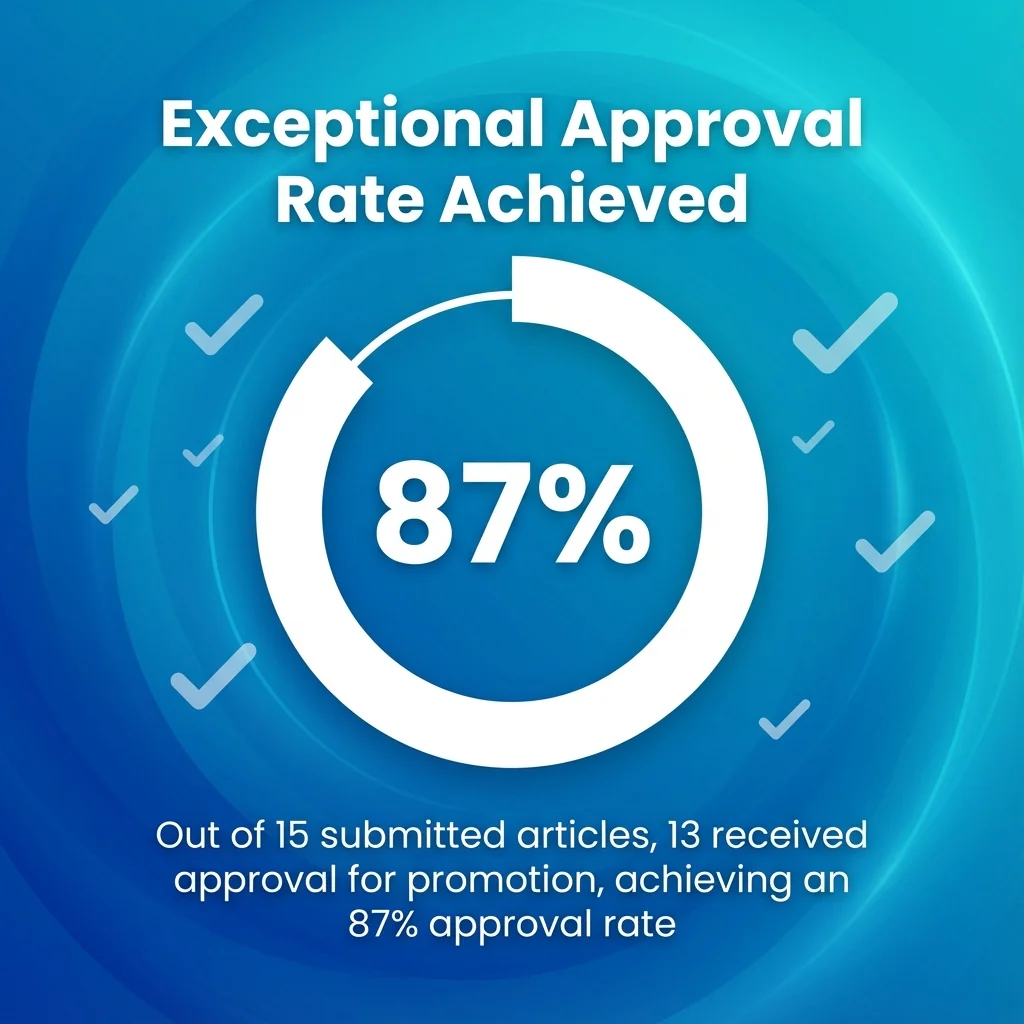
Two pieces were rejected with feedback. One article was deemed too promotional because it featured excessive product mentions. The second rejection occurred because the content didn’t provide sufficient depth for the selected category.
This 87% approval rate aligned with expectations. The rejections actually validated the manual review process rather than suggesting arbitrary gatekeeping.
90-Day Results: Social Shares and Distribution Metrics
The agency tracked performance across the full 90-day promotion period for all approved content. Data collection included shares by platform, timing distribution, and user account quality.
Total social shares across all 13 promoted articles reached 847 over the three-month period. This translated to approximately 65 shares per article on average.

Distribution occurred gradually rather than in immediate bursts. Most articles received 5-10 shares in the first week, then continued accumulating shares throughout the remaining promotion timeline.
Platform Distribution Breakdown
Shares occurred across three primary platforms: Twitter, Facebook, and LinkedIn. Distribution varied by platform based on Quuu’s user base composition and category relevance.
| Platform | Total Shares | Percentage | Average Per Article |
|---|---|---|---|
| 456 | 54% | 35 | |
| 271 | 32% | 21 | |
| 120 | 14% | 9 |
Twitter dominated share volume, which aligned with the platform’s content curation culture. Facebook shares concentrated on longer-form guides and resource articles. LinkedIn shares focused on B2B-oriented and professional development content.
Real Users vs Bot Networks: Account Verification
The agency manually reviewed a sample of 100 sharing accounts to verify authenticity. They examined profile completeness, follower counts, posting history, and engagement patterns.
Results showed 92% of sampled accounts appeared authentic with genuine followers and regular posting activity. Profile characteristics included complete bios, profile photos, follower counts ranging from 200 to 15,000, and consistent posting histories.
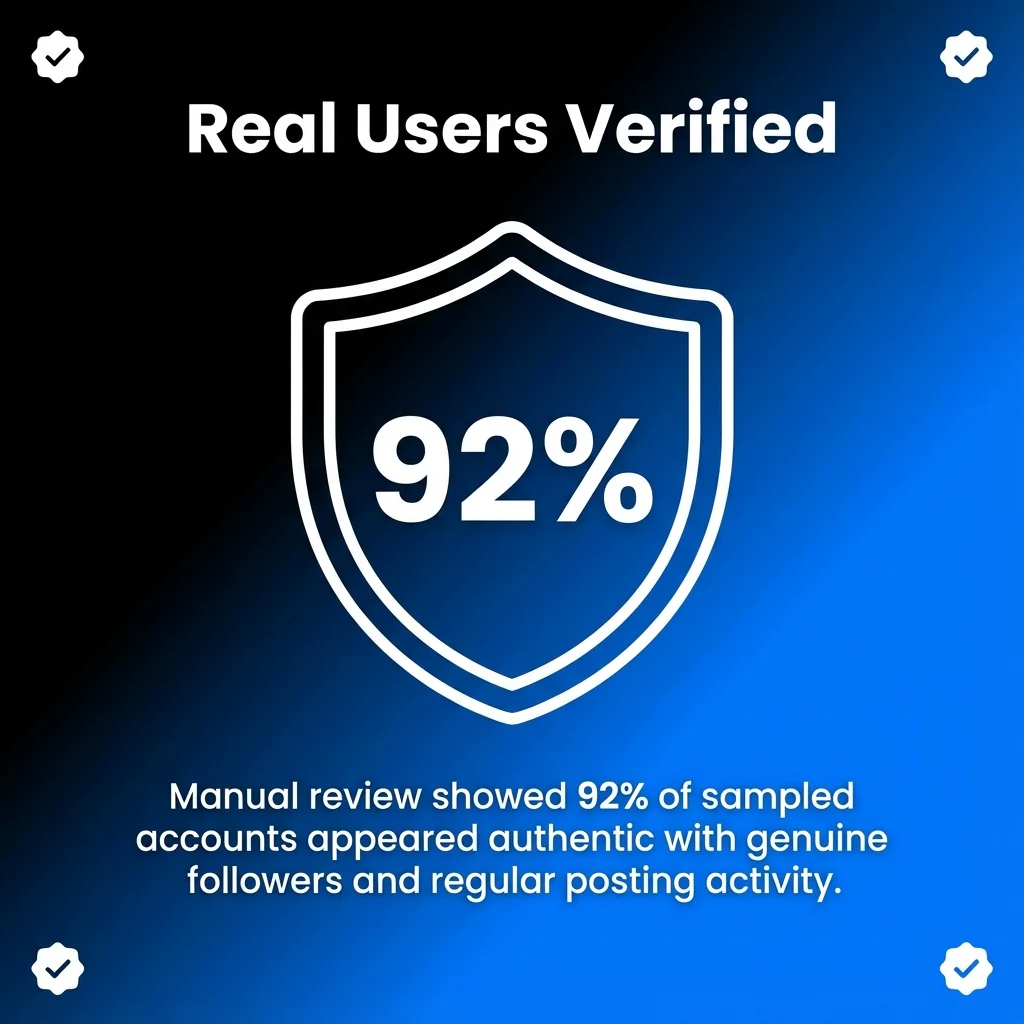
This verification confirmed Quuu Promote delivered on its promise of real user shares. The quality surpassed previous experiences with engagement-boosting services that relied on suspicious or inactive accounts.
Temporal Distribution Patterns
Shares distributed relatively evenly across the 90-day promotion timeline rather than clustering at the beginning. Week one generated approximately 18% of total shares. The remaining 82% occurred gradually over weeks 2-13.
This extended distribution pattern differentiated Quuu Promote from one-time social posting. Content continued receiving visibility long after initial publication.
Click-Through Performance and Traffic Analysis
Social shares represent one metric, but clicks to the actual content determine promotional effectiveness. The agency tracked click-through performance through Google Analytics UTM parameters and referral traffic analysis.
Total clicks from Quuu Promote shares reached 412 over the 90-day period. This converted to approximately 32 clicks per promoted article on average.
The click-to-share ratio averaged 48.7%. Not every share generated a click, which reflects typical social media behaviour where users share content without always reading the full article.
Traffic Impact and Referral Sources
Google Analytics confirmed 412 sessions attributed to Quuu Promote traffic through UTM tracking and referral source identification. These sessions represented new visitors who wouldn’t have discovered the content through existing channels.
Traffic quality metrics showed:
- Average session duration: 2 minutes 34 seconds
- Pages per session: 1.8
- Bounce rate: 64%
These engagement metrics fell slightly below the agency’s organic traffic benchmarks but significantly exceeded paid social advertising performance. Users arriving from Quuu Promote shares demonstrated genuine interest rather than accidental clicks.
Content Performance by Type
Performance varied by content format and topic. How-to guides generated the highest click-through rates whilst comprehensive resource lists accumulated the most total shares.
| Content Type | Articles | Avg Shares | Avg Clicks | Click Rate |
|---|---|---|---|---|
| How-To Guides | 5 | 58 | 38 | 65% |
| Resource Lists | 4 | 78 | 32 | 41% |
| Industry Analysis | 4 | 61 | 27 | 44% |
How-to content demonstrated strongest overall performance. Users both shared these articles more frequently and clicked through at higher rates compared to other formats.
Conversion and Lead Generation Impact
The agency tracked downstream conversions from Quuu Promote traffic including newsletter signups, contact form submissions, and content downloads.
Conversion rates from Quuu traffic reached 2.1%. This meant 9 meaningful conversions occurred from the 412 sessions generated through Quuu Promote shares.
Whilst modest in absolute numbers, this conversion performance exceeded expectations for cold traffic from social amplification. Users discovering content through authentic shares demonstrated higher intent than typical social advertising audiences.
Financial Analysis: Cost Per Share and Cost Per Click
The agency invested £300 total across their 90-day Quuu Promote test. This budget covered promotion credits for 13 approved articles.
Cost per article averaged £23.08. Promotion duration for each piece was set to 90 days, the maximum timeline offered by the platform.
Cost Per Share Calculation
With 847 total shares generated from the £300 investment, cost per share averaged £0.35.
This metric provided limited actionable insight by itself. Shares create visibility but don’t guarantee traffic or conversions. The cost per click calculation offered more meaningful comparison data.
Cost Per Click Comparison
Total clicks reached 412 from the £300 investment. This calculated to £0.73 cost per click.
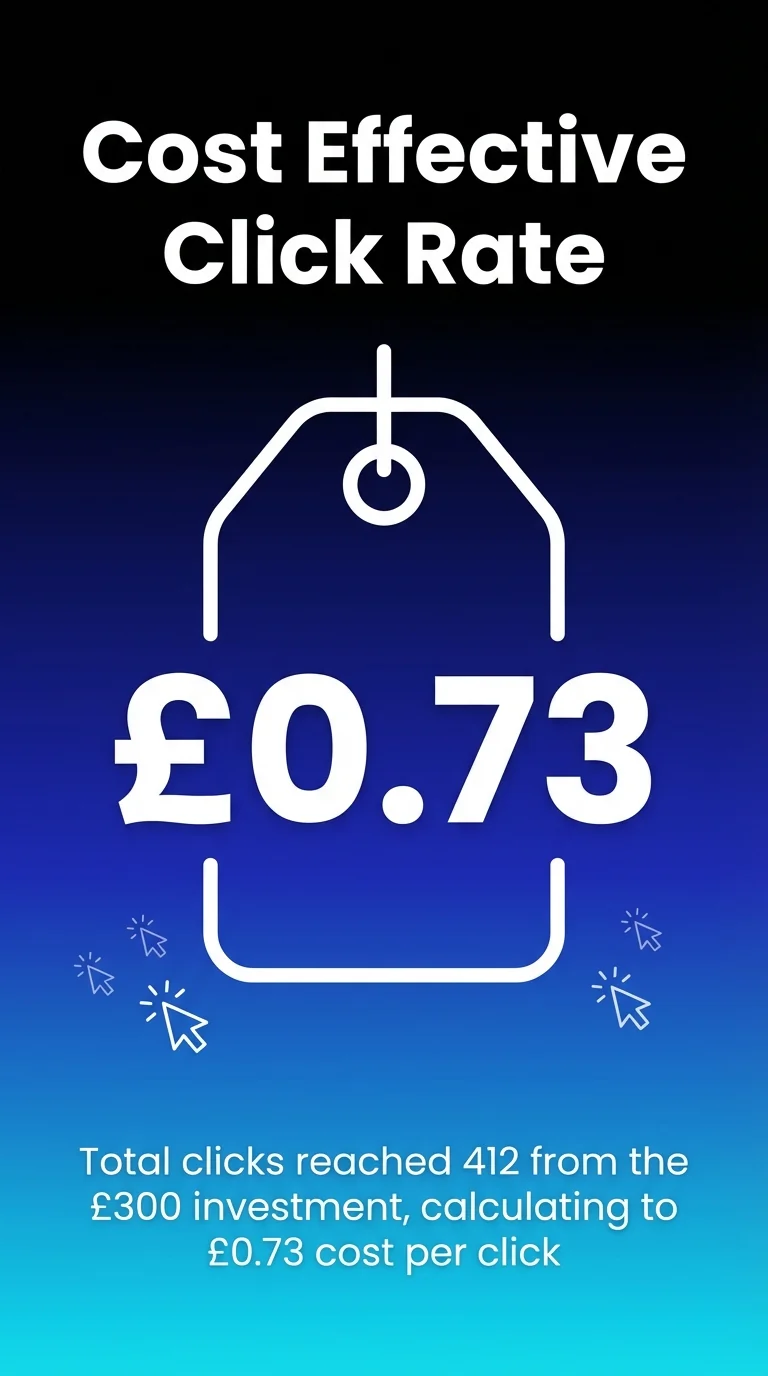
For context, the agency’s Facebook Ads typically delivered clicks between £0.50 and £2.50 depending on targeting, creative, and campaign objectives.
| Channel | Avg Cost Per Click | Management Time | Traffic Quality |
|---|---|---|---|
| Quuu Promote | £0.73 | Low (setup only) | Moderate |
| Facebook Ads | £1.20 | High (ongoing) | Variable |
| Manual Sharing | £0.00 | Very High | Low reach |
Quuu Promote’s £0.73 cost per click positioned competitively against Facebook Ads whilst requiring significantly less ongoing management. The time savings represented substantial value beyond the raw click costs.
Return on Investment Assessment
The agency calculated ROI based on lead generation value. Their average client acquisition value exceeded £2,000, and the 9 conversions from Quuu traffic represented qualified leads.
Even assuming a conservative 10% conversion rate from lead to client, the promotional investment generated positive ROI. One client acquisition would recoup the £300 investment multiple times over.
More importantly, the extended promotion timeline meant content continued generating visibility without additional spending. Articles promoted through Quuu Promote accumulated value over 90 days rather than depleting budget through daily ad spend.
Comparative Analysis: Quuu Promote vs Alternative Channels
The agency evaluated Quuu Promote against their existing promotional channels to determine optimal budget allocation moving forward.
Each channel demonstrated distinct advantages and limitations. The goal wasn’t identifying a single “best” channel but understanding how different promotional methods complemented each other.
Facebook Ads: Precision vs Cost
Facebook Ads offered superior targeting capabilities. The agency could reach specific demographics, job titles, interests, and behaviours with precision unavailable through content sharing platforms.
However, this precision came at higher cost per click and required ongoing management. Campaign performance demanded regular monitoring, creative testing, and budget adjustments.
Quuu Promote sacrificed targeting precision for lower cost and reduced management overhead. You couldn’t target specific demographics, but you reached users genuinely interested in your content category.
Organic Social Posting: Reach Limitations
The agency’s manual social posting reached existing followers but struggled to expand beyond established audiences. Organic reach on platforms like Facebook had declined significantly, with posts typically reaching 2-5% of followers without paid promotion.
Quuu Promote extended reach beyond existing audiences by tapping into other users’ networks. Each share exposed content to new potential readers who wouldn’t encounter it through the agency’s organic posting.
This audience expansion represented Quuu Promote’s primary advantage over manual posting. The platform systematically introduced content to relevant users outside existing follower bases.
Content Syndication Platforms
The agency had previously tested content syndication through platforms like Medium and LinkedIn Articles. These channels generated traffic but often cannibalised search rankings by creating duplicate content competing with the original publication.
Quuu Promote avoided this duplication issue by driving traffic to the original content location. Shares linked directly to the agency’s website rather than republished copies on third-party platforms.
This preservation of link equity and traffic attribution made Quuu Promote more compatible with SEO strategies than traditional syndication approaches.
Implementation Challenges and Limitations
The 90-day test revealed several limitations and challenges agencies should consider before investing in Quuu Promote.
Understanding these constraints helps set realistic expectations and optimise implementation strategy.
Category Competition and Approval Rates
Approval rates varied by category competitiveness. The agency’s 87% approval rate reflected strong content quality, but other categories might prove more challenging.
Popular categories like “Digital Marketing” receive more submissions, potentially increasing editorial standards. Niche categories might offer easier approval but reach smaller user networks.
This dynamic requires strategic category selection. Matching content to less competitive categories might improve approval odds but could sacrifice share volume from smaller user bases.
Limited Targeting and Audience Control
Quuu Promote provides category-level targeting but no demographic or geographic filtering. You can’t specify that content should reach marketing managers in technology companies aged 30-45.
This limitation reduces relevance for highly targeted campaigns or region-specific content. Local businesses or niche B2B companies might find the broad distribution less valuable than precision-targeted advertising.
The platform works best for content with broad appeal within its category rather than hyper-targeted pieces designed for specific audience segments.
Performance Variability by Content Type
Results showed significant performance differences between content types. How-to guides consistently outperformed other formats whilst some industry analysis pieces underperformed expectations.
This variability makes outcome prediction difficult. You can’t guarantee specific share volumes or click-through rates when submitting content for promotion.
Agencies should test multiple content types and track performance patterns over time. Building this data helps identify which content formats justify promotion investment for their specific situation.
Measurement and Attribution Complexity
Tracking Quuu Promote’s impact required UTM parameter implementation and careful analytics monitoring. Without proper tracking setup, distinguishing Quuu traffic from other social sources proved challenging.
The agency implemented consistent UTM tagging across all promoted content. This added setup time but enabled accurate attribution and performance measurement.
Agencies without robust analytics processes might struggle to demonstrate value or calculate accurate ROI from Quuu Promote campaigns.
Lessons Learnt and Strategic Recommendations
The 90-day case study provided valuable insights that informed the agency’s ongoing promotional strategy.
These lessons apply to other small businesses and agencies evaluating content amplification platforms.
Content Quality Determines Outcomes
The strongest correlation with performance was original content quality. Well-researched, comprehensive articles consistently generated more shares and higher click-through rates than shorter or promotional pieces.
This finding reinforces the importance of content investment before promotional spending. Amplifying mediocre content wastes promotional budget regardless of distribution channel.
The agency now prioritises content quality improvements over increased promotional spending. Better content generates superior results across all channels including Quuu Promote.
Optimal Budget Allocation Strategy
Quuu Promote works best as a complement to other promotional channels rather than a replacement. The agency now allocates approximately 15-20% of promotional budgets to Quuu Promote whilst maintaining Facebook Ads and other channels.
This diversified approach balances Quuu Promote’s cost effectiveness and time efficiency with Facebook Ads’ precision targeting capabilities. Each channel serves different strategic purposes within the overall promotional mix.
Starting with a small test budget makes sense. The agency’s £300 initial investment provided sufficient data to evaluate effectiveness before scaling commitment.
Promotion Timeline Considerations
The extended 90-day promotion timeline created compounding value. Content continued accumulating shares and traffic long after initial publication, contrasting with the immediate depletion of paid advertising budgets.
This timeline particularly benefits evergreen content that remains relevant beyond initial publication. Promotional investment delivers value over months rather than days.
For time-sensitive content like news commentary or event announcements, shorter promotion periods might prove more appropriate. The platform offers 30-day promotion options for content with limited relevance windows.
Success Metrics and Expectations
The agency adjusted their success metrics after completing the case study. Initial expectations focused heavily on immediate traffic volume, but the true value emerged through extended visibility and audience expansion.
Realistic expectations for Quuu Promote should account for gradual accumulation rather than immediate traffic spikes. The platform builds momentum over weeks rather than generating instant results.
Tracking should emphasise cumulative metrics over daily performance. Total shares, clicks, and conversions across the full promotion period provide more meaningful assessment than week-one results.
How Quuu Works: Platform Features and Mechanics
Understanding Quuu’s broader ecosystem helps contextualise Quuu Promote’s role within the platform’s content curation infrastructure.
The platform operates as a two-sided marketplace connecting content creators with social media users seeking quality content to share.
According to the Content Marketing Institute, users first select interest categories, then approved content from Quuu Promote is matched to those categories. Approved content is either auto-posted to connected social profiles or sent as daily suggestions for manual sharing.
The User Experience Side
Quuu users connect their social media accounts and select content categories matching their interests and audience demographics. The platform then suggests relevant content pieces for them to share.
Users can choose between automatic sharing or manual approval workflows. Automatic mode posts suggested content directly to connected profiles on a schedule. Manual mode presents suggestions for user review before sharing.
This user-side functionality creates the distribution network that Quuu Promote taps into. Quality content suggestions keep users engaged whilst providing promotion opportunities for content creators.
Content Suggestion Algorithm
Quuu’s algorithm matches promoted content to users based on their selected categories and sharing history. The system considers factors like content freshness, category relevance, and historical share performance.
More recently approved content receives priority in suggestion queues. This ensures users see fresh material rather than outdated articles.
Performance data feeds back into the algorithm. Content generating high engagement rates receives extended visibility whilst underperforming pieces phase out of suggestion rotations faster.
Quality Control and Community Standards
Beyond the initial editorial review, Quuu maintains quality through user feedback mechanisms. Users can report inappropriate content or low-quality suggestions.
Consistent quality complaints trigger additional editorial review. Content creators with repeated violations face account restrictions or removal from the platform.
This community-driven quality control supplements the manual review process and maintains network value for both users and content creators.
Quick Answers to Common Questions
What results can small businesses expect from Quuu Promote?
Based on this case study, small businesses should expect 50-80 shares per article over 90 days, with approximately 30-40 clicks per promoted piece. Performance varies significantly by content quality and category selection.
How does the cost compare to Facebook advertising?
This agency achieved £0.73 cost per click through Quuu Promote compared to £0.50-£2.50 through Facebook Ads. Quuu Promote requires minimal ongoing management whilst Facebook Ads demand regular optimisation and monitoring.
Is Quuu Promote traffic from real users or bots?
Manual verification of 100 sharing accounts showed 92% appeared authentic with genuine followers and regular posting activity. The platform’s manual review process and curated user network delivers substantially higher quality than automated bot networks.
Strategic Implications for Content Marketing
This case study demonstrates that content amplification platforms can deliver measurable value for small businesses operating on limited budgets.
The key lies in realistic expectations and strategic integration. Quuu Promote won’t replace comprehensive promotional strategies, but it provides cost-effective reach expansion with minimal time investment.
Success requires quality content as the foundation. Promotional spending amplifies existing value rather than compensating for weak content. The agency’s best-performing pieces through Quuu Promote were also their strongest organic performers.
The 90-day promotion timeline creates compounding value particularly suited to evergreen content. Articles continue generating visibility long after initial publication, contrasting with the immediate depletion characteristic of paid advertising budgets.
For agencies and small businesses evaluating content promotion options, Quuu Promote represents a viable middle ground between manual social posting and precision-targeted advertising. The platform extends reach beyond existing audiences whilst maintaining cost effectiveness and requiring minimal ongoing management.
The £300 investment generated 847 shares, 412 clicks, and 9 qualified leads over three months. More importantly, it freed approximately 12 hours of staff time previously spent on manual social promotion. This combination of direct results and operational efficiency makes Quuu Promote worth consideration for similar small business contexts.
Content marketing success requires consistent visibility over time. Quuu Promote provides one mechanism for achieving that visibility without proportionally increasing time investment or budget allocation. The platform won’t revolutionise your marketing strategy, but it can meaningfully contribute to a diversified promotional approach.