Marketing teams waste hours manually posting the same content to different platforms. Cross-channel marketing automation solves this by connecting your email, SMS, social media, and web channels into unified workflows that respond to customer behaviour in real time.
This approach differs from simply scheduling posts across channels. True cross-channel automation uses customer data to trigger personalised messages based on actions people take.
When someone abandons their cart, automated workflows can send an email within the hour, follow up with an SMS 24 hours later, and display targeted social ads. Each touchpoint builds on the previous one, creating a seamless customer experience that feels natural rather than intrusive.
This guide covers how cross-channel marketing automation works, the key differences between similar approaches, and practical strategies for building workflows that drive results.
What Cross-Channel Marketing Automation Actually Means
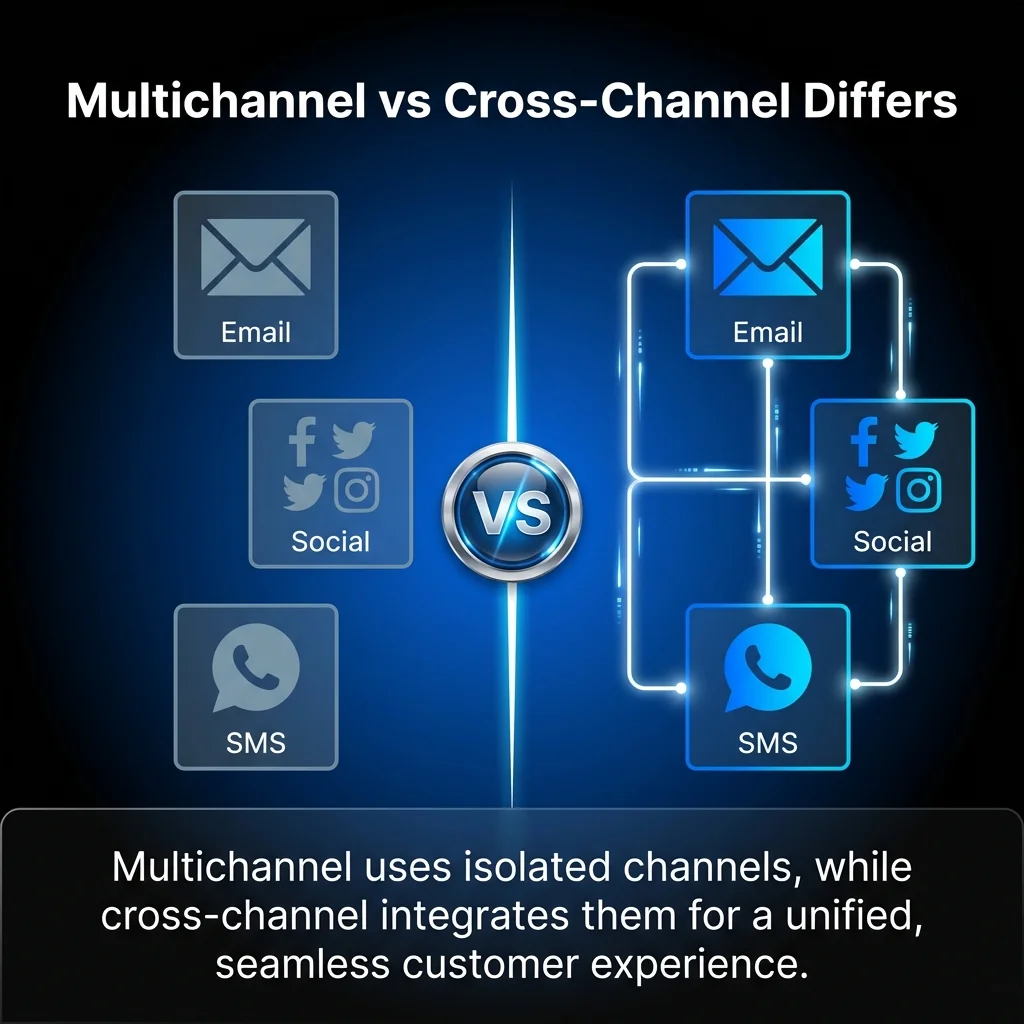
Cross-channel marketing automation connects multiple marketing channels into coordinated workflows. Unlike multichannel marketing, which operates each channel independently, cross-channel strategies share customer data across touchpoints to create unified campaigns.
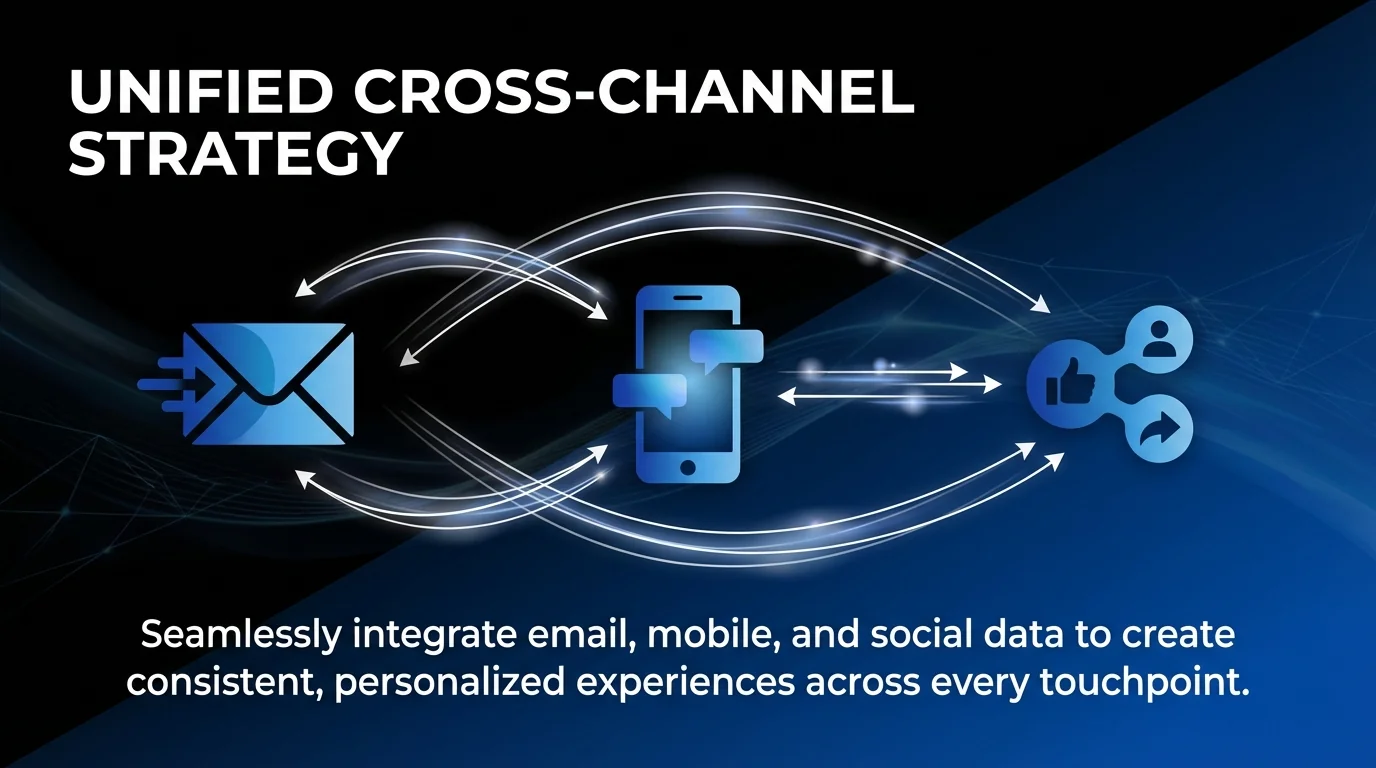
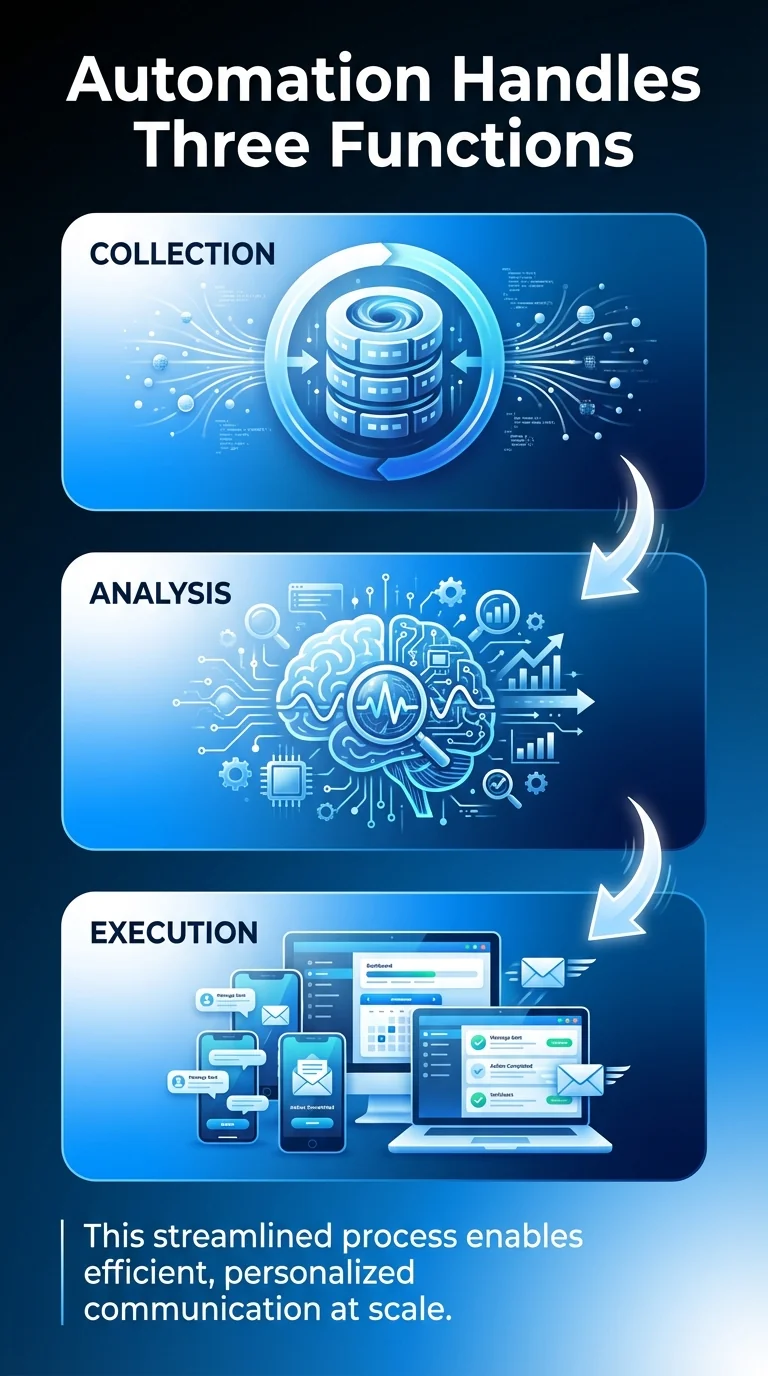
The automation aspect handles three critical functions. First, it collects customer data from every interaction point. Second, it analyses that data to determine the next best action. Third, it executes personalised messages automatically based on predetermined triggers.
Customer behaviour drives these workflows. When someone clicks a product link in your email, the system notes this interest. It might then suppress irrelevant social ads whilst prioritising content about that specific product category across all channels.
Consistent messaging across platforms strengthens brand recognition. Cross-channel automation ensures your tone, offers, and visual identity remain cohesive whether customers encounter you via email, SMS, or social media.
How Cross-Channel Differs from Multichannel and Omnichannel
These three approaches sound similar but work quite differently. Understanding the distinctions helps you choose the right strategy for your business goals.
Multichannel Marketing: Separate Channels
Multichannel marketing means having a presence on multiple platforms. Your business might send emails, post on social media, and run SMS campaigns.
Each channel operates independently. Your email team doesn’t coordinate with your social media manager. Customer data stays siloed within each platform.
This creates disconnected experiences. A customer might receive an email promoting winter coats whilst seeing summer dress ads on social media.
Cross-Channel Marketing: Connected Workflows
Cross-channel marketing integrates these separate channels. Customer data flows between platforms, enabling coordinated messaging.
When someone opens your email about running shoes, your cross-channel system updates their profile. Your social ads then reflect this interest, showing relevant athletic content instead of unrelated products.
According to research on marketing integration, cross-channel marketing drives better return on investment by optimising marketing spend across channels.
Omnichannel Marketing: Seamless Integration
Omnichannel marketing takes cross-channel further. It creates completely seamless transitions between channels, allowing customers to switch platforms mid-journey without disruption.
A customer might browse products on mobile, add items to cart on desktop, and complete purchase in-store. Their cart, preferences, and history follow them across every touchpoint.
Most businesses start with cross-channel automation before attempting full omnichannel integration. The data infrastructure required for true omnichannel experiences demands significant investment.
| Approach | Data Integration | Channel Coordination | Best For |
|---|---|---|---|
| Multichannel | Siloed by channel | Independent campaigns | Basic presence building |
| Cross-Channel | Shared across channels | Coordinated workflows | Automated engagement |
| Omnichannel | Unified in real-time | Seamless transitions | Premium experiences |
The Mechanics of Cross-Channel Marketing Automation
Understanding how cross-channel automation works helps you build more effective workflows. The process follows a consistent pattern regardless of which channels you connect.
Data Collection and Unification
Everything starts with customer data. Your automation platform collects information from every channel where customers interact with your brand.
Email systems track opens, clicks, and conversions. Social media platforms record engagement, shares, and comments. Your website monitors page views, time on site, and purchase behaviour.
This data flows into a central database. Customer profiles merge information from all sources, creating comprehensive views of individual preferences and behaviours.
Effective cross-platform tracking requires consistent user identifiers. Email addresses, phone numbers, or customer IDs link activities across channels.
Segmentation and Targeting
Unified customer data enables sophisticated segmentation. You can group audiences based on combined behaviours across multiple channels.
Someone who opened three emails about gardening tools, engaged with plant care content on social media, and browsed your gardening category clearly shows interest. Your segments should reflect these cross-channel signals.
Dynamic segmentation updates automatically. When customer behaviour changes, they move between segments without manual intervention.
Trigger-Based Workflow Execution
Triggers activate automated workflows. These can be simple single-channel events or complex cross-channel patterns.
Simple triggers respond to one action. Someone subscribing to your email list triggers a welcome series.
Complex triggers combine multiple signals. A customer viewing a product three times, adding it to cart, then abandoning without purchase triggers a multi-channel recovery sequence.
Research shows that cross-channel marketing meets customers where they are with relevant messaging, reducing cart abandonment.
Personalisation Across Touchpoints
Each message in your automated workflows should reflect what you know about the recipient. Personalisation extends beyond using someone’s first name.
Product recommendations should align with browsing history across all channels. Timing should match individual engagement patterns. Someone who typically opens emails at 7 PM shouldn’t receive time-sensitive offers at 9 AM.
Content personalisation adapts messaging to customer journey stage. New subscribers receive educational content. Repeat customers see loyalty rewards and advanced features.
Core Benefits of Automated Cross-Channel Workflows
Cross-channel marketing automation delivers measurable improvements across multiple business metrics. These benefits compound as your systems mature and collect more customer data.
Improved Customer Experience
Coordinated messaging creates smoother customer journeys. People receive relevant information through their preferred channels at appropriate times.
This reduces friction. Customers don’t see contradictory offers or irrelevant content. Each interaction builds on previous touchpoints naturally.
Consistent brand experiences build trust. When your messaging aligns across email, social media, and SMS, customers perceive your brand as reliable and professional.
Increased Efficiency and Scale
Automation handles repetitive tasks that previously required manual effort. Your team sets up workflows once, then the system executes them automatically for thousands of customers.
This scalability proves essential as your audience grows. Ten customers require minimal coordination. Ten thousand customers make manual channel management impossible.
Marketing teams redirect time saved from manual tasks towards strategy and optimisation. Rather than scheduling individual posts, they analyse performance data and refine targeting.
Better Data Utilisation
Customer data becomes more valuable when unified across channels. Individual channel data shows fragments of customer behaviour. Integrated data reveals complete patterns.
Someone might ignore your emails but engage heavily on social media. Cross-channel data helps you adjust channel mix for different segments.
These insights improve decision-making. You can identify which channel combinations drive conversions for specific customer types.
Higher Conversion Rates and ROI
Personalised, coordinated messaging outperforms generic broadcasts. When customers receive relevant offers through their preferred channels, response rates increase.
Cross-channel automation enables precise timing. Recovery emails for abandoned carts arrive when customers are most likely to complete purchases.
Marketing automation platforms show that marketing automation delivers a unified brand message across all customer touchpoints, improving overall campaign effectiveness.
Essential Channels for Cross-Channel Automation
Effective cross-channel strategies typically incorporate four to six primary channels. Starting with these core platforms provides the foundation for more complex workflows.
Email Marketing
Email remains central to most automation strategies. It allows detailed personalisation, supports rich content formats, and provides clear performance metrics.
Email marketing integrates easily with other channels. Welcome emails can include social media links. Purchase confirmations can request SMS opt-ins.
Behavioural email triggers based on cross-channel data perform particularly well. Someone browsing products on your website then receiving a relevant email sees a connected experience.
SMS and Text Messaging
SMS delivers immediate impact with high open rates. Messages typically get read within minutes of arrival.
Use SMS for time-sensitive communications. Flash sales, appointment reminders, and delivery updates work well via text.
SMS integration with email creates powerful sequences. Send detailed product information via email, then follow with a brief SMS reminder before an offer expires.
Social Media Marketing
Social media platforms offer unique engagement opportunities. Content spreads through shares and comments, extending reach beyond your direct audience.
Social media data enriches customer profiles. Engagement patterns reveal interests that might not surface through email or purchase behaviour.
Automated social media posting maintains consistent presence whilst freeing time for real-time community engagement. Specialised social media automation tools help manage multiple platforms efficiently.
Website and Web Push Notifications
Your website serves as the hub for cross-channel experiences. Behaviour tracking on your site informs messaging across other channels.
Web push notifications reach visitors who haven’t provided email addresses. They work well for time-sensitive content like breaking news or flash sales.
Personalised website content based on email engagement or social media activity creates cohesive experiences. Someone who clicked a specific product link in your email should see related items prominently displayed when visiting your site.
Paid Advertising Channels
Paid ads on search engines and social platforms extend your reach to new audiences whilst retargeting existing customers.
Cross-channel automation coordinates paid advertising with owned channels. Someone who opened your email but didn’t click might see a related social ad reinforcing your message.
Suppression lists prevent wasted ad spend. Customers who already purchased don’t need to see acquisition campaigns.
Key Features of Cross-Channel Automation Platforms
Not all marketing automation tools support true cross-channel workflows. Look for these essential capabilities when evaluating platforms.
Unified Customer Data Platform
The platform should consolidate data from all your marketing channels into single customer profiles. This eliminates data silos that prevent effective coordination.
Customer profiles must update in real-time or near-real-time. Delayed data synchronisation creates disconnected experiences.
Data integration should work bidirectionally. Information flows from channels to your central database and back to channels for personalisation.
Visual Workflow Builder
Complex automation requires intuitive creation tools. Visual workflow builders let you map customer journeys without coding.
Drag-and-drop interfaces speed workflow development. Your team can test different sequences and optimise based on performance data.
Branching logic enables personalised paths. Workflows should split based on customer actions, allowing different sequences for different behaviours.
Advanced Segmentation Capabilities
Effective personalisation requires sophisticated audience segmentation. Platforms should support unlimited custom segments based on any combination of data points.
Behavioural segmentation uses actions across channels to define groups. Someone who engages with content about specific topics across email and social media clearly signals interest.
Predictive segmentation identifies customers likely to take specific actions. Machine learning models can flag customers at risk of churning or ready to upgrade.
Multi-Channel Campaign Management
Create and launch campaigns across multiple channels from a single interface. This ensures consistent messaging and timing across touchpoints.
Campaign calendars should display activities across all channels. This prevents conflicting messages and helps identify gaps in your communication strategy.
A/B testing capabilities should work across channels. Test not just individual messages but entire cross-channel sequences.
Analytics and Attribution Tracking
Understanding which channels drive results requires robust analytics. Platforms should track the entire customer journey from first touch to conversion.
Multi-touch attribution models show how different channels contribute to conversions. Email might introduce a product, social media might build interest, and SMS might close the sale.
Custom reporting lets you analyse performance from different angles. Compare channel effectiveness, segment performance, and campaign ROI.
Popular Cross-Channel Marketing Automation Tools
Several platforms offer comprehensive cross-channel automation capabilities. Each suits different business sizes and needs.
Enterprise-Level Platforms
Salesforce Marketing Cloud provides extensive cross-channel capabilities for large organisations. It integrates email, mobile, social media, advertising, and web personalisation into unified customer journeys.
Adobe Campaign combines cross-channel orchestration with powerful analytics. Its strength lies in handling complex, data-intensive marketing operations.
These platforms require significant investment in both licensing and implementation. They suit businesses with dedicated marketing operations teams.
Mid-Market Solutions
HubSpot Marketing Hub offers cross-channel automation with strong CRM integration. It balances capability with usability, making it accessible for growing businesses.
Marketo Engage specialises in B2B marketing automation with sophisticated lead scoring and account-based marketing features.
ActiveCampaign combines email marketing, marketing automation, and CRM in an affordable package. It works well for small to medium businesses building their first cross-channel workflows.
Specialised Tools
Some businesses build cross-channel systems by integrating specialised tools. Mailchimp handles email and basic automation. Buffer manages social media scheduling.
Integration platforms like Zapier connect these tools, creating workflows across separate services.
This approach offers flexibility but requires more technical setup. You’ll need to maintain multiple subscriptions and manage data synchronisation between platforms.
For comprehensive reviews of automation options, explore detailed comparisons of marketing automation software.
Building Effective Cross-Channel Automation Strategies
Successful cross-channel automation requires careful planning. Follow this structured approach to build workflows that deliver results.
Start With Customer Journey Mapping
Document how customers currently interact with your brand. Identify all touchpoints from initial awareness through purchase and beyond.
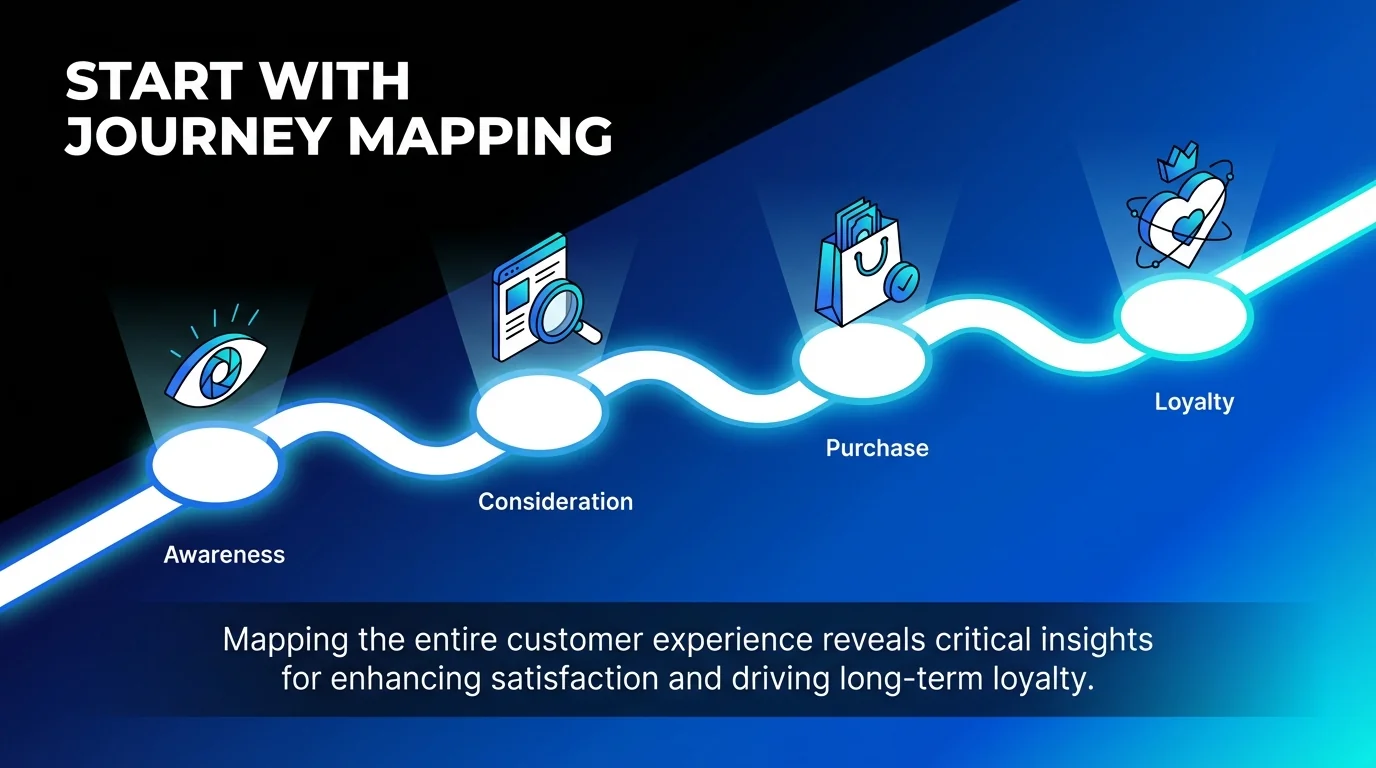
Look for friction points where customers drop off or experience confusion. These represent opportunities for automation to improve experiences.
Map ideal journeys for different customer types. First-time buyers need different workflows than repeat customers. B2B buyers follow longer decision processes than B2C consumers.
Define Clear Objectives
Each workflow should serve specific business goals. Increasing email engagement differs from reducing cart abandonment or improving customer retention.
Set measurable targets. Rather than “improve engagement,” aim for “increase email click-through rates by 15% over three months.”
Prioritise workflows based on potential impact. Start with automation that addresses your biggest challenges or opportunities.
Implement Progressive Profiling
Don’t demand all customer information upfront. Collect data gradually through multiple interactions across channels.
Initial email signup might request only an email address. Subsequent interactions can gather preferences, interests, and demographics.
Each channel contributes to complete customer profiles. Social media reveals interests. Website behaviour shows product preferences. Email responses indicate content preferences.
Create Channel-Appropriate Content
Each channel has unique strengths and constraints. Email supports detailed explanations. SMS requires brevity. Social media emphasises visual content.
Adapt your message format whilst maintaining consistent core messaging. The same promotion should feel natural whether delivered via email, SMS, or social media.
Content calendars should coordinate timing across channels. Avoid message fatigue by spacing communications appropriately.
Test and Optimise Continuously
Launch workflows as experiments rather than permanent fixtures. Monitor performance and iterate based on results.
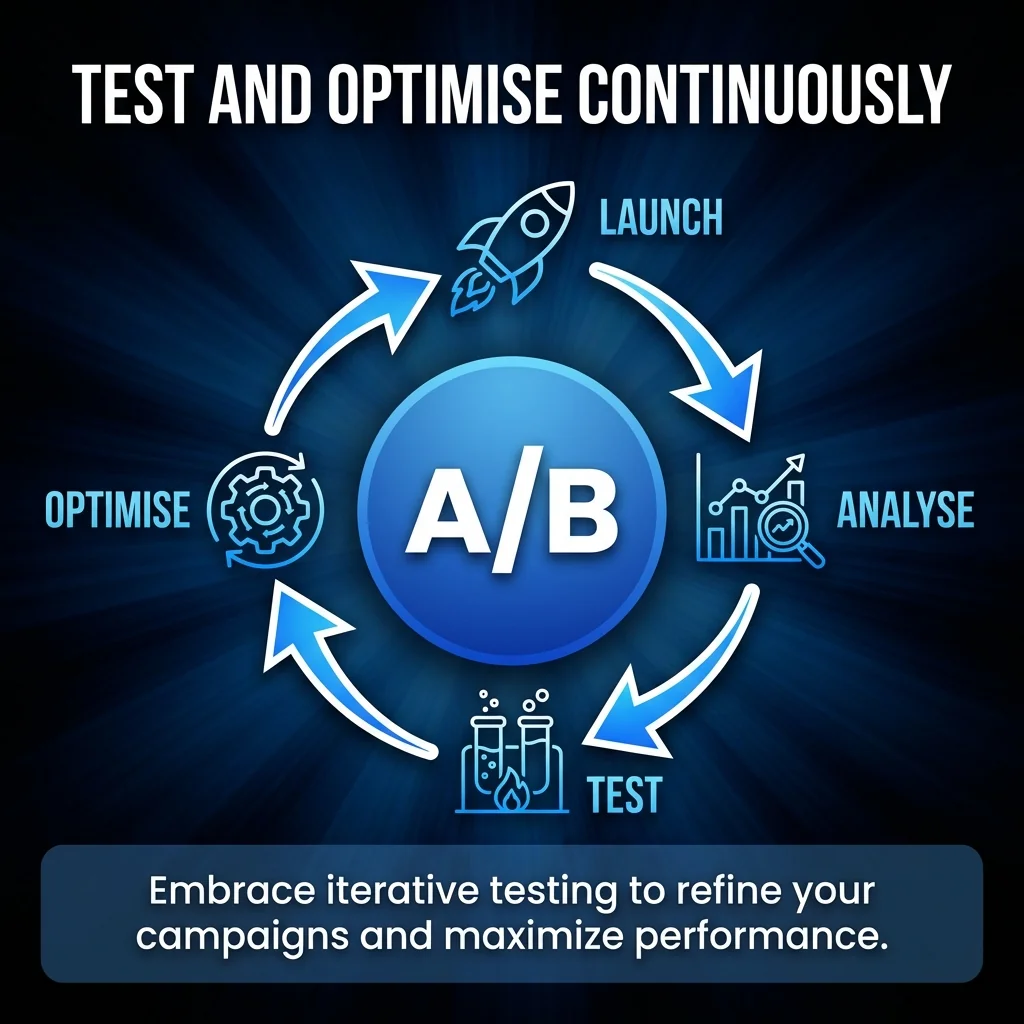
A/B test individual components. Try different subject lines, send times, channel sequences, and message content.
Analyse drop-off points in your workflows. High abandonment at specific steps indicates problems needing attention.
Many teams benefit from systematically automating their digital marketing content across channels.
Common Implementation Challenges and Solutions
Cross-channel automation presents obstacles that can derail implementation. Understanding these challenges helps you prepare appropriate solutions.
Data Integration Complexity
Different marketing platforms store data in incompatible formats. Connecting these systems requires technical expertise.
Solution: Start with platforms offering native integrations. Many marketing automation tools connect directly to popular email, social media, and CRM systems.
Consider customer data platforms that specialise in unifying disparate data sources. These tools handle the technical complexity of data integration.
Resource Constraints
Building sophisticated workflows requires time, expertise, and budget that many teams lack.
Solution: Begin with simple workflows addressing high-impact use cases. A basic abandoned cart sequence delivers value whilst requiring minimal complexity.
Expand gradually as you gain experience and demonstrate ROI. Success with initial workflows justifies investment in more advanced automation.
Attribution Difficulties
Determining which channels drive conversions becomes complex when customers interact across multiple touchpoints.
Solution: Implement multi-touch attribution models rather than relying on last-click attribution. These models credit all touchpoints that contributed to conversions.
Focus on incremental impact rather than absolute attribution. Compare performance of customers in automated workflows against control groups.
Message Fatigue
Customers can feel overwhelmed when receiving messages across multiple channels simultaneously.
Solution: Implement frequency caps limiting total messages per customer within specific timeframes.
Create channel preference centres allowing customers to choose how and when they hear from you.
Monitor engagement metrics for signs of fatigue. Declining open rates or increasing unsubscribes indicate excessive messaging.
Measuring Cross-Channel Automation Success
Effective measurement requires tracking metrics that reflect your specific objectives. These key performance indicators help assess workflow effectiveness.
Engagement Metrics
Track how customers interact with content across channels. Email open rates, click-through rates, social media engagement, and website session duration all indicate interest levels.
Compare engagement rates between automated and manual campaigns. Well-designed automation should outperform batch-and-blast approaches.
Monitor engagement consistency across channels. Customers who engage on multiple channels typically show stronger brand affinity.
Conversion Metrics
Measure actions that directly support business goals. These might include purchases, demo requests, content downloads, or subscription renewals.
Track conversion rates at each workflow stage. This identifies where customers progress smoothly and where they abandon journeys.
Calculate revenue per workflow to understand which automation sequences generate the most value.
Efficiency Gains
Automation should reduce manual effort whilst improving results. Track time saved through automated processes.
Measure cost per acquisition across automated and manual campaigns. Effective automation reduces customer acquisition costs.
Monitor your team’s capacity for strategic work versus operational tasks. Successful automation shifts effort towards high-value activities.
Customer Lifetime Value
Cross-channel automation should strengthen customer relationships over time. Track how automated engagement affects retention and repeat purchase behaviour.
Compare lifetime value between customers in automated workflows and those receiving minimal automated communication.
Monitor how quickly new customers reach profitability. Effective onboarding automation accelerates this timeline.
Real-World Cross-Channel Automation Examples
These practical scenarios demonstrate how businesses apply cross-channel automation to solve specific challenges.
E-Commerce Cart Recovery
A customer adds products to their cart but leaves without purchasing. The automation system waits one hour, then sends an email reminding them about abandoned items.
If the email goes unopened after 24 hours, the system sends an SMS with a direct cart link and limited-time discount.
Simultaneously, social media retargeting ads display the abandoned products. The customer sees consistent messaging across three channels, increasing likelihood of purchase completion.
Content Engagement Nurture
A prospect downloads a research report from your website. This triggers a welcome email series delivering related educational content over two weeks.
The system tracks which content pieces the prospect engages with. Someone repeatedly clicking links about specific topics receives targeted social media content on those subjects.
After two weeks of engagement, the automation shifts from education to evaluation. Emails now include product information and case studies. SMS invitations to webinars arrive for highly engaged prospects.
Customer Retention Programme
The system identifies customers approaching renewal dates. Two months before renewal, it initiates a cross-channel engagement sequence.
Email highlights new features and improvements since initial purchase. Social media showcases customer success stories. SMS delivers exclusive renewal incentives.
For customers showing low engagement, the workflow triggers retention interventions. Personal outreach from account managers combines with targeted incentives delivered across multiple channels.
Event Promotion Campaign
A business announces a major event three months in advance. Email delivers detailed information to the entire database.
Customers who open the email but don’t register see social media ads reinforcing the event message. Those who click through to the registration page but don’t complete receive SMS reminders.
After registration, attendees enter a pre-event engagement workflow. Email delivers logistics information. Social media creates community through event hashtags. SMS sends last-minute updates and venue details.
Learn more about efficiently managing multiple social media accounts as part of your cross-channel strategy.
Future Trends in Cross-Channel Automation
Cross-channel marketing automation continues advancing rapidly. These emerging trends will shape the next generation of automated workflows.
Artificial Intelligence and Machine Learning
AI increasingly powers automation decision-making. Machine learning algorithms determine optimal send times, channel selection, and content personalisation for individual customers.
Predictive analytics identify customers likely to churn, convert, or upgrade. Automation proactively adjusts workflows based on these predictions.
Natural language processing enables sophisticated content personalisation. Systems generate variations of messaging tailored to individual communication styles and preferences.
Voice and Conversational Channels
Voice assistants and messaging apps represent growing communication channels. Cross-channel automation will increasingly incorporate these conversational interfaces.
Chatbots connected to automation workflows provide immediate responses whilst collecting data that informs other channels.
Voice commerce requires new automation strategies. Customers might receive email confirmations for voice-initiated purchases, creating cross-channel experiences.
Privacy-First Personalisation
Increasing privacy regulations change how businesses collect and use customer data. Cross-channel automation must deliver personalised experiences whilst respecting privacy.
Zero-party data collection becomes more important. Customers explicitly share preferences rather than having behaviour tracked.
Contextual personalisation reduces reliance on persistent identifiers. Automation responds to immediate signals rather than extensive historical tracking.
Real-Time Experience Orchestration
Automation increasingly happens in real-time rather than batch processes. Systems instantly respond to customer actions across any channel.
Someone browsing products on mobile might immediately receive a personalised web push notification about related items.
Real-time coordination requires sophisticated infrastructure but delivers significantly improved customer experiences.
Discover how automated solutions help busy professionals maximise social media efficiency within broader cross-channel strategies.
Getting Started With Cross-Channel Automation
Begin your cross-channel automation journey with these practical first steps that deliver quick wins whilst building towards more sophisticated workflows.
Audit Your Current Channel Usage
Document all marketing channels you currently use. List the tools, processes, and team members responsible for each.
Identify existing data connections between channels. Where does customer information already flow between systems?
Spot obvious disconnects. Find places where customers experience inconsistent messaging or gaps in communication.
Select Your Initial Workflow
Choose one high-impact workflow for your first automation project. Cart abandonment, welcome series, and post-purchase follow-up sequences all deliver measurable results.
Start simple. Connect two or three channels rather than attempting comprehensive cross-channel orchestration immediately.
Ensure you have necessary data and tools. Your first workflow should leverage existing infrastructure rather than requiring extensive new investments.
Map the Customer Journey
Detail the exact steps customers take through your selected workflow. Include all touchpoints, decision points, and potential paths.
Define triggers that initiate the workflow. What specific customer action or condition starts the automated sequence?
Plan content for each touchpoint. What message does the customer receive at each step? Through which channel?
Build and Test
Create your workflow using your automation platform’s tools. Start with a simple version rather than trying to perfect it immediately.
Test thoroughly before launching to customers. Send yourself through the workflow multiple times. Check timing, content, and transitions between channels.
Launch to a small segment initially. Monitor performance closely and address any issues before expanding to your full audience.
Measure and Iterate
Track key metrics from day one. Compare workflow performance against your established objectives.
Gather qualitative feedback. Survey customers who complete your workflow to understand their experience.
Make incremental improvements based on data. Test variations and implement changes that improve performance.
Consider starting with automating your social media content calendar as an accessible entry point to cross-channel automation.
Moving Forward With Cross-Channel Workflows
Cross-channel marketing automation transforms disconnected marketing activities into coordinated customer experiences. By unifying customer data across email, SMS, social media, and web channels, automated workflows deliver personalised messages that respond to real-time behaviour.
The difference between basic multichannel presence and sophisticated cross-channel automation lies in integration. Connected systems share data, coordinate timing, and maintain consistent messaging across every touchpoint.
Start with one workflow addressing a specific business challenge. Build your technical capabilities and team expertise gradually. As your automation matures, expand to more complex workflows incorporating additional channels.
Success requires balancing automation with authentic connection. Technology handles repetitive tasks and enables personalisation at scale, but your strategy, messaging, and brand voice remain distinctly human.
The marketing teams seeing strongest results treat cross-channel automation as ongoing optimisation rather than one-time implementation. They continuously test, measure, and refine their workflows based on customer response and business outcomes.