
Building thought leadership doesn’t require creating every piece of content from scratch. Strategic content curation positions you as a trusted filter who helps your audience navigate information overload whilst demonstrating deep expertise in your field.
Genuine thought leadership content provides insight and value rather than simply advertising services. When you curate thoughtfully, you’re not just sharing links.
You’re demonstrating judgement, adding context, and building the credibility that transforms you from another voice in the crowd into someone your audience actively seeks out. Curated content lets you cover more of your industry’s conversations than you could create alone, positioning you as a ‘filter’ people rely on to understand what matters.

This guide shows you how to use content curation systematically to establish authority, engage your target audience, and maintain consistent visibility without burning out. You’ll learn the specific strategies that turn shared content into thought leadership assets.
What Is Thought Leadership and How Does Curation Fit In?
Thought leadership means being recognised as an authority because you consistently share valuable insights, guidance, and expertise in a specific niche. It’s about shaping how your industry thinks about key challenges.
You demonstrate mastery not just through original research, but through your ability to contextualise, synthesise, and apply existing knowledge in ways that help your audience make better decisions.
Content curation is the practice of discovering, selecting, and sharing relevant third-party content with your audience. The critical element is adding your own commentary or annotation.
When done strategically, curation becomes a powerful thought leadership tool. You’re not competing with original content creation. You’re complementing it.
Curated content helps you maintain a regular posting cadence on social and owned channels with less effort than creating everything from scratch. This consistency keeps you visible to your audience whilst you work on longer original pieces.
The relationship between curation and thought leadership works because expertise isn’t just about generating new ideas. It’s about having the judgement to identify what matters, the knowledge to provide context, and the communication skills to make complex topics accessible.
Curation showcases all three capabilities every time you share.
The Benefits of Using Content Curation for Thought Leadership
Strategic content curation delivers multiple advantages that accelerate your path to recognised authority. Understanding these benefits helps you approach curation with clear objectives.
Building Credibility Through Consistent Value
Regular, high-quality curation establishes you as a reliable source. Your audience learns they can count on you to surface the most important developments in your field.
This reliability builds trust faster than sporadic original content because you’re demonstrating consistent attention to your domain. Each curated piece with insightful commentary reinforces your expertise.
You’re proving you stay current, read widely, and can distinguish signal from noise.
Expanding Your Content Reach
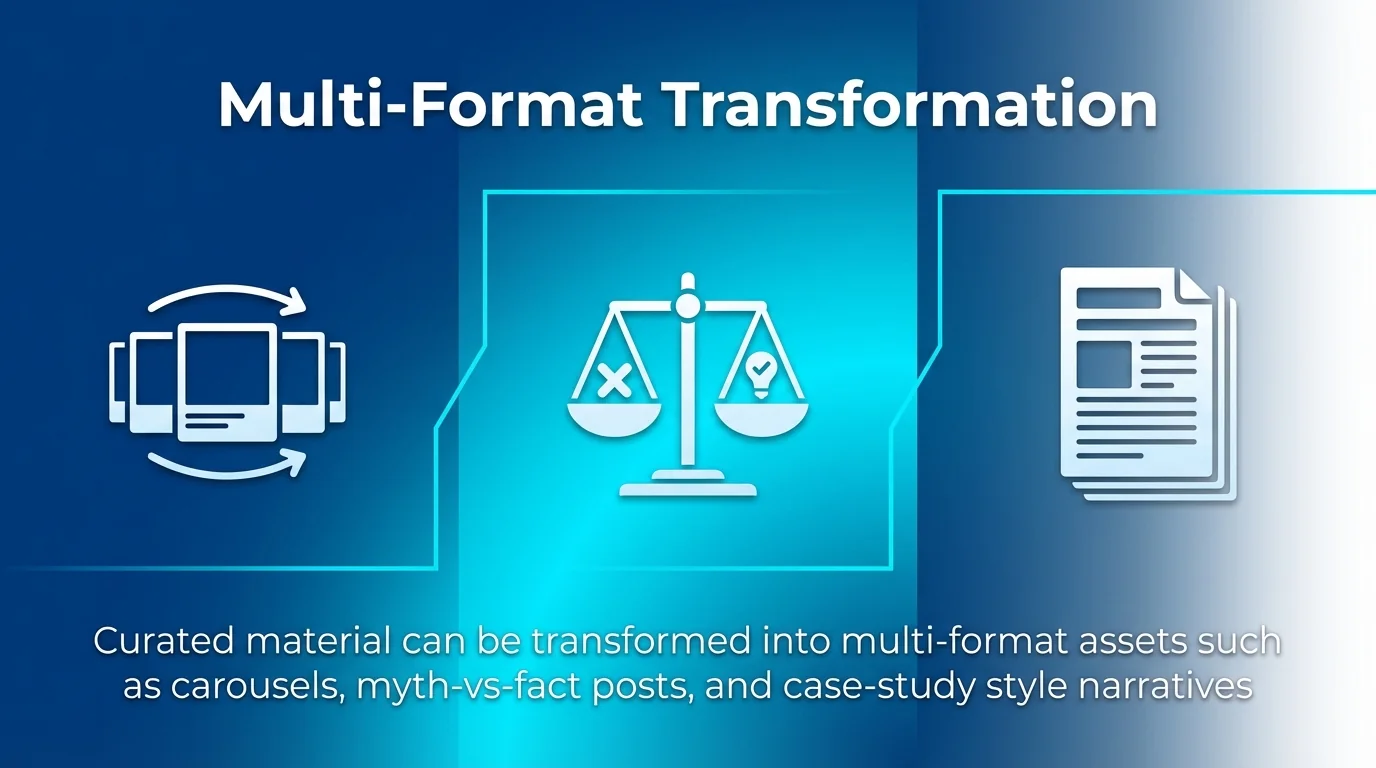
Creating original content exclusively limits how much you can publish. Curated material can be transformed into multi-format assets such as carousels, myth-vs-fact posts, how-to breakdowns, and case-study style narratives.
This multi-format approach lets you maintain presence across platforms without constant content creation pressure. You cover more ground whilst preserving energy for your most important original work.
Demonstrating Industry Awareness
B2B and knowledge-driven audiences look for leaders who can separate ‘signal from noise’ by organising and contextualising complex information flows. Your curation choices reveal what you consider important.
The sources you select, the perspectives you highlight, and the trends you track all communicate your understanding of the field. This awareness is a core component of subject matter expertise.
Creating Conversation Opportunities
Curated content with your perspective invites discussion. When you share an industry report with your interpretation, you create space for your audience to engage with your thinking.
These interactions build relationships and often surface insights you can develop into original content later. Curation becomes a listening tool as much as a sharing mechanism.
Define Your Target Audience and Expertise Area
Effective thought leadership curation starts with clarity about who you’re serving and what you’re known for. Without this foundation, your curation efforts will lack focus and fail to build recognisable authority.
Identify Your Specific Audience
Define your target audience with precision. General categories like “marketers” or “business owners” are too broad to guide meaningful curation decisions.
Consider specific roles, industries, challenges, and experience levels. Are you serving B2B SaaS marketing directors? E-commerce founders scaling past £1M? Content strategists in financial services?
The more specific your audience definition, the easier it becomes to select content that genuinely serves their needs. Your curation becomes a tailored service rather than generic sharing.
Establish Your Anchor Topic
Introductory thought leadership resources stress that the first step is to form a clear, specific area of expertise. Choose the specific domain where you’ll build authority through curation.
Your anchor topic should be narrow enough that you can realistically track key developments, yet broad enough to provide consistent curation opportunities. “Email marketing automation for SaaS companies” works better than just “marketing”.
A narrow focus helps audiences quickly understand what to expect from you and why they should follow you as a go-to resource in that space. It also makes your curation more valuable because you’re filtering a specific domain thoroughly rather than skimming broadly.
Map Your Expertise to Audience Needs
Your curation sweet spot sits where your knowledge intersects with your audience’s challenges. List the top five problems your target audience faces regularly.
Then identify which of these problems you’re best positioned to help them solve through curated insights, frameworks, and examples. This mapping exercise guides what types of content you should prioritise in your curation.
When your curated content consistently addresses real pain points with expert context, you become indispensable to your audience.
Identify and Diversify Your Content Sources
The quality of your curation depends entirely on the quality and diversity of your sources. Building a robust source network takes initial effort but pays dividends through richer, more credible content curation.
Establish Reputable Core Sources
Start by identifying authoritative publications, research organisations, and industry bodies in your expertise area. These become your core sources for high-credibility content.
Look for sources that publish data-driven analysis, original research, or expert commentary rather than aggregated news. Academic journals, industry associations, established trade publications, and recognised think tanks typically offer the substantive content thought leadership requires.
Subscribe to these sources directly through RSS feeds, newsletters, or alerts so you catch important publications quickly.
Add Diverse Perspectives
Quality curation includes voices that challenge prevailing wisdom or offer alternative viewpoints. Seek sources that represent different perspectives within your field.
This might include practitioners versus theorists, different methodological approaches, or voices from adjacent industries applying similar concepts. Diversity in your curated sources demonstrates intellectual openness and helps your audience develop more nuanced understanding.
Your role as curator includes surfacing perspectives your audience might otherwise miss.
Track Emerging Voices
Established authorities matter, but emerging experts often publish the freshest thinking. Follow rising practitioners, new research programmes, and startup companies pushing boundaries in your domain.
These sources help you curate content that feels current and forward-looking. When you regularly share emerging perspectives alongside established sources, you position yourself as connected to where your field is heading, not just where it’s been.
Organise Your Discovery System
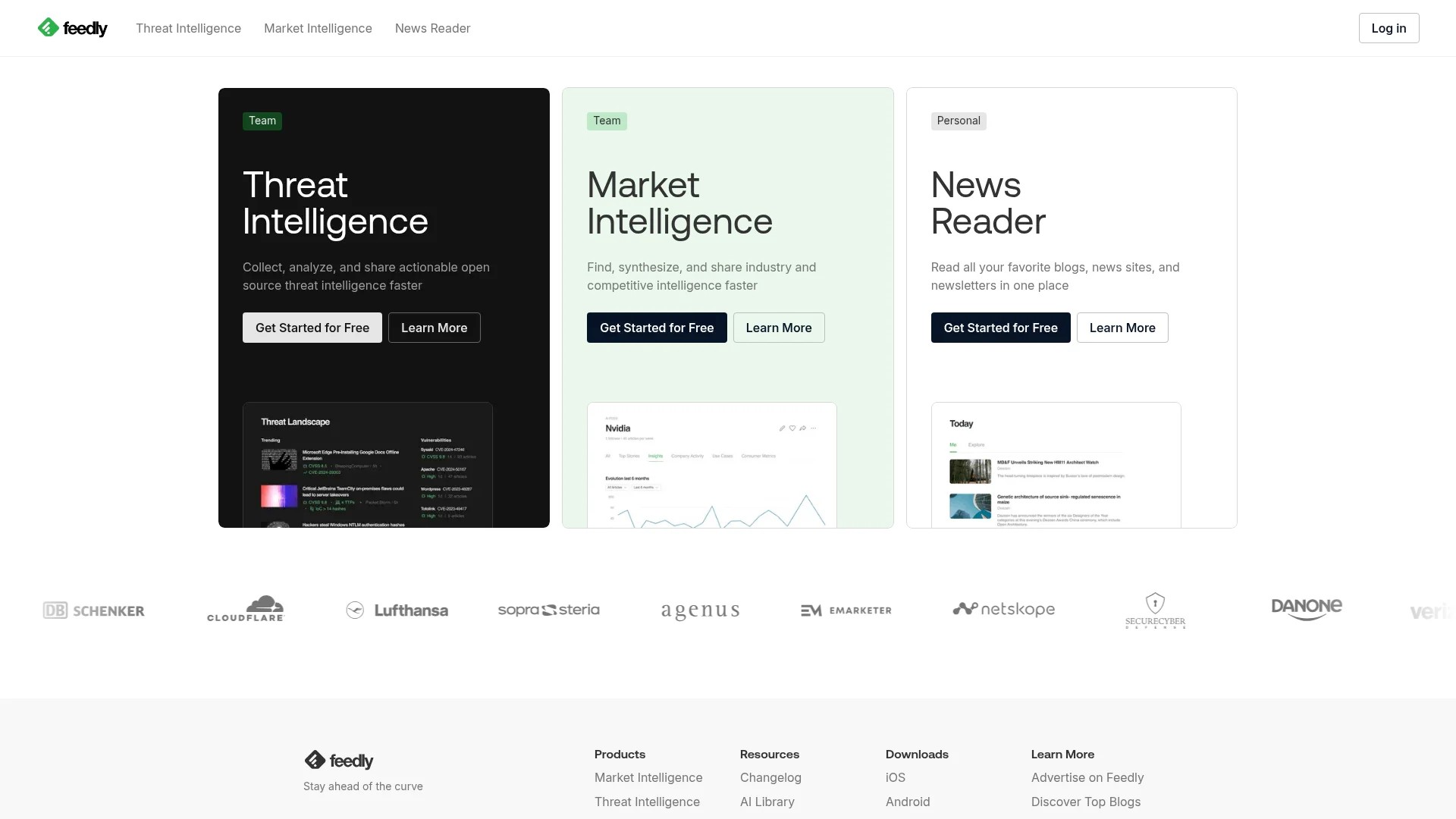
Set up a systematic approach to source monitoring. Use Feedly or similar RSS readers to aggregate your key sources in one place.
Create folders by topic, source type, or priority level. Social media curation guides commonly recommend scheduling dedicated time blocks (daily or weekly) to discover and select content rather than doing it ad hoc.
This structured approach ensures you don’t miss important content whilst preventing source monitoring from consuming your entire day.
Select High-Quality, Relevant Content
Not every piece of content from good sources deserves curation. Developing selection criteria ensures you only share material that genuinely serves your audience and reinforces your authority.
Apply Quality Filters
Evaluate potential content against specific quality standards before sharing. Does it present evidence-based insights rather than unsupported opinions?
Is the methodology sound if it includes research or data? Does it offer practical value or genuine new thinking rather than rehashing common knowledge?
Quality over quantity matters intensely in thought leadership curation. Three excellent pieces per week build more credibility than daily shares of mediocre content.
Assess Audience Relevance
Each piece you curate should clearly address needs, questions, or interests of your defined target audience. Ask yourself: “Would my ideal audience member find this immediately useful or enlightening?”
Content can be high quality but irrelevant to your specific audience. Resist the temptation to share content just because it’s interesting to you personally unless it serves your audience’s needs within your expertise area.
This discipline keeps your curation focused and your thought leadership positioning clear.
Check Timeliness and Context
Consider whether content is timely enough to be valuable. Some evergreen content remains relevant for years, whilst breaking news or trend analysis has a short window.
Also evaluate whether your audience has the context to understand the piece. If it requires significant background knowledge, you’ll need to provide that context in your annotation.
Sometimes the most valuable curation involves surfacing older, foundational content that your audience missed rather than chasing every new publication.
Verify Source Credibility
Before sharing, verify the source’s credibility and check for potential biases or conflicts of interest. Even from known sources, individual pieces can have issues.
Read thoroughly before sharing. Your recommendation carries your reputation, so due diligence protects your credibility as much as it serves your audience.
Add Value Through Commentary and Annotation
Raw content sharing isn’t curation and doesn’t build thought leadership. Your annotation transforms good content into a thought leadership asset by adding your expert perspective.

Provide Context and Connection
Explain why this content matters now. Connect it to recent developments, ongoing debates, or emerging trends your audience is tracking.
Context helps your audience understand not just what the content says, but why they should care. Your ability to position content within the bigger picture demonstrates the pattern recognition that defines expertise.
Add Your Expert Analysis
Share your interpretation, agreement, or constructive criticism. What’s your take on the main argument? How does this align with or challenge your experience?
Where do you see gaps in the analysis? This analytical layer is where thought leadership happens in curation.
You’re not just forwarding content. You’re processing it through your expertise and sharing the results. Even brief analysis adds significant value: “This research confirms what we’ve seen in three client projects this quarter” or “The methodology here is solid, but the conclusions overlook regulatory changes coming in Q3”.
Offer Practical Application
Help your audience use the insights. What should they do with this information? How might they apply these findings to their specific context?
Adding your own examples, mini-case studies, or practical next steps to curated content turns each share into a moment of active thought leadership rather than a passive repost. “To implement this framework, start by auditing your current process against the three criteria mentioned” gives your audience a concrete starting point.
Ask Engaging Questions
Invite your audience into the conversation. Pose questions that encourage them to think critically about the content or share their own experiences.
“Have you seen this pattern in your organisation?” or “Which of these five approaches aligns best with your current strategy?” transforms passive consumption into active engagement. This technique works particularly well on social media platforms where discussion is expected.
Leverage Social Media and Distribution Channels
Strategic distribution ensures your curated content reaches your target audience and builds your thought leadership presence where it matters most.
Choose Your Primary Platforms
Select social media platforms based on where your target audience actively seeks professional content. Building an engaged audience requires focusing your efforts where your specific audience congregates.
B2B professionals typically engage with thought leadership on LinkedIn, whilst some industries have strong communities on Twitter/X. Don’t spread yourself across every platform.
Master one or two channels where your curation will have maximum impact with your target audience.
Adapt Content for Each Platform
Format your annotations to suit platform norms and technical constraints. LinkedIn allows longer-form commentary, whilst Twitter demands concise framing.
Each platform has different engagement patterns and expectations. Adapt your approach whilst maintaining consistent voice and quality standards across channels.
Create a Consistent Publishing Rhythm
Establish a regular curation schedule your audience can rely on. This might be daily posts, a weekly roundup, or a mid-week industry update.
Consistency builds habit and expectation. Your audience begins checking for your curated insights at predictable times, which strengthens your position as a reliable source.
AI-driven schedulers report helping users reclaim significant time each week that would otherwise be spent on manual content management tasks. Tools like Buffer or Hootsuite help maintain consistency without requiring you to be online constantly.
Engage With Your Audience
Monitor and respond to comments, questions, and discussions your curated content generates. This interaction demonstrates you’re not just broadcasting but genuinely engaged in the conversation.
Your responses to audience comments often provide as much thought leadership value as your original annotations. They show your thinking in action and build relationships with your community.
Use Content Curation Tools to Streamline Your Process
The right tools make systematic curation sustainable. Without efficient systems, curation becomes too time-consuming to maintain consistently.
Content Discovery Platforms
Content curation tools help you find relevant material without spending hours searching. BuzzSumo lets you discover trending content by topic and analyse what performs well in your industry.

Feedly aggregates RSS feeds from your chosen sources into a readable stream. These discovery tools filter the noise and surface content worth your attention.
Curation and Annotation Platforms
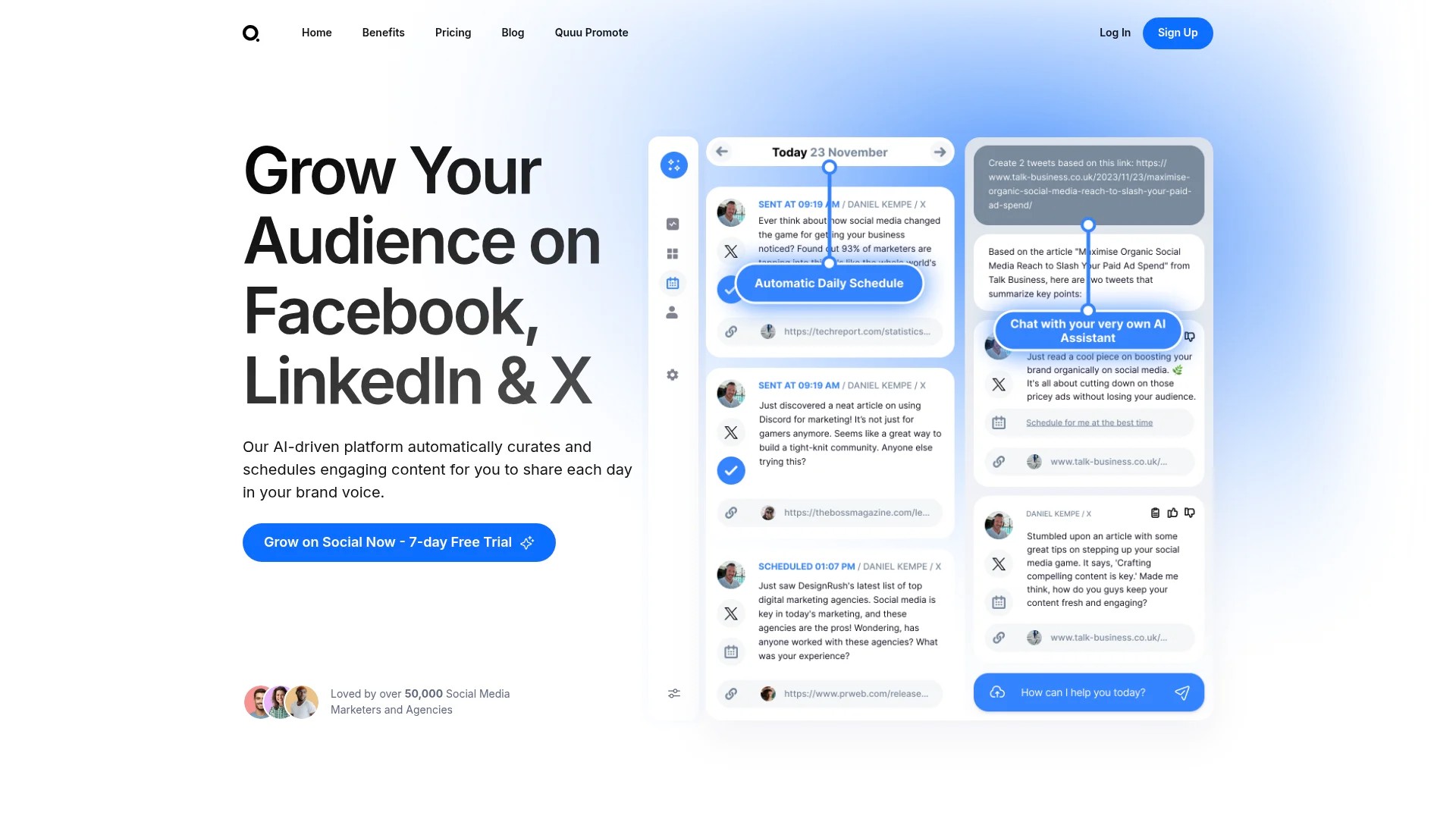
Tools like Quuu provide AI-powered content curation strategies that suggest relevant content based on your interests whilst helping you maintain a consistent sharing schedule.
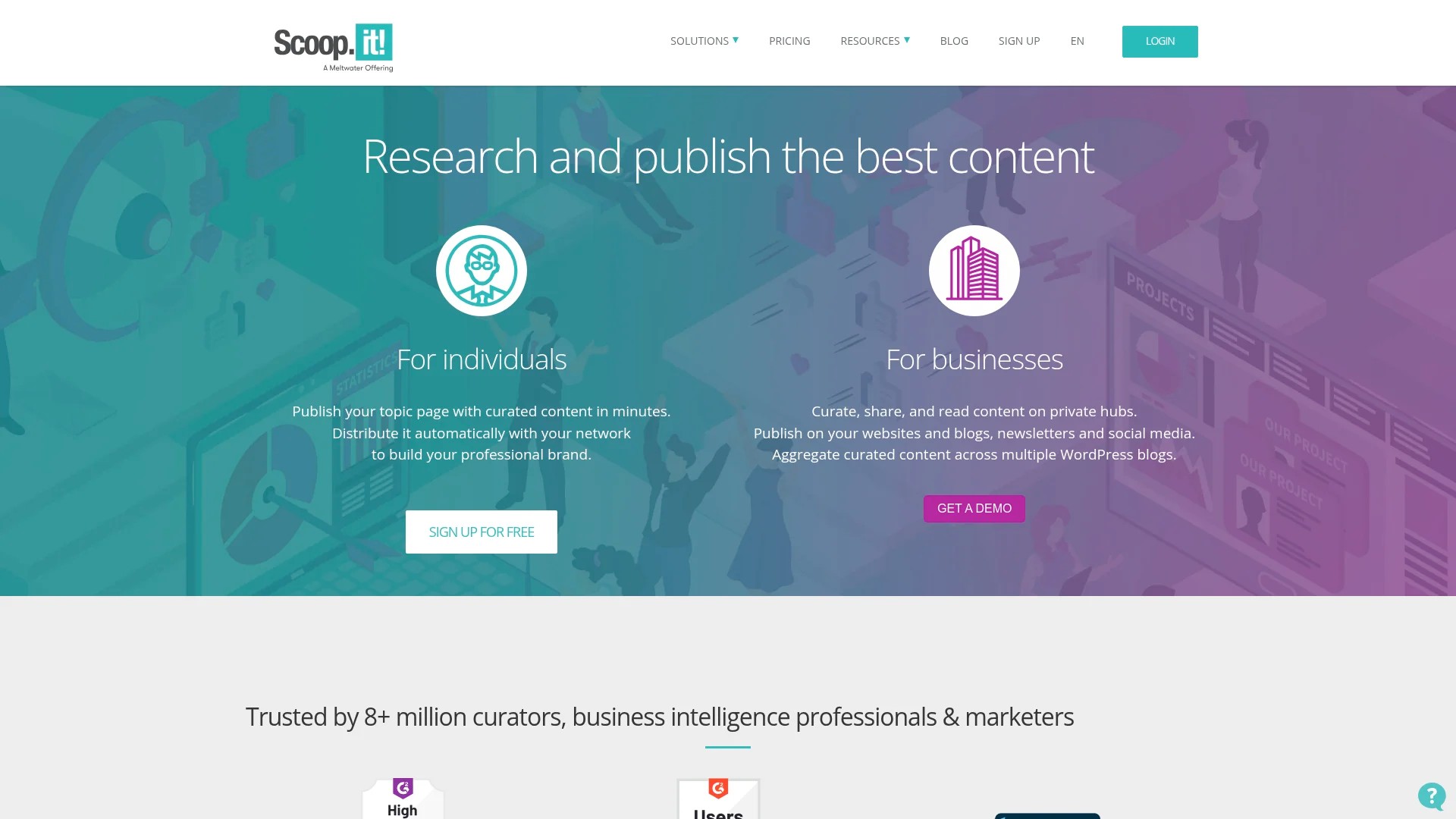
Scoop.it combines discovery with publishing, letting you create curated topic pages that showcase your expertise. These platforms reduce friction between finding content and sharing it with your annotation.
Scheduling and Distribution Tools
Scheduling tools like Buffer, Hootsuite, or Later let you batch your curation work. Spend focused time selecting and annotating content, then schedule it to publish at optimal times throughout the week.

This approach prevents curation from constantly interrupting your workflow whilst maintaining consistent audience engagement.
Measurement and Analytics
Track which curated content resonates most with your audience. Platform-native analytics on LinkedIn, Twitter, and other social channels show engagement patterns.
Tools like Google Analytics track traffic if you share curated content through owned channels like blogs or newsletters. Understanding what works helps you refine your curation strategy over time.
Look for patterns in topics, formats, and sources that generate the strongest engagement.
Balance Curated Content With Original Insights
Whilst curation builds thought leadership effectively, it works best alongside original content creation. Finding the right mix of curated and original content strengthens your overall content strategy.
The Complementary Relationship
Curation maintains your visibility and demonstrates breadth of knowledge. Original content showcases depth and unique perspective.
Together, they create a complete picture of expertise. Your curated content keeps you present in daily conversations whilst your original pieces establish distinctive points of view.
Use Curation to Inform Original Content
Pay attention to themes and gaps in the content you curate. What questions remain unanswered? Where do you disagree with prevailing perspectives?
These observations become seeds for original articles, research, or frameworks. Your curation practice functions as ongoing market research that guides your content creation priorities.
Create a Sustainable Rhythm
A practical approach might involve daily or several-times-weekly curation alongside weekly or monthly original content. The specific ratio depends on your capacity and audience expectations.
What matters is maintaining both practices consistently. Centralised, curated content hubs are used by companies to help employees share on-brand, up-to-date resources, demonstrating how curation can work at scale alongside original thought leadership.
Quick Answers to Common Questions
What is a thought leadership strategy?
A thought leadership strategy is a structured plan to build and demonstrate authority in a field by consistently sharing evidence-based, insight-driven content with defined audiences. It aligns topics, formats and channels to organisational or professional goals, aiming to shape industry conversations, influence decision-making and build long-term trust.
How much original content do I need alongside curation?
There’s no fixed ratio, but aim for at least one substantial original piece monthly alongside regular curation. Your original content provides unique perspective whilst curation maintains consistent presence. The key is sustainability—choose a balance you can maintain long-term rather than burning out trying to create everything from scratch.
How do I avoid looking like I’m just reposting others’ content?
Always add substantive commentary that demonstrates your expertise. Explain why the content matters, offer your analysis, connect it to broader trends, or provide practical application guidance. Your annotation is what transforms sharing into thought leadership curation.
Your Path to Recognised Authority
Building thought leadership through content curation requires strategic intent, not just casual sharing. You’ve now got a framework covering audience definition, source identification, quality selection, meaningful annotation, strategic distribution, and the tools that make it sustainable.
Start by defining your specific expertise area and target audience today. Then identify five core sources that consistently publish quality content in that domain.
Spend the next week practising annotation—share three curated pieces with your expert commentary that adds genuine value for your audience. Notice which types of commentary feel most natural and generate the strongest engagement.
Thought leadership through curation is built through consistent, thoughtful practice. Each piece you curate with insight strengthens your position as the filter your audience trusts. Focus on serving your audience’s needs with expert judgement, and recognition as a thought leader will follow.