
Content discovery apps help marketers and businesses find, track, and organise valuable content from across the web. These tools aggregate articles, trending topics, and industry news into personalised feeds, eliminating hours of manual searching. The best platforms combine RSS feed readers, social media monitoring, and keyword tracking to surface content that resonates with your target audience.
Staying current with industry trends shouldn’t feel like a full-time job. Content discovery tools streamline the research process, helping you identify relevant content for curation, spot emerging topics before competitors, and maintain a steady flow of content ideas for your marketing strategy.
This guide covers the top content discovery platforms available today, from budget-friendly options to enterprise solutions. You’ll learn which tools excel at specific tasks, how to choose the right platform for your needs, and practical tips for maximising your content research efforts.
What are content discovery tools?
Content discovery tools are applications designed to help you find, collect, and organise relevant content from multiple sources. These platforms function as intelligent aggregators, pulling information from websites, blogs, social media platforms, and news outlets based on your specified interests and keywords.
The core difference between content discovery and manual searching lies in automation. Rather than visiting dozens of websites daily, you create personalised feeds that automatically surface new content matching your criteria. This saves considerable time whilst ensuring you never miss important industry updates.
Content discovery differs from content curation in timing and purpose. Discovery focuses on finding new content as it’s published. Curation involves selecting, organising, and sharing that content with your audience. Most marketers use discovery tools as the first step in their content curation workflow.
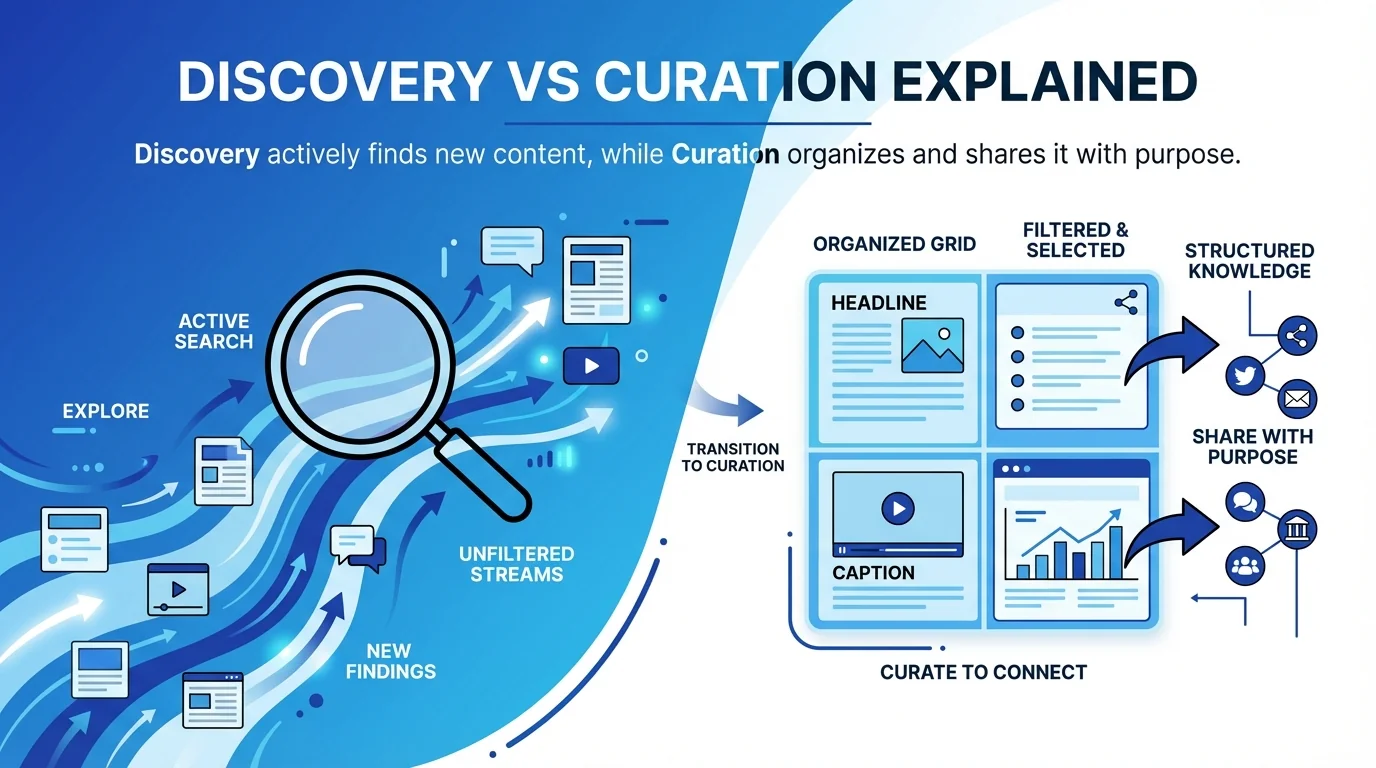
These platforms typically offer several core features:
- RSS feed aggregation from websites and blogs
- Social media monitoring for trending topics
- Keyword tracking and alerts
- Content categorisation and tagging
- Save-for-later functionality
Modern content discovery platforms increasingly incorporate AI to refine results. They learn from your reading habits, engagement patterns, and manual selections to suggest increasingly relevant content over time.
Why content marketers need content discovery apps
Content marketing requires a consistent stream of ideas, insights, and inspiration. Content discovery tools solve three critical challenges that marketers face daily.
Staying current with industry trends
Industry landscapes shift rapidly. New technologies emerge, consumer preferences evolve, and competitors launch campaigns. Discovery platforms help you monitor these changes in real-time rather than discovering trends weeks after they’ve peaked.
Social media moves particularly quickly. What’s trending today may be forgotten tomorrow. Tools that track social shares and engagement help identify which topics are gaining traction with your target audience before saturation occurs.
This timely awareness informs your content strategy. You can create relevant content whilst topics are still fresh, positioning your brand as current and knowledgeable.
Generating content ideas efficiently
Blank page syndrome affects even experienced content creators. Discovery tools provide endless inspiration by surfacing what’s resonating in your industry. You can analyse successful content to identify patterns, angles, and gaps your competitors haven’t addressed.
Keyword research tools within discovery platforms reveal what your audience is actually searching for. This data-driven approach replaces guesswork with evidence about which topics deserve your attention.
Content research becomes systematic rather than sporadic. Instead of scrambling for ideas when deadlines loom, you maintain a running list of potential topics drawn from continuous discovery efforts.
Monitoring competitors and industry influencers
Understanding competitor content strategies provides valuable intelligence. Discovery tools let you track specific domains, monitoring when competitors publish new content and which pieces gain significant social shares.
You can also follow industry influencers to see what they’re discussing and sharing. This reveals emerging conversations before they reach mainstream awareness, giving you opportunities to contribute early and establish thought leadership.
Social listening capabilities help track brand mentions and relevant keywords. You’ll spot opportunities to engage in conversations, address customer questions, and identify potential collaboration opportunities.
How to choose the right content discovery platform
Selecting the ideal content discovery tool depends on several factors specific to your situation. Not every platform suits every marketing team.
Assess your content discovery needs
Start by identifying your primary use case. Are you primarily seeking content to curate and share? Do you need competitor intelligence? Are you focused on trending social media content or in-depth industry research?
Consider your content sources. Some tools excel at RSS feed aggregation whilst others specialise in social media monitoring. If you need both, look for platforms offering integrated functionality rather than managing multiple tools.
Think about team collaboration requirements. Solo marketers need different features than agencies managing multiple clients. Shared feeds, team annotations, and approval workflows matter for collaborative environments.
Evaluate pricing and features
Content discovery platforms range from free options to enterprise solutions costing hundreds monthly. Freemium models offer basic functionality with premium features behind paywalls.
Match features to your actual requirements. Don’t pay for advanced analytics if you simply need a feed reader. Conversely, don’t choose a limited free tool if you need robust competitor tracking and keyword monitoring.
Consider scalability. Your needs may grow as your content marketing matures. Platforms offering tiered pricing let you start small and upgrade as requirements expand.
Test integration capabilities
Content discovery tools should connect seamlessly with your existing marketing technology. Look for integrations with your content management system, social media scheduling tools, and note-taking applications.
API access matters for larger organisations wanting to build custom workflows. Browser extensions enhance convenience for quick content saving whilst browsing.
Mobile apps enable content discovery on-the-go. If you frequently review content outside office hours, mobile functionality becomes essential rather than optional.
Best RSS feed readers and aggregators
RSS feeds remain one of the most reliable methods for content discovery. These tools aggregate updates from your favourite websites into a single, organised interface.
Feedly: The industry standard RSS reader
Feedly dominates the RSS feed reader space with good reason. Feedly streamlines content curation by allowing users to add specific websites to personalised feeds and refine them using a virtual assistant.

The platform organises sources into categories, making it simple to browse content by topic. You can quickly scan headlines, read full articles within the interface, or save items to read later.
Feedly’s AI assistant, Leo, learns from your behaviour to highlight the most relevant content. It can filter out noise, prioritise specific keywords, and even mute topics you want to avoid.

Pricing: Feedly offers a free plan with basic functionality. Pro plans start at £5 monthly, with advanced features for teams available at higher tiers.
Best for: Marketers who regularly follow specific blogs and news sites, particularly those wanting AI-powered content filtering to reduce information overload.
Pocket: Save content for later reading
Pocket takes a different approach to content discovery. Rather than aggregating feeds, it functions as a save-for-later tool that captures articles you find whilst browsing.
The platform strips away ads and formatting, presenting content in a clean, readable format. This focus on reading experience rather than discovery makes Pocket ideal as a companion tool alongside feed readers.
Browser extensions and mobile apps make saving content effortless. You can tag items for organisation and access your saved content offline, useful for reading during commutes.
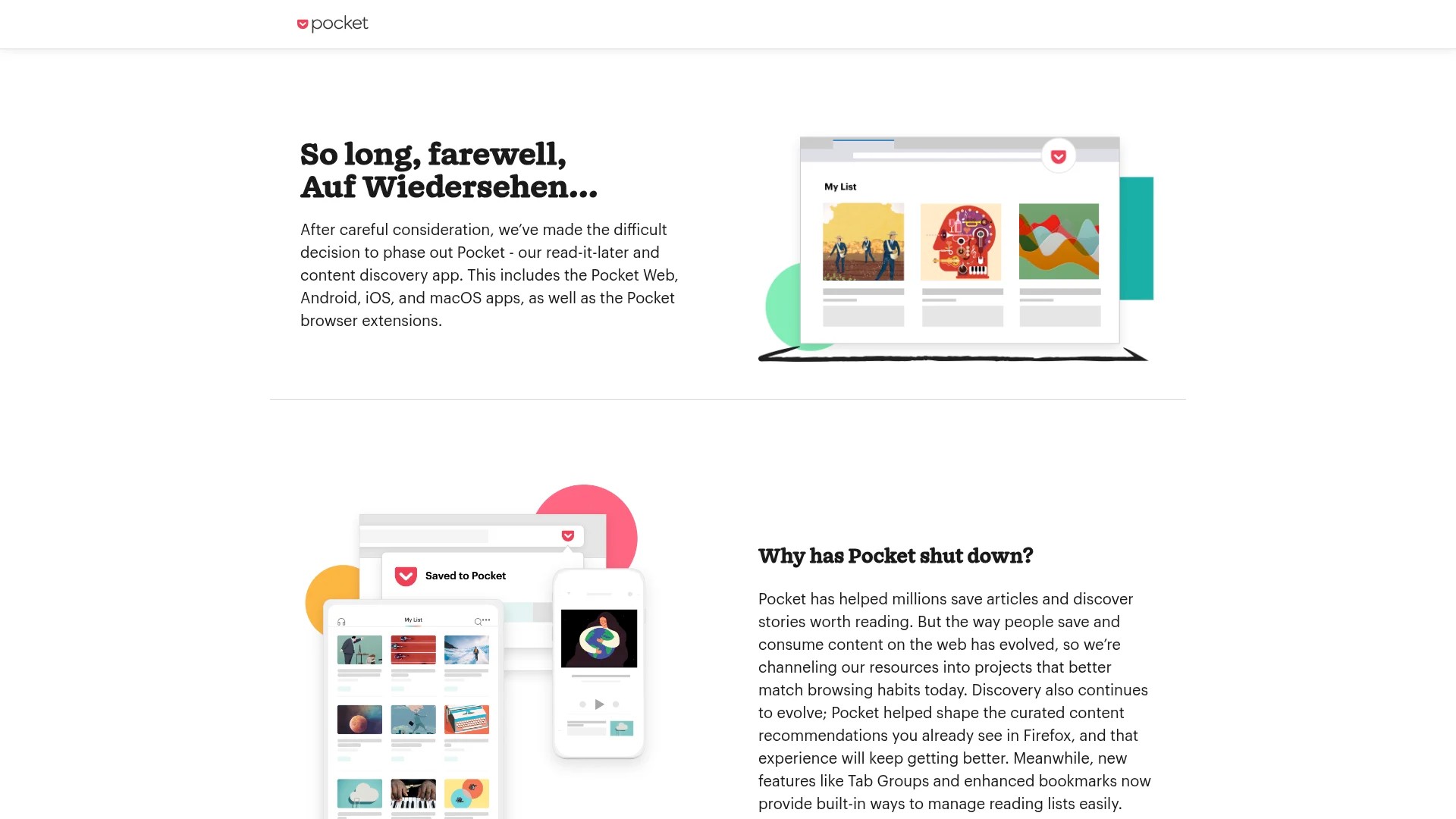
Pricing: Pocket offers a free version with core functionality. Premium plans provide advanced features like full-text search and unlimited highlighting.
Best for: Content marketers who find valuable articles throughout the day but lack time for immediate reading. Perfect for building a personal knowledge library.
Scoop.it: AI-powered content curation
Scoop.it combines content discovery with curation and publishing features. The platform uses AI to suggest relevant content based on your chosen topics and keywords.
You can create topic-specific pages that aggregate both discovered content and your own articles. These pages function as mini-publications, positioning you as a knowledgeable curator within your niche.
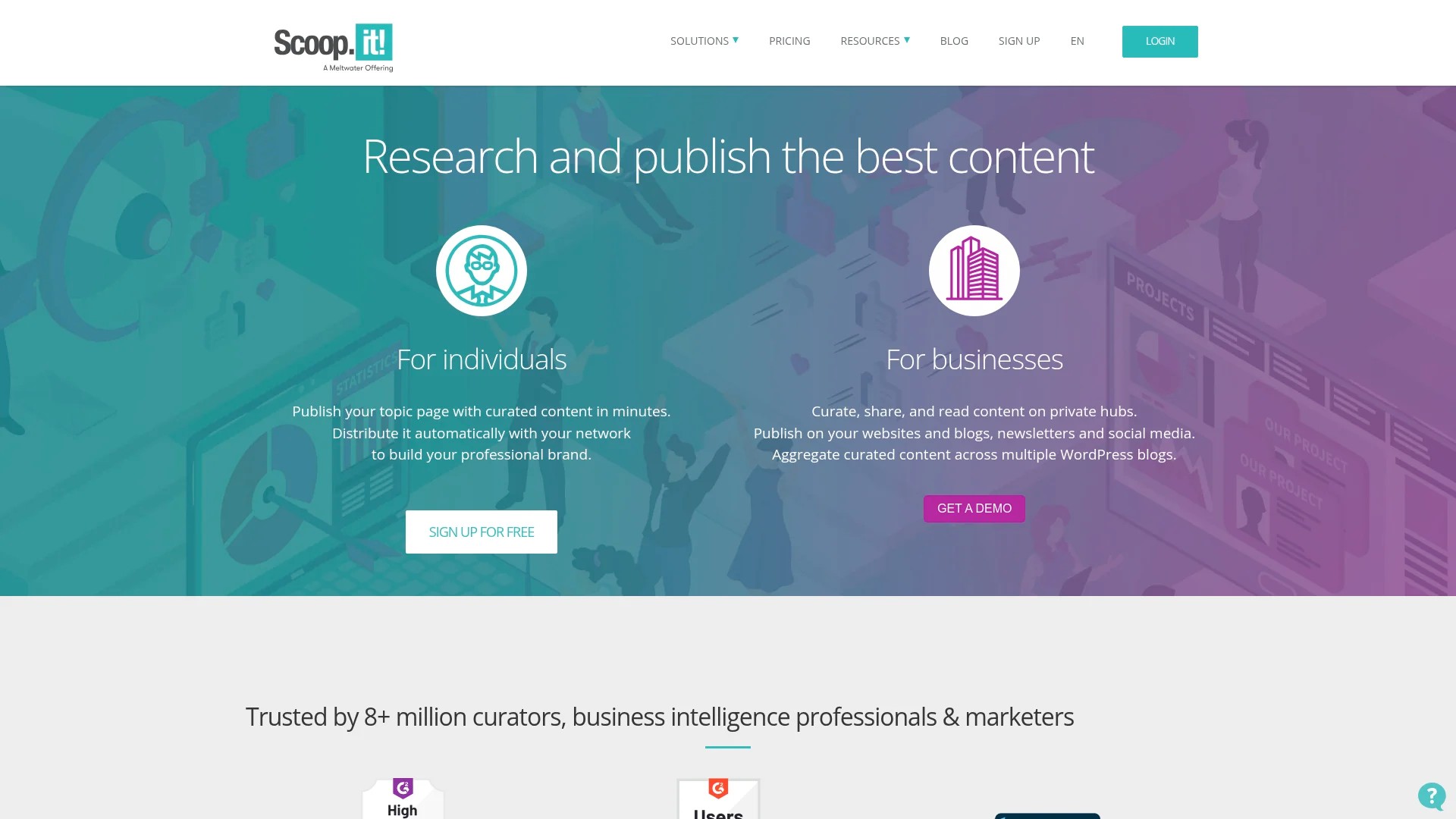
The social sharing functionality integrates with major platforms, enabling you to distribute curated content directly from Scoop.it. This streamlines the workflow from discovery to publication.
Pricing: Free plans offer limited functionality. Business plans with advanced content discovery tools start at higher price points suitable for professional use.
Best for: Marketers who want to combine discovery and curation in a single platform, particularly those building thought leadership through content aggregation.
Social media and trending content tools
Social platforms generate massive amounts of content daily. These tools help identify which pieces are gaining traction and why.
BuzzSumo: The comprehensive social content analyser
BuzzSumo excels at finding trending content and analysing what makes it successful. The platform tracks content performance across major social networks, showing which articles receive the most shares and engagement.
You can search by topic, domain, or author to discover top-performing content. The results reveal patterns about headline styles, content formats, and publishing times that drive social shares.
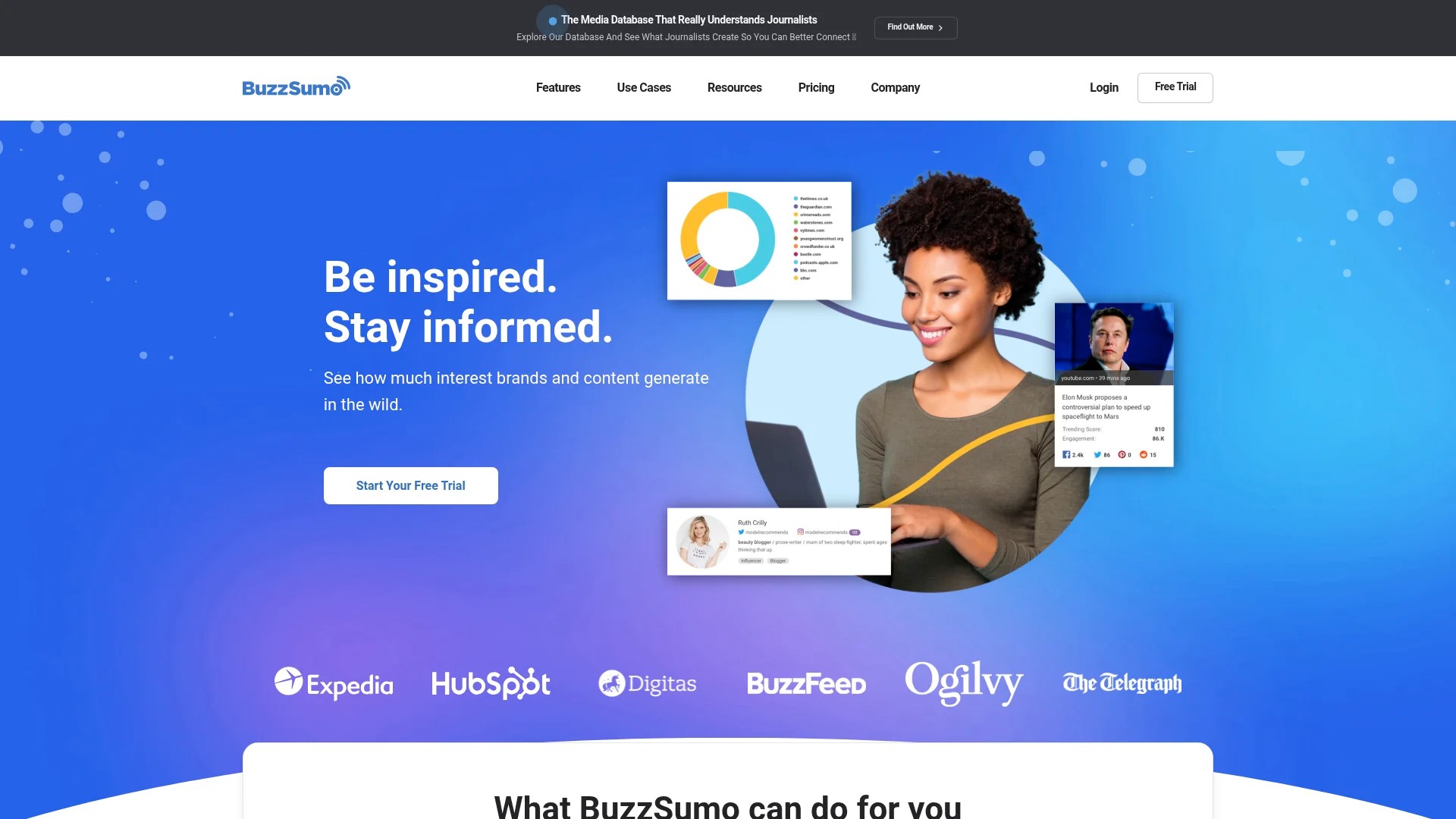
BuzzSumo’s Content Analyzer surfaces proven content ideas quickly. You can see what’s working for competitors, identify content gaps, and spot trending topics before they reach peak saturation.
BuzzSumo pricing starts at $199 per month with plans up to $999 per month billed annually. Monthly payment options are also available.

Best for: Serious content marketers needing in-depth social media analytics and competitive intelligence. The investment makes sense for teams creating regular content.
For more guidance on finding content that resonates with your audience, see our article on how to find content for social media.
Google Alerts: Simple keyword monitoring
Google Alerts provides free, straightforward keyword tracking. Set up alerts for specific terms, competitors, or topics, and Google emails you when new content appears.
The tool monitors web pages, news articles, blogs, and discussions. You can customise alert frequency, sources, and language to control the volume and relevance of notifications.

Whilst less sophisticated than paid alternatives, Google Alerts offers reliable monitoring without cost. It’s particularly effective for brand mentions and competitor tracking.
Pricing: Completely free with a Google account.
Best for: Budget-conscious marketers needing basic keyword and brand monitoring. Excellent starting point before investing in premium social listening tools.
Taggbox: Multi-platform content aggregation
Taggbox specialises in aggregating user-generated content from social media. Taggbox supports curation from over 20 platforms with features for UGC rights management, content moderation, and automatic updates.
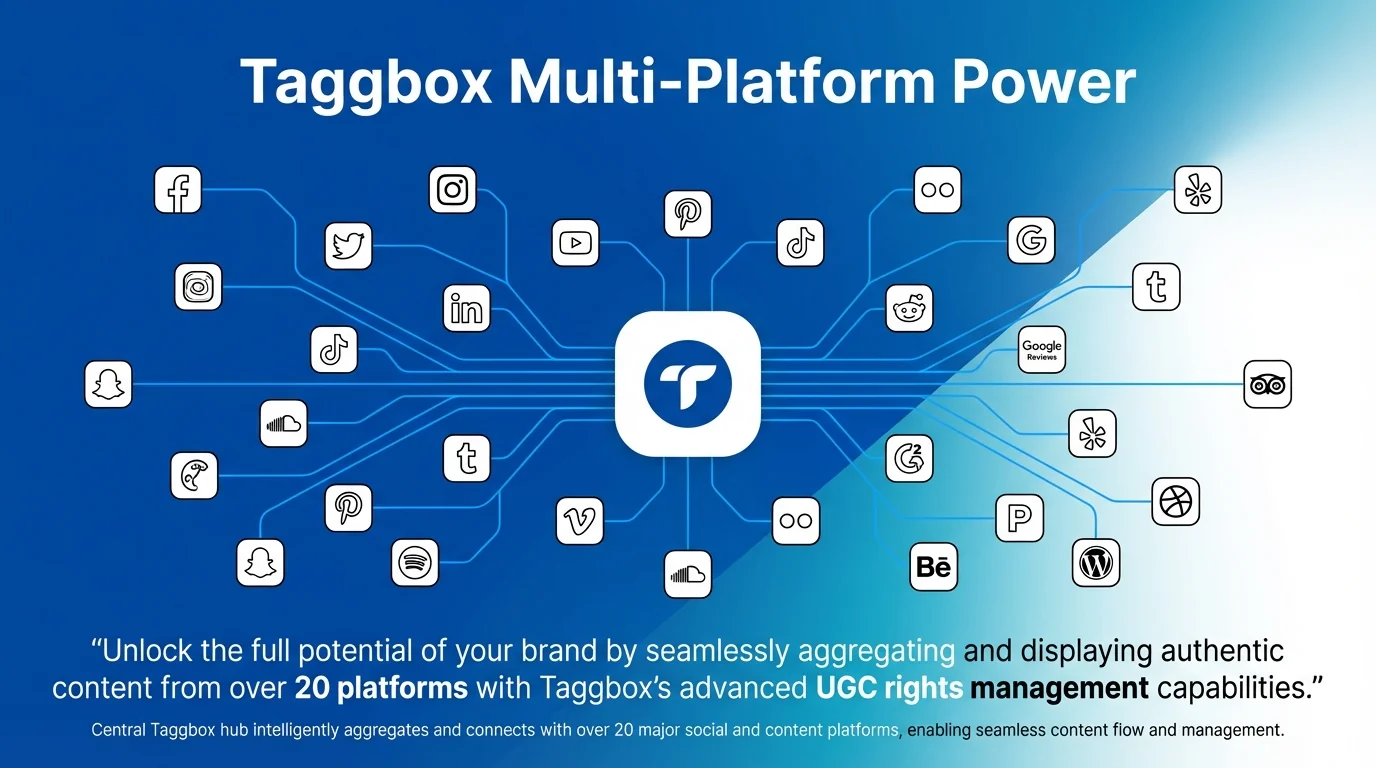
The platform helps you discover relevant social content using hashtags, mentions, and handles. This is particularly valuable for finding authentic customer content to repurpose in marketing campaigns.

Built-in moderation features let you filter inappropriate content before display. Rights management tools help secure permissions for using user-generated content legally.
Pricing: Taggbox offers tiered pricing based on features and usage volume. Contact their team for specific pricing information.
Best for: Brands leveraging user-generated content in marketing campaigns, particularly those needing robust moderation and rights management capabilities.
SEO and keyword research discovery tools
Content discovery extends beyond articles and social posts. SEO tools reveal what your audience is searching for, uncovering content opportunities based on actual demand.
Ubersuggest: Budget-friendly keyword discovery
Ubersuggest provides accessible keyword research for marketers without enterprise budgets. Ubersuggest offers budget-friendly keyword discovery with volume, difficulty metrics, AI content ideas, and backlink monitoring.
The platform suggests related keywords, showing search volume and competitive difficulty for each term. This data helps prioritise which topics to target based on realistic ranking potential.
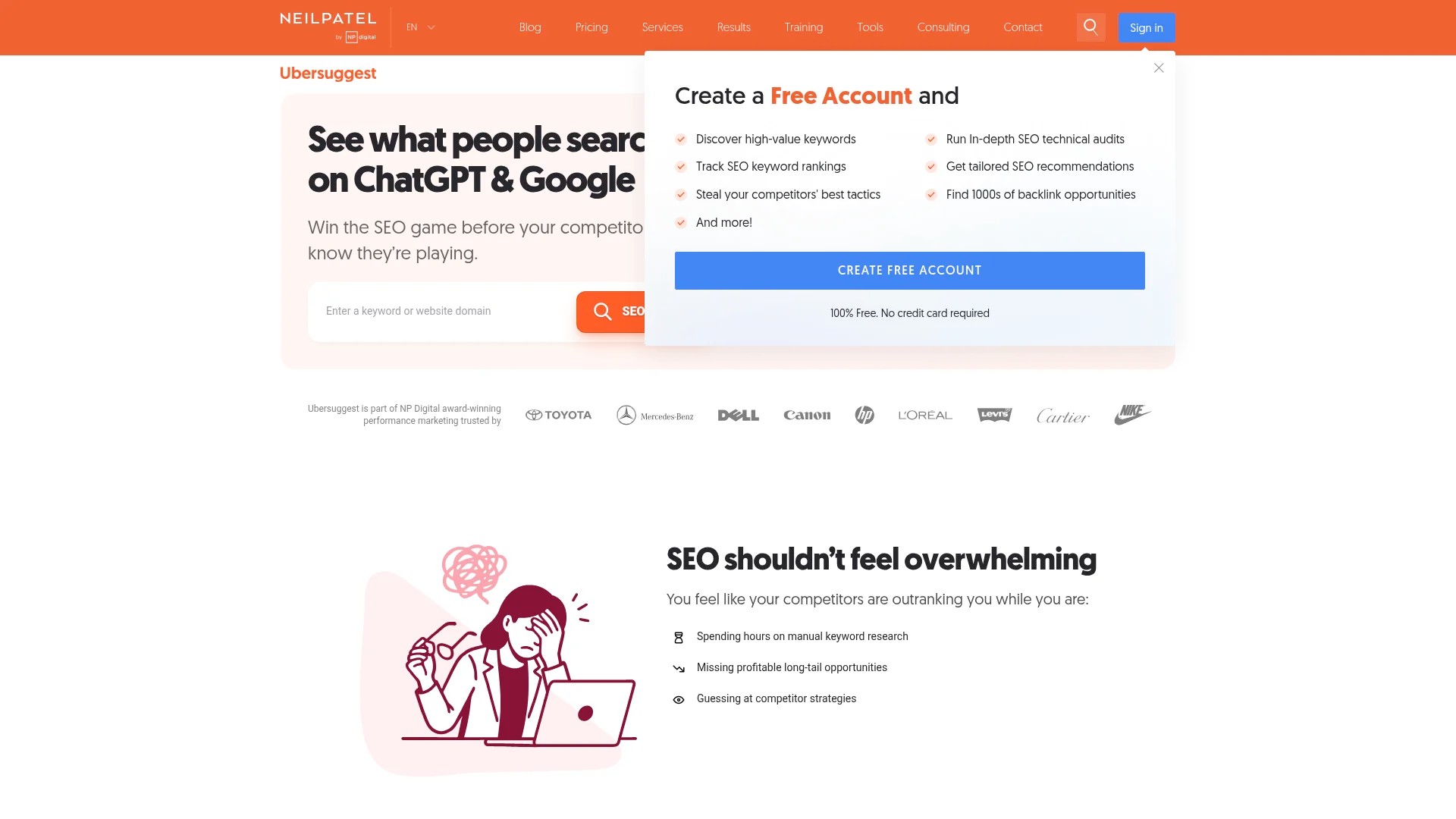
AI-powered content suggestions provide article ideas based on your keywords. You’ll see what questions people ask and which topics related to your core terms.
Pricing: Limited free searches available. Paid plans start at reasonable monthly rates with lifetime access options also offered.
Best for: Small businesses and individual marketers needing solid keyword research without the cost of premium SEO suites.
Mangools: Comprehensive keyword toolkit
Mangools bundles several SEO tools into an affordable package. Mangools provides keyword suggestions via KWFinder, SERP analysis, and rank tracking, with annual pricing from $19.43 to $58.44 per month.
KWFinder specialises in discovering long-tail keywords with lower competition. This helps you identify content opportunities where ranking is achievable without massive authority.
The SERP analysis shows who currently ranks for target keywords and why. You can study competitor content to understand what Google values for specific searches.

Best for: Marketers wanting comprehensive SEO insights at mid-range pricing. The interface is notably user-friendly compared to more complex alternatives.
Learn more about related tools in our guide to content curation tools.
Wordtracker Scout: Quick competitor keyword research
Wordtracker Scout takes a unique approach to keyword discovery. Wordtracker Scout is a Chrome extension for rapid competitor keyword discovery.
Visit any competitor’s website, activate Scout, and it extracts keywords from their content. This reveals what terms competitors target and uncovers potential gaps in your own content strategy.
The extension provides volume and competition data directly within your browser. This convenience factor makes regular competitive analysis more practical.
Pricing: Available as part of Wordtracker subscriptions with various tier options.
Best for: Marketers who regularly analyse competitor websites and want streamlined keyword extraction without switching between tools.
WriterZen: Advanced topic clustering
WriterZen focuses on comprehensive topic research rather than simple keyword lists. WriterZen leads in keyword clustering and topic discovery, supporting large-scale brief creation and plagiarism detection.
The platform groups related keywords into topic clusters, helping you understand the full scope of a subject. This ensures your content covers topics comprehensively rather than targeting isolated keywords.
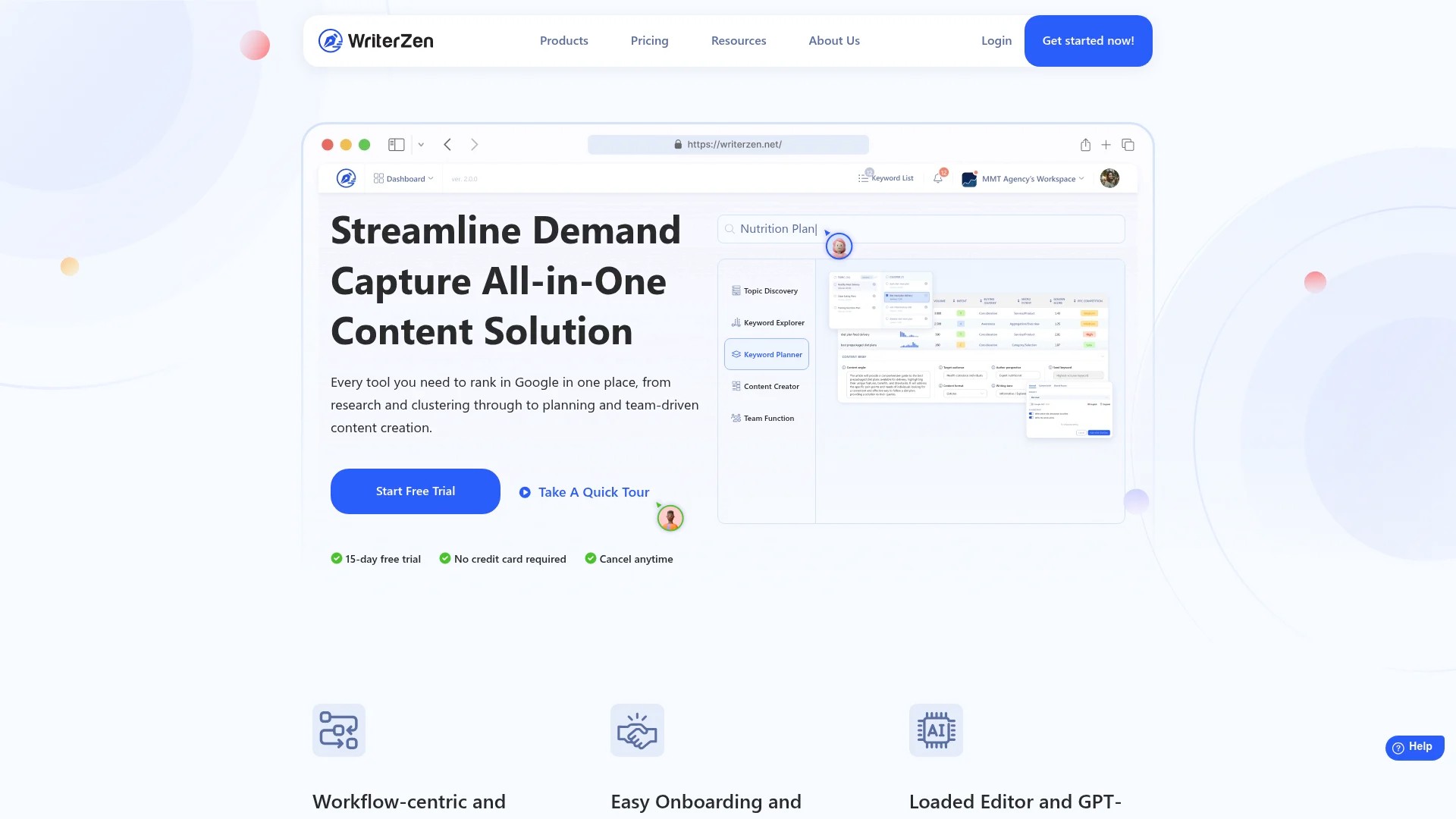
Brief creation tools help you outline articles based on research data. Plagiarism detection ensures your content remains original whilst covering necessary topic elements.
Pricing: Subscription plans available at various levels depending on usage requirements and team size.
Best for: Content teams producing high volumes of SEO-optimised articles who need systematic topic research and content planning workflows.
Specialised content discovery solutions
Beyond mainstream platforms, several specialised tools address specific content discovery needs.
TopicRanker: Business topic suggestions
TopicRanker takes a unique approach to content ideas. TopicRanker suggests relevant business topics to unlock new keyword ideas, emerging as a niche tool in content marketing.
The platform analyses your industry and business type to suggest relevant topics you might not have considered. This helps break out of repetitive content patterns.

Topic suggestions connect to keyword research, showing search demand for each suggested subject. You can evaluate which topics offer both relevance and traffic potential.
Pricing: Check their website for current pricing information as plans may vary.
Best for: Marketers struggling with content ideation who need fresh perspectives on what to create next.
Mixkit: Video content discovery
Mixkit serves a different content type entirely. Mixkit offers free HD stock videos in categorised collections, adding about 10 new ones weekly for video content discovery.
Video content increasingly dominates social media and content marketing. Finding quality stock footage without licensing fees removes a significant barrier to video creation.
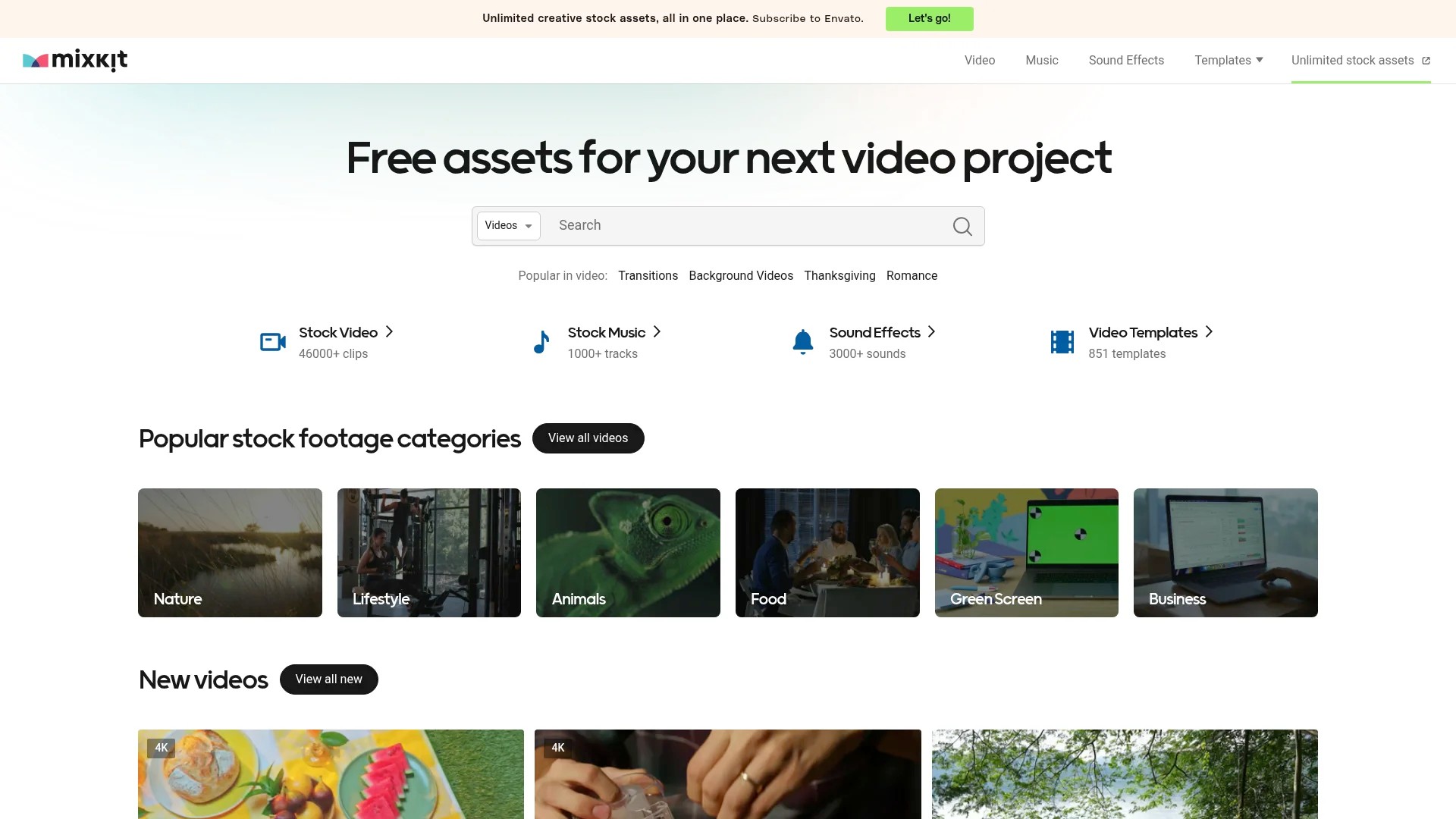
The categorised collections make browsing efficient. Weekly additions ensure fresh options appear regularly for ongoing video projects.
Pricing: Completely free for both personal and commercial use.
Best for: Content creators incorporating video into their strategy who need stock footage without budget constraints.
For additional insights on content strategies, explore our comparison of human vs AI curation.
Maximising your content discovery workflow
Owning the right tools represents only half the equation. Effective usage requires thoughtful workflow design.
Create a structured discovery routine
Set specific times for content discovery rather than browsing randomly throughout the day. Fifteen minutes each morning reviewing feeds provides more value than sporadic checks that fragment your attention.
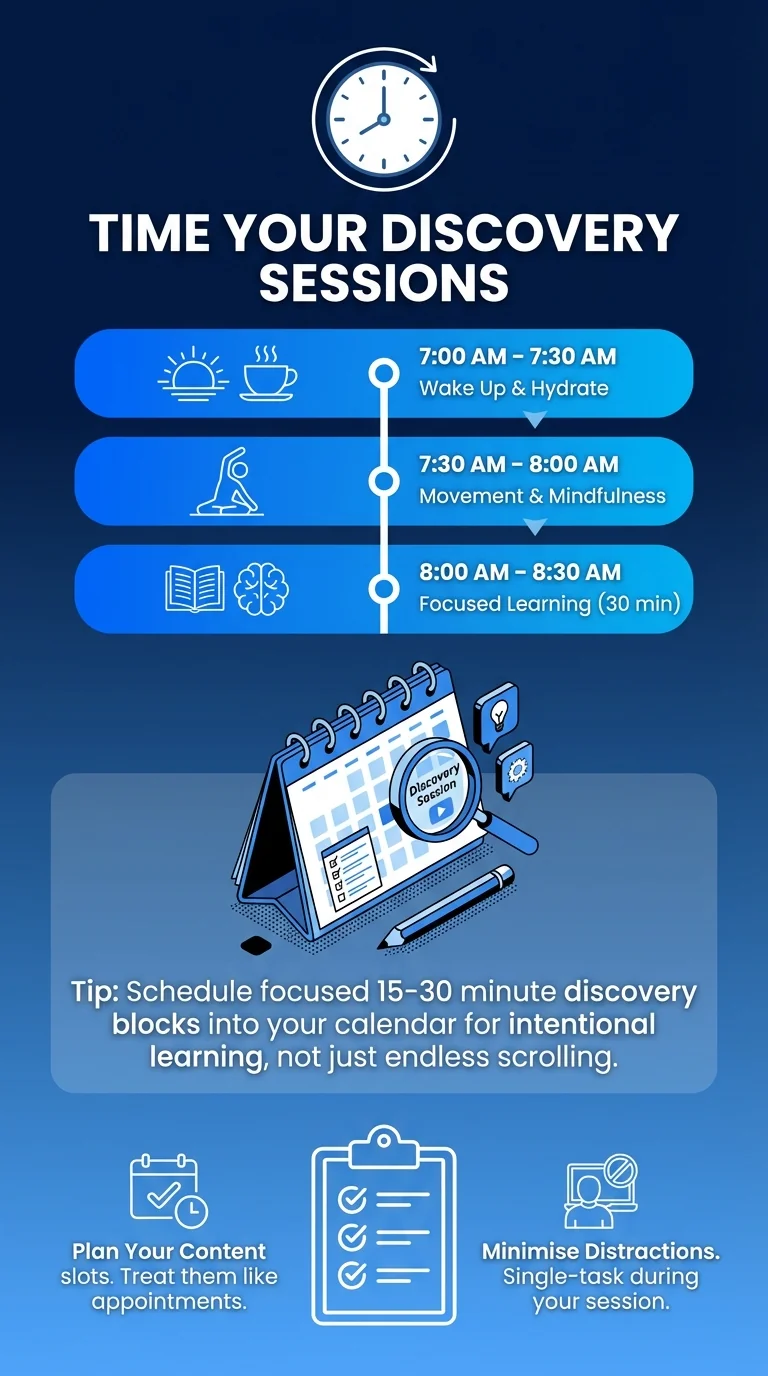
Organise sources into categories aligned with your content strategy. Separate feeds for industry news, competitor content, and inspiration topics lets you focus attention appropriately.
Use tagging and saving features liberally. When you encounter valuable content, immediately categorise it by topic, content type, or intended use. This organisation pays dividends when you need specific content later.
Balance discovery with action
Discovery tools can become procrastination devices if you’re not careful. Consuming endless content feels productive but creates no value until you act on insights.
Set limits on discovery time. Once you’ve gathered sufficient ideas, close discovery tools and move to creation. Five strong content ideas you execute beat twenty brilliant concepts that remain in your saved items.
Establish a clear path from discovery to creation. When you save content, note specifically how you’ll use it. Will it inspire an article? Provide a quote? Offer statistical backing? This clarity prevents saved content from becoming digital clutter.
Combine multiple tools strategically
Different tools serve different purposes. Use RSS readers for systematic source monitoring, social tools for trending topics, and SEO platforms for keyword opportunities.
Avoid tool overload. Three complementary platforms typically suffice. More tools mean more interfaces to check, increasing complexity without proportional value.
Look for tools with overlapping functionality to reduce your tool stack. A platform offering both feed reading and social monitoring eliminates the need for separate solutions.
Check out our guide on tools every social media manager needs to know for additional recommendations.
Common content discovery mistakes to avoid
Even with excellent tools, certain habits undermine content discovery effectiveness.
Following too many sources
More sources don’t automatically mean better discovery. An overloaded feed becomes overwhelming, causing you to skim superficially rather than engage deeply with quality content.
Regularly audit your sources. Remove feeds that consistently provide low-value content. Quality sources that align with your content strategy deserve your attention more than quantity.
Consider using folder systems or priority feeds. Not all sources warrant daily checking. Some might only need weekly reviews.
Ignoring your audience’s interests
Content discovery should focus on what your target audience cares about, not just what interests you personally. These don’t always align perfectly.
Use analytics to understand which content types resonate with your audience. Let this data guide your discovery focus rather than personal preferences.
Monitor questions your audience asks. Discovery tools tracking specific keywords help you find content addressing these genuine interests.
Failing to take action on discoveries
Saving content creates no value unless you eventually use it. Many marketers accumulate hundreds of saved articles they never revisit.
Schedule regular reviews of saved content. Block time monthly to process saved items, either using them or deleting them if no longer relevant.
Implement a simple action system. Tag items as “share,” “reference,” or “inspire” to clarify intended use. This reduces decision paralysis when you return to saved content.
For more techniques, see our article on efficient techniques for curating articles.
Building a sustainable content discovery practice
Content discovery tools transform how marketers find ideas and stay current with industry developments. The platforms covered here address different needs, from RSS aggregation to social monitoring to keyword research.
Start with one or two tools matching your primary needs. RSS readers like Feedly provide systematic source monitoring. Social tools like BuzzSumo reveal trending topics and successful content patterns. SEO platforms like Ubersuggest uncover search-driven opportunities.
The most effective approach combines discovery tools with structured workflows. Regular discovery sessions, organised tagging systems, and clear paths from discovery to creation ensure you act on insights rather than merely collecting information.
Remember that tools enable discovery, but your strategy determines what you discover. Focus on content relevant to your audience, not just topics that interest you. Use analytics to validate that your discoveries align with audience needs.
Begin with free or low-cost options to establish your discovery habits. As your content marketing matures, premium features and advanced analytics become worthwhile investments.