
Social media management pricing typically ranges from £400 to £4,000 per month, but this vast spread reflects fundamentally different service models, provider types, and value propositions. The key to setting profitable rates lies in choosing the right pricing model: monthly retainers work best for ongoing management, project-based fees suit campaign work, value-based pricing aligns with business outcomes, and hourly rates provide flexibility for smaller engagements. Your pricing model determines not just your income, but your client relationships, workflow predictability, and business scalability.
Understanding which pricing structure fits your service offering requires examining how different businesses charge for social media work. Agencies often use tiered retainers, freelancers frequently charge hourly rates, and consultants may implement value-based models tied to performance metrics.
This guide breaks down every pricing model used in social media services. You’ll see specific dollar ranges for different service types, compare provider costs across experience levels, and learn frameworks for calculating your own rates based on scope, platforms, and deliverables.
Understanding Social Media Management Pricing in 2026
Social media management pricing reflects three core components: strategy development, content creation, and community engagement. Each component carries different cost structures based on complexity and time investment.
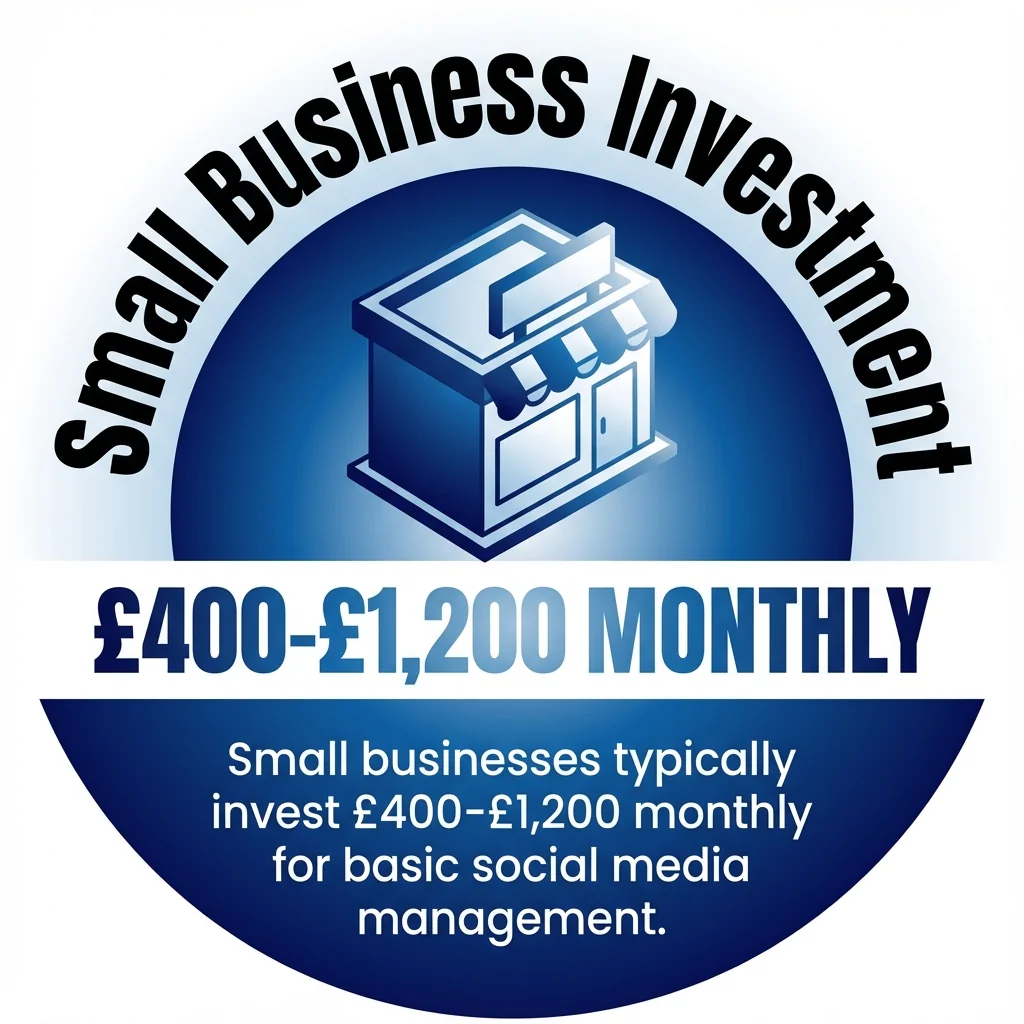
Small businesses typically invest £400-£1,200 monthly for basic social media management. This covers 10-15 posts per month across two or three platforms, basic engagement monitoring, and monthly performance reports.
Mid-sized businesses allocate £1,200-£3,000 monthly for comprehensive management. Services expand to include content calendars, paid advertising coordination, influencer outreach, and detailed analytics reporting.
Enterprise organisations budget £3,000-£8,000+ monthly for full-service management. This encompasses multi-platform strategies, dedicated account management, crisis monitoring, advanced analytics, and integrated marketing campaigns.
The pricing variation stems from several factors. Platform quantity matters significantly: managing one platform costs less than coordinating five. Content complexity influences rates: curated reshares cost less than custom graphics or video production. Engagement depth affects pricing: basic post scheduling differs from active community management with real-time responses.
Cost Drivers Beyond Business Size
Industry specialisation commands premium rates. Healthcare, finance, and legal sectors require compliance knowledge and specialised content expertise. These industries often pay 20-40% above standard rates for qualified providers.

Geographic location impacts pricing structures. Social media managers in London charge higher rates than those in regional markets, though remote work increasingly equalises these differences. International providers may offer competitive rates but require consideration of time zones and cultural nuances.
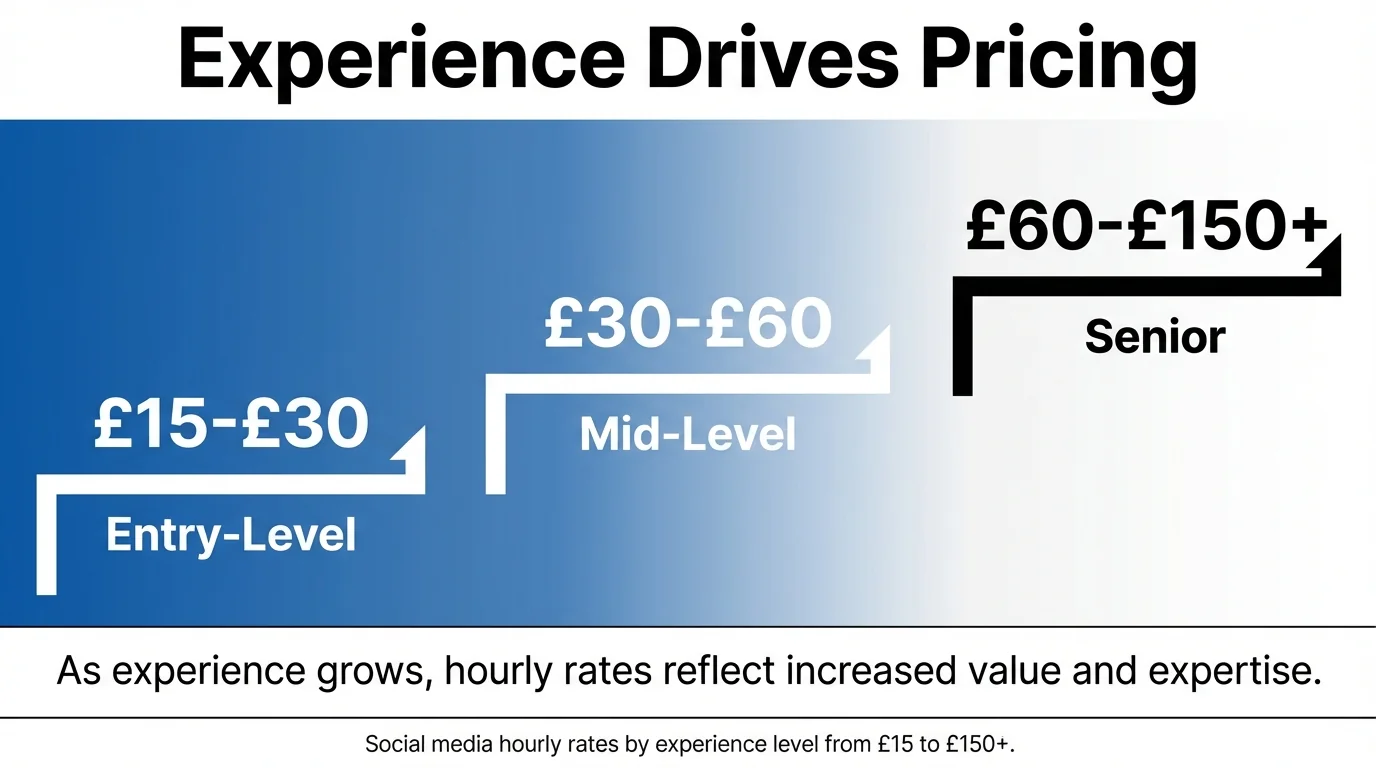
Experience level creates substantial price variation. Entry-level freelancers charge £15-£30 hourly, mid-level professionals command £30-£60 hourly, and senior strategists request £60-£150+ hourly for their expertise.
Service Scope Variations
Basic social media management includes content scheduling, platform monitoring, and simple engagement. This foundational service suits businesses maintaining consistent presence without complex campaigns.
Comprehensive management adds strategy development, content creation, paid advertising, influencer coordination, and detailed reporting. Businesses seeking growth invest in this expanded service level.
Full-service management integrates social media with broader marketing initiatives. It includes reputation management, crisis response, competitive analysis, and cross-channel campaign coordination.
Understanding these pricing foundations helps you evaluate provider proposals and set your own service rates. The next section examines specific cost ranges for different service configurations.
Average Cost Ranges for Social Media Management Services
Social media strategy services typically cost £800-£3,000 for initial development. This one-time investment creates your content framework, platform selection, audience targeting, and competitive positioning.
Monthly management retainers vary by service intensity. Basic packages start at £400-£800 monthly for minimal posting and monitoring. Standard packages range £800-£2,000 monthly for regular content and engagement. Premium packages exceed £2,000-£5,000 monthly for comprehensive multi-platform management.
Content creation carries separate pricing structures. Single posts cost £30-£100 depending on complexity. Custom graphics range £50-£200 per piece. Professional photography sessions bill at £300-£1,000 per shoot. Video production costs £500-£3,000+ per finished video based on length and production quality.
Platform-Specific Cost Considerations
Different platforms require varying effort levels and expertise. Managing Facebook and Instagram together costs less than adding LinkedIn, TikTok, and Twitter to your service mix.
LinkedIn management typically commands premium rates. B2B content requires industry expertise and thought leadership positioning. Professional networks demand higher-quality content and strategic engagement.
TikTok management requires video production skills and trend awareness. Younger audiences and fast-paced content cycles create unique demands. Providers often charge 15-25% premiums for TikTok-specific expertise.
Twitter management involves real-time engagement and brand voice consistency. The platform’s conversational nature requires active monitoring and quick response capabilities.
Campaign vs Ongoing Management Pricing
One-time campaigns bill differently than ongoing management. Product launches typically cost £2,000-£8,000 depending on campaign complexity and duration. Event promotion ranges £1,500-£5,000 based on event size and promotion timeline.
Seasonal campaigns require concentrated effort over shorter periods. Holiday promotions might cost £1,000-£4,000 for planning, content creation, and execution across a 4-6 week window.
Ongoing management provides consistent brand presence. Monthly retainers create predictable costs and sustained engagement. Most businesses find better value in retained services rather than sporadic campaign work.
The table below compares typical pricing ranges across service levels and provider types.
| Service Level | Freelancer Monthly Cost | Agency Monthly Cost | Included Services |
|---|---|---|---|
| Basic | £400-£800 | £800-£1,500 | 2-3 platforms, 10-15 posts, basic engagement |
| Standard | £800-£2,000 | £1,500-£3,500 | 3-4 platforms, 20-30 posts, active management, monthly reports |
| Premium | £2,000-£4,000 | £3,500-£8,000 | Multi-platform, custom content, strategy, paid ads, detailed analytics |
| Enterprise | £4,000+ | £8,000-£20,000+ | Full-service, dedicated team, crisis management, integration |
These ranges provide benchmarks for evaluating proposals. Your specific costs depend on service scope, platform quantity, content requirements, and provider expertise.
Pricing Models Explained: Which One Is Right for You?
Choosing your pricing model affects client relationships, revenue predictability, and business scalability. Four primary models dominate social media services: hourly rates, monthly retainers, project-based fees, and value-based pricing.
Each model suits different service types and business stages. Understanding their mechanics helps you select the most profitable approach for your offerings.
Hourly Rate Pricing
Hourly pricing bills clients for actual time spent on their accounts. Rates typically range £15-£150 per hour based on experience and specialisation.
This model works best for variable-scope projects. One-off content creation, consulting sessions, and audit work suit hourly billing. Clients appreciate paying only for time used, particularly for smaller engagements.
Track every minute meticulously when using hourly rates. Use time-tracking tools like Toggl or Harvest to document billable hours. Provide detailed timesheets showing task breakdowns and hours invested.

Hourly pricing creates income uncertainty. Revenue fluctuates with client needs and available hours. You’re also selling time rather than value, which caps earning potential.
Monthly Retainer Pricing
Retainer models charge fixed monthly fees for defined service packages. Clients pay the same amount regardless of hours worked, creating predictable revenue streams.
Most social media agencies prefer retainers for ongoing management. Consistent monthly income enables better resource planning and team scheduling. Clients benefit from predictable costs and guaranteed service availability.
Structure retainers with clear deliverable definitions. Specify post quantities, response times, reporting frequency, and platform coverage. Include revision limits and additional fee structures for out-of-scope requests.
Retainer pricing requires careful scoping. Underestimate required hours and you lose money. Overestimate and clients feel overcharged. Review retainers quarterly to ensure fair value exchange as needs evolve.
According to social media management tool pricing data, platforms like eClincher charge £119-£279 monthly for tools supporting multiple profiles, demonstrating that even software follows retainer models.
Project-Based Pricing
Project pricing quotes fixed fees for specific deliverables. Campaign launches, content series creation, and social media audits work well with project structures.
Define project scope exhaustively before quoting. Include deliverable specifications, revision rounds, timeline, and exclusions. Detailed scopes prevent scope creep and client disputes.
Calculate project fees by estimating total hours required and multiplying by your desired hourly rate, then adding 20-30% buffer for revisions and project management. This ensures profitability even with unexpected complications.
Project pricing creates revenue gaps between engagements. You’ll need consistent sales efforts to maintain steady income. Many providers combine project work with retainer clients for balanced revenue streams.
Value-Based Pricing
Value-based models tie fees to client outcomes rather than time or deliverables. You might charge based on revenue generated, leads produced, or engagement metrics achieved.
This model requires quantifying your impact. Track conversion rates, sales attributed to social campaigns, and customer acquisition costs. Document how your work directly influences business metrics.
Value pricing commands premium rates. Clients pay more when services demonstrably generate revenue. A social campaign generating £50,000 in sales justifies £5,000-£10,000 fees where hourly billing might yield only £2,000.
Implementation requires clear success metrics. Establish baseline measurements before engagement begins. Use attribution tracking and analytics platforms to document results. Agree on pricing formulae upfront, such as 10% of attributed revenue or fixed fees per qualified lead generated.
Value-based pricing works best for experienced providers with proven track records. New providers should build case studies through other pricing models before transitioning to value-based structures.
How Much to Charge for Social Media Strategy
Social media strategy development requires distinct pricing from execution services. Strategy work involves research, competitive analysis, audience profiling, and platform recommendations.
Entry-level strategists charge £500-£1,500 for basic strategy documents. These typically include platform recommendations, content themes, posting frequencies, and basic competitor analysis.
Experienced strategists command £1,500-£5,000 for comprehensive strategies. Deliverables expand to include detailed audience personas, content calendars, growth roadmaps, paid advertising recommendations, and measurement frameworks.
Senior strategists and agencies charge £5,000-£15,000+ for enterprise strategies. These include extensive market research, multi-platform integration, crisis management protocols, and quarterly strategy reviews.
Strategy Components That Justify Premium Pricing
Audience research adds significant value. Deep demographic analysis, psychographic profiling, and behaviour pattern identification justify higher fees. Clients pay premium rates when strategies target precisely defined audience segments.
Competitive intelligence commands higher pricing. Comprehensive competitor content analysis, engagement benchmarking, and differentiation positioning require substantial research time. This intelligence creates competitive advantages worth premium investment.
Content architecture development deserves separate pricing consideration. Creating content pillars, editorial calendars, and governance guidelines requires strategic thinking beyond basic posting plans. Charge £800-£2,500 for detailed content frameworks.
Productising Your Strategy Services
Package strategy services at three levels for easier client selection. Starter packages (£800-£1,500) provide basic platform recommendations and content themes. Growth packages (£1,500-£3,500) add comprehensive audience research and competitive analysis. Premium packages (£3,500-£8,000+) include full strategic frameworks with quarterly reviews.
Include implementation guidance in strategy packages. Strategy documents without execution support often sit unused. Add 2-4 hours of implementation coaching to increase perceived value and ensure strategy adoption.
Offer strategy refreshes at reduced rates to existing clients. Annual or semi-annual strategy updates maintain relevance as platforms and audiences evolve. Price refreshes at 40-60% of initial strategy costs.
The content in our guide to social media services explores different service types you might include in strategic packages.
Social Media Management Pricing Breakdown
Social media management encompasses multiple service components, each carrying different cost structures. Breaking down pricing by activity type helps you create transparent proposals and identify profitable service areas.
Content scheduling forms the foundation of management services. Using tools like Buffer or Hootsuite, providers schedule 10-30 posts monthly across client platforms. This basic service typically costs £200-£600 monthly depending on post quantity and platform count.
Community management requires active platform monitoring and engagement. Responding to comments, messages, and mentions typically adds £300-£1,000 monthly to management fees. Real-time engagement demands consistent attention and quick response capabilities.
Performance reporting involves data collection, analysis, and presentation. Monthly reports showing reach, engagement, follower growth, and top-performing content cost £150-£500 depending on depth and visualisation quality.
Service Combinations and Package Pricing
Most clients need multiple management components. Package related services together for simplified pricing and increased value perception.
Basic management packages combine scheduling and minimal monitoring. These £400-£800 monthly packages suit small businesses maintaining presence without extensive engagement needs.
Standard packages add active community management and monthly reporting. These £800-£2,000 packages serve growing businesses needing consistent engagement and performance tracking.
Premium packages include strategy development, content creation, paid advertising coordination, and detailed analytics. These £2,000-£5,000+ packages provide comprehensive solutions for businesses treating social media as primary marketing channels.
Platform Quantity Impact on Pricing
Managing additional platforms increases workload and justifies higher pricing. Each platform requires separate content optimisation, platform-specific engagement, and distinct performance tracking.
Single-platform management serves niche businesses. A LinkedIn-only strategy for B2B companies or Instagram-only approach for visual brands simplifies management and reduces costs by 30-40% compared to multi-platform services.
Two-platform management represents the most common configuration. Facebook and Instagram pairing or LinkedIn and Twitter combinations provide broad reach without excessive complexity. Base pricing on this configuration, then adjust for additional platforms.
Multi-platform management (4+ platforms) requires significant coordination. Content must be adapted for each platform’s format and audience expectations. Charge 15-25% premiums for each platform beyond three to account for increased complexity.
The table below shows how platform quantity affects monthly management pricing.
| Platform Quantity | Monthly Management Cost | Typical Platform Combinations |
|---|---|---|
| 1 Platform | £300-£800 | LinkedIn only, Instagram only |
| 2 Platforms | £500-£1,500 | Facebook + Instagram, LinkedIn + Twitter |
| 3 Platforms | £800-£2,500 | Facebook + Instagram + LinkedIn |
| 4+ Platforms | £1,500-£4,000+ | Full multi-platform presence |
Content Creation Costs and Pricing
Content creation represents the most visible component of social media services. Pricing varies dramatically based on content type, production complexity, and creative requirements.
Text-based posts require minimal production effort. Simple status updates, curated links, and basic announcements cost £15-£40 per post. These suit high-frequency posting strategies where volume matters more than individual post complexity.
Custom graphics command higher rates. Static images with brand elements, typography, and visual design cost £40-£120 per graphic. Professional designers charge toward the upper range, while template-based designs fall at lower price points.
Photography services carry distinct pricing structures. Stock photo licensing costs £8-£30 per image. Custom photography sessions range £300-£1,000 for 20-40 edited images. Product photography for e-commerce brands often commands premium rates due to technical requirements.
Video Production Pricing
Video content requires the highest production investment. Short-form videos (15-60 seconds) for Instagram Reels or TikTok cost £200-£800 per finished video depending on editing complexity and special effects.
Long-form videos (3-10 minutes) for YouTube or LinkedIn range £500-£3,000+ per video. Production costs include scripting, filming, editing, colour grading, and audio mixing. Professional videographers charge toward the upper range.
Live video requires technical setup but lower post-production costs. Live streaming services cost £300-£1,000 per session including equipment, streaming software setup, and technical monitoring.
Content Volume Discounting
High-volume content packages justify volume discounting. Creating 40 graphics monthly costs less per unit than producing occasional pieces.
Offer tiered content packages based on monthly volume. A 20-post package might price at £800 (£40 per post), while a 40-post package costs £1,200 (£30 per post). Volume discounts reward clients while ensuring consistent workload.
Monthly content retainers provide predictable revenue. Rather than pricing individual pieces, charge fixed monthly fees for defined content quantities. A £1,500 monthly retainer might include 30 graphics, 10 captions, and 5 short videos.
Understanding how to choose content writing services helps you price written content components appropriately within your social media packages.
Rights and Usage Considerations
Content licensing affects pricing structures. Full rights transfer where clients own all created content justifies 30-50% premiums over limited-use licensing.
Specify usage rights in all content agreements. Define whether content can be repurposed, who retains ownership, and how long clients can use materials. Clear rights agreements prevent future disputes.
Consider residual pricing for content with extended value. Evergreen content usable for years justifies higher one-time fees than timely content with short relevance periods.
Social Media Campaign Pricing
Campaign-based pricing differs from ongoing management through defined timelines and specific objectives. Campaigns focus on product launches, events, promotions, or seasonal initiatives with clear start and end dates.
Small campaigns (2-4 weeks) targeting single objectives typically cost £1,000-£3,000. These include campaign planning, content creation for 15-25 posts, basic paid advertising coordination, and performance reporting.
Medium campaigns (1-3 months) with multiple touchpoints range £3,000-£8,000. Services expand to include comprehensive content calendars, influencer coordination, multi-platform execution, and detailed analytics.
Large campaigns (3-6 months) for major initiatives command £8,000-£25,000+. These include extensive planning, custom content production, significant paid advertising budgets, ongoing optimisation, and comprehensive measurement frameworks.
According to digital PR campaign research, retainer-based campaigns can range from £4,000 to £32,000 monthly for ongoing promotional efforts, demonstrating how extended campaigns justify premium pricing.
Campaign Scope Elements
Product launch campaigns require concentrated effort over short periods. Pre-launch teasers, launch day coordination, and post-launch momentum maintenance create distinct phases requiring different content approaches.
Event promotion campaigns build awareness leading to specific dates. Timeline-based content strategies count down to events, share speaker announcements, and maintain engagement throughout event duration.
Seasonal campaigns capitalise on holidays or shopping periods. Holiday promotions, back-to-school campaigns, and seasonal sales require timely content aligned with customer buying cycles.
Paid Advertising Integration
Campaign pricing often excludes paid advertising budgets. Separate creative fees from media spend in proposals to avoid confusion.
Charge management fees for paid advertising coordination. Typical structures include 15-20% of ad spend or fixed monthly fees of £500-£2,000 depending on campaign complexity and budget size.
Small advertising budgets (£500-£2,000 monthly) require similar management effort as larger budgets but generate less fee revenue. Consider minimum monthly fees of £400-£600 regardless of ad spend to ensure profitable engagements.
Campaign Success Metrics
Define success metrics before campaign launch. Establish baseline measurements and target improvements for reach, engagement, conversions, or sales.
Build performance bonuses into campaign agreements. Achieving or exceeding targets might trigger 10-20% bonus fees, aligning your success with client outcomes.
Document campaign results thoroughly. Detailed case studies from successful campaigns justify premium pricing for future proposals and demonstrate your value to prospective clients.
Community Management and Engagement Costs
Community management involves active monitoring and engagement rather than scheduled content publication. This service requires consistent attention and quick response capabilities.
Basic monitoring services cost £200-£600 monthly. This includes daily platform checks, flagging urgent mentions, and basic comment responses during business hours.
Active engagement services range £600-£1,500 monthly. Providers respond to all comments and messages, participate in relevant conversations, and maintain brand voice consistency across interactions.
Comprehensive community management costs £1,500-£4,000+ monthly. Services include real-time monitoring, crisis response protocols, proactive engagement strategies, and detailed engagement analytics.
Response Time Commitments
Response speed affects pricing structures. Same-day response commitments (8-12 hour response times) suit most businesses and fall within standard pricing ranges.
Real-time monitoring (1-2 hour response times) requires dedicated attention. Charge 30-50% premiums for fast response commitments due to increased resource requirements.
24/7 monitoring serves global brands or crisis-prone industries. Round-the-clock coverage requires team coordination and shift management. Price these engagements at £3,000-£8,000+ monthly depending on platform quantity and engagement volume.
Engagement Volume Considerations
High-engagement accounts require more management time. Accounts receiving 100+ comments daily need significantly more resources than those with minimal interaction.
Estimate monthly engagement volume during onboarding. Review historical comment quantities, message volumes, and mention frequencies. Adjust pricing based on expected workload rather than follower counts alone.
Include engagement thresholds in agreements. Define baseline engagement levels included in base pricing, then add surcharges for volumes exceeding thresholds. This protects you from underpricing high-interaction accounts.
Our analysis of social media marketing ROI measurement shows how engagement quality impacts business outcomes, justifying investment in comprehensive community management.
Crisis Management Premium Services
Crisis response capabilities command premium pricing. Brands facing reputation risks need immediate response protocols and experienced crisis communicators.
Include crisis management as add-on services. Basic crisis protocols (monitoring and escalation procedures) add £300-£800 monthly to management fees. Full crisis response capabilities (including statement drafting and real-time coordination) justify £1,000-£3,000+ monthly premiums.
Maintain crisis retainers even during quiet periods. Crisis preparedness provides value through prevention and readiness, not just active crisis management.
Comparing Service Providers: Agency vs Freelancer vs In-House
Three primary provider types serve the social media management market: agencies, freelancers, and in-house employees. Each offers distinct advantages and cost structures.
Freelancers typically charge £15-£60 hourly or £400-£3,000 monthly for retained services. Lower overhead costs enable competitive pricing. Freelancers suit small businesses with limited budgets or specific skill needs.
Agencies charge £60-£150+ hourly or £1,500-£15,000+ monthly for comprehensive services. Higher rates reflect team resources, established processes, and diverse expertise. Agencies serve mid-sized to enterprise clients needing scalable solutions.
In-house employees cost £25,000-£55,000+ annually in salary plus benefits, equipment, and training. Full-time dedication provides deep brand knowledge but limits diverse experience. In-house models suit large organisations with substantial social media needs.
Freelancer Advantages and Limitations
Freelancers offer flexibility and specialised skills. You can engage multiple freelancers for different needs: a copywriter for captions, a designer for graphics, a strategist for planning.
Cost efficiency appeals to budget-conscious businesses. Paying only for needed services rather than full-time salaries reduces expenses significantly.
Limitations include capacity constraints and limited redundancy. Freelancer availability varies, and single-person operations lack backup coverage during illness or holidays.
Agency Benefits and Premium Costs
Agencies provide team resources and diverse expertise. Multiple specialists collaborate on your accounts, bringing varied perspectives and skills.
Established processes create consistency. Agencies typically use proven workflows, quality assurance procedures, and project management systems that ensure reliable service delivery.
Scalability suits growing businesses. Agencies adjust resource allocation as your needs expand, providing seamless service increases without hiring complications.
Higher costs reflect these advantages. Agencies charge premium rates but deliver professional service quality and business stability.
In-House Employee Considerations
Full-time employees provide dedicated focus and deep brand understanding. Daily immersion creates authentic brand voice and cultural alignment.
Total employment costs exceed salary figures. Add benefits (20-30% of salary), equipment, software subscriptions, training, and management overhead when calculating true in-house costs.
Single-employee models create vulnerability. Departures leave coverage gaps, and limited expertise restricts strategic perspectives. Many organisations supplement in-house staff with agency support for specialised needs.
| Provider Type | Monthly Cost Range | Best For | Key Advantages |
|---|---|---|---|
| Freelancer | £400-£3,000 | Small businesses, specific projects | Flexibility, cost efficiency, specialised skills |
| Agency | £1,500-£15,000+ | Growing businesses, comprehensive needs | Team resources, scalability, proven processes |
| In-House | £2,100-£4,600+ (salary/12) | Large organisations, substantial volume | Dedicated focus, brand immersion, immediate availability |
Factors Affecting Social Media Service Pricing
Multiple variables influence social media service costs beyond basic scope definitions. Understanding these factors helps you evaluate proposals accurately and set appropriate rates.
Platform complexity varies significantly. Managing LinkedIn requires different skills than TikTok. B2B platforms demand professional content and industry knowledge. Entertainment platforms prioritise creativity and trend awareness. Specialised platform expertise justifies 15-30% pricing premiums.
Content production requirements drive cost variations. Curating existing content costs substantially less than producing original graphics, videos, or written content. Production-heavy strategies require higher budgets than curation-focused approaches.
Posting frequency affects workload and pricing. Publishing 5 times weekly requires less effort than daily posting. Multiple daily posts across numerous platforms demand significant time investment and coordination.
Industry Specialisation Premiums
Regulated industries command higher rates. Healthcare providers need HIPAA compliance knowledge. Financial services require regulatory awareness. Legal practices demand precise communication. These specialisations justify 25-40% premiums over general social media management.
Technical industries benefit from specialised knowledge. B2B technology, manufacturing, and professional services need providers understanding complex products and sophisticated audiences. Industry expertise adds significant value worth premium pricing.
Competitive industries require advanced strategies. Saturated markets need differentiated approaches and creative excellence. Standing out in crowded spaces demands more strategic thinking and creative investment.
Geographic and Market Factors
Local market conditions influence pricing expectations. Major metropolitan areas support higher rates than smaller markets. However, remote work increasingly allows providers to serve clients anywhere, partially equalising geographic pricing differences.
Target audience sophistication affects content requirements. Reaching educated professionals requires different content than targeting general consumers. Executive audiences expect polished, substantive content justifying higher production investments.
International markets introduce complexity. Multi-language content, cultural adaptation, and time zone coordination increase workload. International services typically command 20-35% premiums over domestic-only management.
Technology and Tool Costs
Professional social media management requires various tools. Scheduling platforms, analytics software, graphic design tools, and project management systems create recurring expenses.
The price bracketing research shows consumers choose more easily when presented with low, mid, and high price options, a principle applicable to packaging your technology-enabled service tiers.
Pass through or absorb tool costs based on service level. Basic packages might pass software costs to clients. Premium packages typically absorb these costs as business expenses reflected in overall pricing.
Enterprise tools provide advanced capabilities. Sprout Social, Agorapulse, and similar platforms cost £200-£500+ monthly but deliver sophisticated analytics and team collaboration features justifying premium service pricing.
Understanding how to choose the right automation tool helps you select cost-effective technology supporting profitable service delivery.
Creating Your Social Media Pricing Strategy
Developing your pricing strategy requires balancing profitability, competitiveness, and value perception. Follow this framework to establish sustainable rates.
Calculate your minimum viable rate by determining required income and available billable hours. Divide annual income needs by billable hours (typically 1,000-1,400 hours yearly accounting for non-billable time) to establish your baseline hourly rate.
Research competitive rates in your market and specialisation. Review freelancer platforms, agency websites, and industry surveys to understand prevailing rates. Position yourself within this range based on experience and expertise.
Define service packages at three levels. Starter packages serve budget-conscious clients with basic needs. Standard packages target your ideal client profile with comprehensive services. Premium packages showcase your full capabilities for high-investment clients.
Package Development Framework
Build packages around client outcomes rather than time investment. Focus on deliverables and results clients receive rather than hours you’ll work.
Starter packages might include platform setup, basic content calendar, 10-15 monthly posts, and monthly reporting. Price these at £600-£1,200 monthly for accessibility while maintaining profitability.
Standard packages expand to strategy development, custom content creation, active engagement, paid advertising coordination, and detailed analytics. Price these at £1,500-£3,500 monthly as your primary offering.
Premium packages provide full-service solutions including advanced strategy, comprehensive content production, multi-platform management, crisis protocols, and executive reporting. Price these at £4,000-£8,000+ monthly for clients needing extensive support.
Value-Based Pricing Considerations
Shift from cost-plus to value-based thinking as you gain experience. Rather than calculating costs and adding markup, price services based on client value received.
Quantify your impact through case studies and performance data. Document revenue generated, leads produced, or cost savings achieved. Use these results to justify premium pricing tied to outcomes.
Implement tiered success fees for performance-based components. Base fees might cover service delivery, whilst bonus fees reward achieving specific metrics. This aligns your success with client outcomes whilst protecting baseline revenue.
Pricing Communication Strategies
Present pricing with clear value explanations. Don’t simply list prices; explain what clients receive and how it benefits their business.
Use comparison tables showing different package levels. Visual presentations help clients understand options and make informed decisions. The pricing research from SurveyKing demonstrates how bracketing three options improves decision-making.
Offer payment flexibility where appropriate. Monthly payment plans make larger engagements more accessible. Annual prepayment discounts (10-15% off) improve cash flow and client retention.
Learning from how agencies and freelancers acquire clients through social media helps you understand what pricing models attract and retain ideal clients.
Common Pricing Mistakes to Avoid
Several pricing errors undermine profitability and business sustainability. Recognising these mistakes helps you maintain healthy margins.
Underpricing services is the most common mistake. New providers often charge too little hoping to attract clients. This strategy creates unsustainable workloads and devalues your expertise. Price at market rates from the beginning, competing on value rather than lowest cost.
Scope creep destroys profitability. Clients requesting additional work beyond agreements erode margins. Define scope clearly in contracts and charge for additional requests. Regular scope reviews prevent gradual expansion without compensation.
Failing to increase rates regularly leaves money on the table. Review pricing annually, adjusting for increased experience, inflation, and market conditions. Existing clients should see modest increases (5-10% annually) whilst new clients pay current market rates.
Proposal and Contract Clarity
Vague proposals create expectation mismatches. Specify exact deliverables, quantities, timelines, and exclusions. Detail what’s included and what costs extra.
Include revision limits in agreements. Unlimited revisions consume time without additional compensation. Allow 2-3 revision rounds, then charge for additional changes.
Define communication parameters. Specify response times, meeting frequencies, and reporting schedules. Unlimited access expectations create inefficiency and interrupt workflow.
Value Communication Failures
Competing solely on price attracts price-sensitive clients. These relationships often prove unprofitable and high-maintenance. Emphasise value, expertise, and results rather than lowest pricing.
Neglecting to showcase results undermines pricing justification. Maintain detailed case studies, performance metrics, and client testimonials. Quantified results justify premium pricing and differentiate you from competitors.
Avoiding pricing conversations creates awkwardness. Discuss pricing confidently as fair exchange for valuable services. Hesitant pricing communication suggests uncertainty about your worth.
Maximising Profitability in Social Media Services
Profitable social media services require strategic efficiency alongside appropriate pricing. These approaches increase margins without compromising quality.
Systematise repetitive tasks through templates and workflows. Create content templates, approval processes, and reporting formats that reduce time investment per client. Efficiency improvements increase effective hourly rates.
Leverage tools and automation strategically. The Buffer creator playbook demonstrates how pay-as-you-go pricing models work for scheduling tools, helping you select cost-effective solutions.
Batch similar work across clients. Schedule all client content in dedicated blocks. Create all graphics in focused sessions. Batching reduces context-switching time and improves efficiency.
Productised Service Development
Productised services standardise offerings for scalability. Rather than custom solutions for each client, create defined packages with set deliverables and pricing.
This approach increases sales efficiency. Standardised packages are easier to explain and sell than fully custom proposals. Clients choose from clear options rather than negotiating bespoke arrangements.
Productisation improves delivery efficiency. Repeatable processes allow faster onboarding and execution. You refine workflows through repetition, identifying improvement opportunities.
Maintain flexibility through add-ons. Base packages provide structure whilst optional additions accommodate specific needs. À la carte pricing for extras increases revenue without complicating core offerings.
Team Leverage and Scaling
Solo practitioners hit income ceilings based on available hours. Building teams multiplies capacity and revenue potential beyond individual limitations.
Start with subcontractors for overflow work or specialised skills. Pay subcontractors £15-£40 hourly whilst charging clients £40-£100 hourly. The margin covers project management and business overhead whilst expanding capacity.
Develop training systems for consistent quality. Document processes, create style guides, and establish quality checkpoints. Systematisation enables delegation whilst maintaining service standards.
Transition from delivery to management as teams grow. Your highest value shifts from execution to client relationships, strategy, and business development. Price your involvement accordingly, charging premium rates for strategic guidance whilst delegating execution.
Resources like our guide to efficient social media management help you systematise operations for improved profitability.
Moving Forward with Your Pricing Strategy
You now understand the complete pricing structure for social media services. Monthly retainers provide predictable revenue for ongoing management. Project fees suit campaign work with defined scopes. Value-based pricing aligns compensation with client outcomes. Hourly rates offer flexibility for variable engagements.
Your specific pricing depends on experience level, service scope, platform quantity, and market positioning. Small business packages start around £400-£1,200 monthly. Mid-market services range £1,500-£4,000 monthly. Enterprise solutions command £5,000-£15,000+ monthly for comprehensive management.
Calculate your baseline rates by determining required income and available billable hours. Research competitive pricing in your specialisation and market. Package services at three levels to provide clear client choices whilst maximising revenue potential.
Implement your pricing strategy immediately. Review existing client agreements and adjust rates for new clients. Create package descriptions explaining deliverables and value clearly. Communicate pricing confidently as fair exchange for professional expertise.
Your pricing evolves with experience and market conditions. Review rates quarterly, adjusting based on demand, capacity, and results achieved. Successful social media businesses balance profitability with sustainable client relationships through strategic pricing aligned with value delivered.
For comprehensive guidance on building your social media expertise, explore our ultimate social media marketing guide covering strategy development, content creation, and performance optimisation.