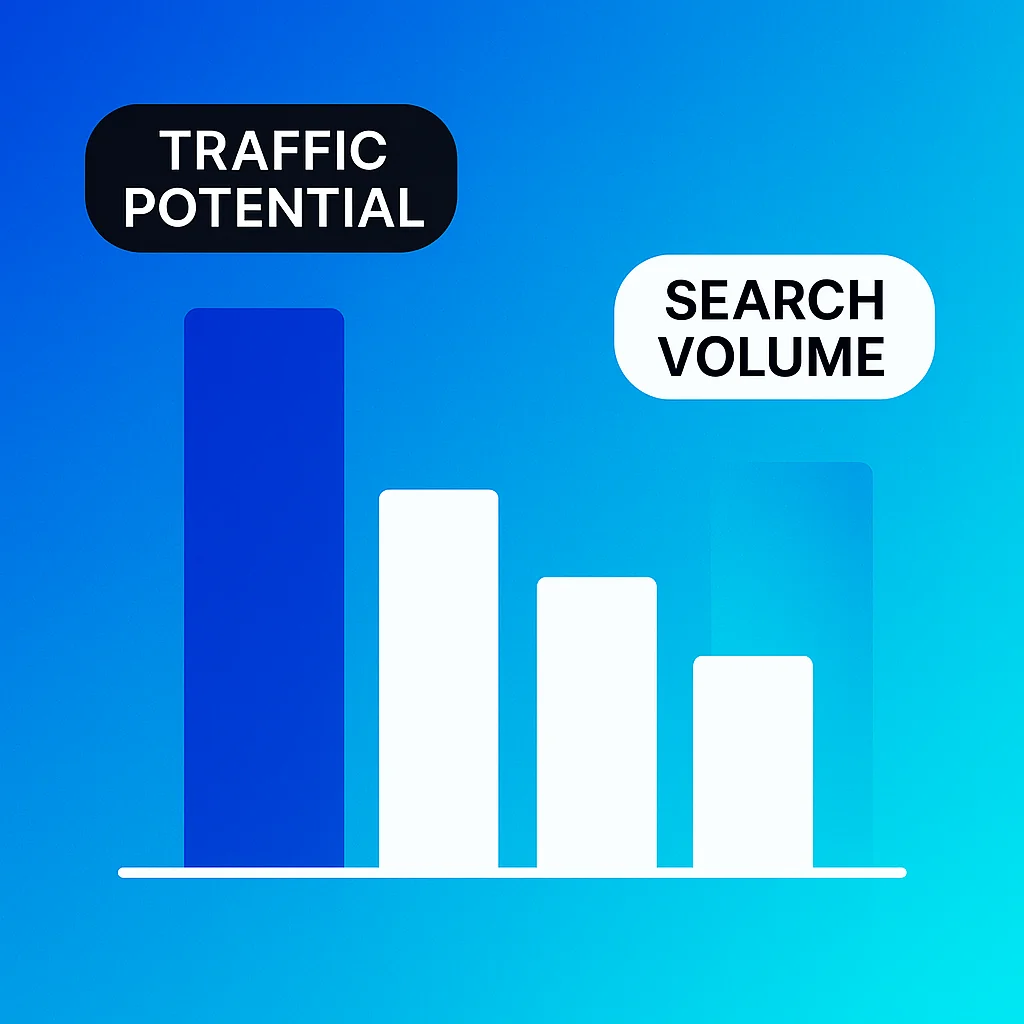
Search volume tells you how many people search for a keyword each month. Traffic potential shows how many visitors you could actually get to your page if you rank well for that keyword and its related terms. Search volume estimates monthly searches for specific keywords, but it doesn’t account for ranking position, click-through rates, or SERP features that affect clicks.
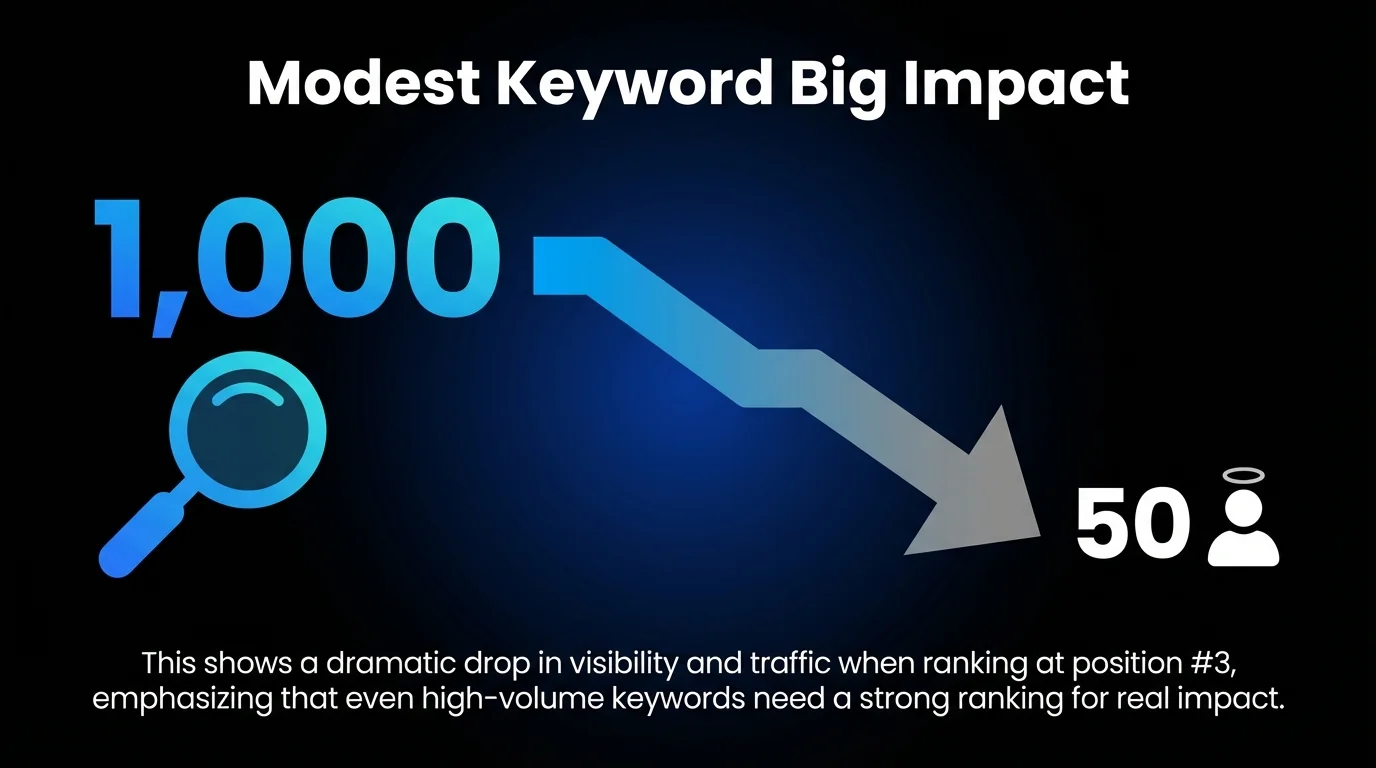
Traffic potential matters more for SEO strategy because it reflects reality. A keyword with 1,000 monthly searches might only send you 50 visitors if you rank third. Meanwhile, targeting ten related keywords with 100 searches each could deliver 500 visitors if you capture top positions across all of them.
Understanding this distinction changes how you prioritize keywords. You’ll focus on terms where you can actually win traffic, not just terms with impressive search numbers. This guide walks you through both metrics, when to use each, and how to find traffic potential in keyword research tools.

What is search volume?
Search volume measures how many times people search for a specific keyword in a given period, typically one month. Keyword search volume estimates how many times people search a specific keyword in search engines like Google or YouTube.
Most SEO tools report this as monthly searches. If a keyword shows 5,000 search volume, roughly 5,000 searches happen each month for that exact term.
Think of search volume as a demand indicator. It tells you how popular a topic is. High search volume suggests strong interest. Low search volume indicates a niche topic.
How search volume is calculated
SEO platforms gather search volume data from multiple sources. Google Keyword Planner uses actual Google search data. Tools like Semrush and Ahrefs combine Google data with clickstream information from browser extensions.
These tools typically show average monthly searches over 12 months. This smooths out seasonal spikes and gives you a baseline number.
The calculation accounts for variations in search behaviour across locations. A keyword might have 10,000 searches globally but only 400 in the UK. Most tools let you filter by country or region.
Why search volume fluctuates
Christmas gift searches spike in November and December. Tax software searches peak in March and April. Summer holiday destinations surge in January when people plan trips.
Trending events cause temporary volume spikes. A news story or viral moment can multiply searches by 1,000% for days or weeks. These spikes usually settle back to baseline quickly.
Industry shifts also affect volume over time. As markets mature or decline, search interest follows. New technologies create search demand that didn’t exist before.
What is traffic potential?
Traffic potential estimates how many organic visits you could receive if you ranked highly for a keyword and its related terms. Traffic potential refers to the estimated total amount of revenue or clicks your business could generate from organic search if you achieved top rankings for all relevant commercially valuable keywords.
Unlike search volume, traffic potential considers the whole picture. It accounts for ranking position, click-through rates, SERP features, and related keywords that could send traffic to the same page.
This metric answers a more useful question: how much traffic can this actually bring? It’s the difference between theoretical demand and practical opportunity.
The parent topic concept
Most pages don’t rank for just one keyword. They rank for dozens or hundreds of related terms. The main keyword is the parent topic. Related keywords are variations and long-tail searches.
A page targeting ‘content marketing strategy’ might also rank for ‘how to create content marketing strategy’, ‘B2B content marketing tactics’, and ‘content strategy framework’. All these searches could send traffic to the same page.
Traffic potential calculates the combined traffic from the parent topic and all related keywords. This gives you a realistic estimate of total page traffic, not just traffic from one exact-match keyword.
How ranking position affects traffic
Not everyone clicks search results. Position one typically captures 30-40% of clicks. Position two gets 15-20%. By position ten, click rates drop below 5%.
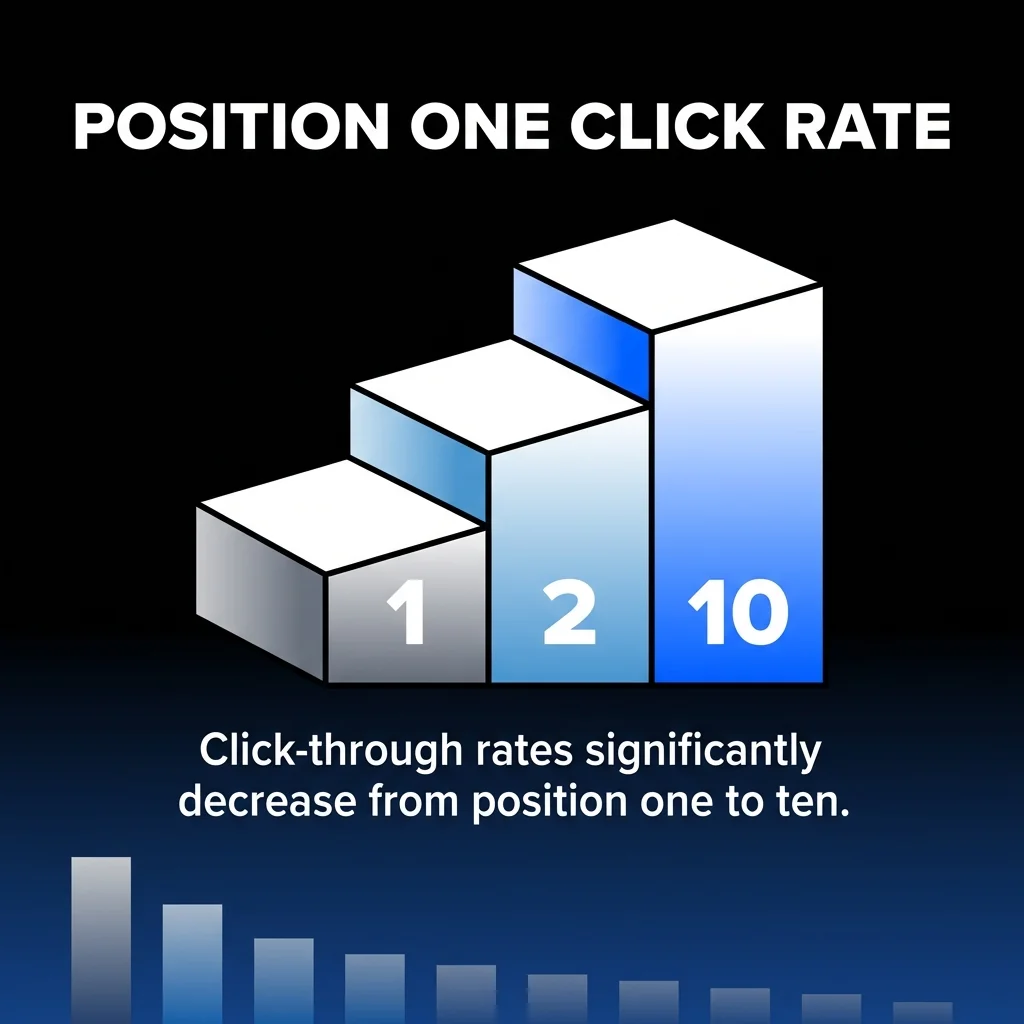
Traffic potential factors in these click-through rates. It looks at the top-ranking page for a keyword and estimates total traffic based on what that page actually receives.
This reveals opportunities search volume hides. A keyword with modest search volume but high click-through rates might deliver more traffic than a high-volume keyword dominated by ads and featured snippets.
Key differences between search volume and traffic potential
Search volume and traffic potential serve different purposes in keyword research. Search volume shows market size. Traffic potential shows realistic opportunity.
Here’s how they compare across key dimensions:
| Aspect | Search Volume | Traffic Potential |
|---|---|---|
| What it measures | Monthly searches for exact keyword | Estimated traffic to top-ranking page |
| Scope | Single keyword only | Parent topic plus related keywords |
| Click-through rate | Not considered | Factored into estimate |
| SERP features impact | Not reflected | Accounts for featured snippets, ads |
| Best use case | Gauging topic popularity | Prioritising content opportunities |
| Ranking difficulty | Not indicated | Implied through top page analysis |
Search volume gives you the full picture of demand. Traffic potential narrows that to achievable traffic based on competition and search behaviour.
A keyword with 10,000 searches might only drive 2,000 visits to the top result. Another keyword with 1,000 searches could deliver 800 visits if it has better click-through rates and fewer SERP distractions.
Why search volume alone can be misleading
Relying only on search volume leads to poor keyword choices. High search volume looks attractive, but it doesn’t guarantee traffic or results.
Traffic volume reveals how many people arrived at your website but reveals nothing about the quality of those visitors. The same principle applies to search volume.

SERP features reduce available clicks
Featured snippets, local packs, shopping results, and knowledge panels steal clicks from organic results. Some searches never lead to clicks at all because Google answers the question directly.
Zero-click searches are common for definitions, calculations, and factual queries. A keyword with 50,000 searches might only generate 10,000 actual clicks to websites.
Traffic potential accounts for these SERP features. It estimates clicks available after Google takes its share. This prevents chasing keywords that look valuable but deliver minimal traffic.
Ranking difficulty varies dramatically
High search volume keywords attract more competition. Established sites with strong authority dominate these terms. Breaking into the top ten requires significant effort and resources.
A keyword with 100,000 searches might be impossible to rank for. A keyword with 1,000 searches could be achievable within months. Traffic potential guides you toward keywords you can actually win.
This matters especially for newer sites. Targeting many low-volume keywords often delivers more traffic than competing for a single high-volume keyword where you rank on page 2.

Related keywords multiply opportunity
Search volume only counts one exact phrase. Traffic potential includes all keyword variations that could send traffic to the same page.
Someone searching for ’email marketing tips’ might also search ’email marketing best practices’, ‘effective email campaigns’, or ‘improve email open rates’. These variations won’t appear in the original keyword’s search volume.
When you target the parent topic, you capture traffic from all these related searches. This multiplier effect often makes lower-volume parent topics more valuable than high-volume exact-match keywords.
How traffic potential is calculated
Traffic potential uses the top-ranking page as a proxy for opportunity. Tools analyse what that page currently receives, then estimate what you could get with a similar ranking.
The calculation follows this logic: identify the parent topic keyword, find all related keywords that page ranks for, estimate clicks each keyword sends based on position, and sum total traffic from all keywords.
Data sources for traffic potential
SEO platforms combine multiple data sources. They start with search volume data for the main keyword and related terms. Then they layer in ranking positions for the top-performing page.
Click-through rate data comes from industry studies and clickstream information. Tools know that position one averages 30% CTR, position two gets 15%, and so on. These rates vary by query type and SERP layout.
The most sophisticated tools factor in your site’s authority. If you have a domain rating of 40 and you’re competing against sites with DR 70, your traffic potential will be lower even if you rank well.
The role of clicks per search
Clicks per search (CPS) measures average clicks generated per search query. Some keywords generate more clicks than others. Comparison queries often lead to multiple clicks as users explore options.
A keyword with 1,000 searches and 1.5 CPS could deliver 1,500 clicks monthly. A keyword with 2,000 searches and 0.5 CPS only generates 1,000 clicks. CPS reveals which keywords drive more engaged searching behaviour.
Traffic potential calculations incorporate CPS data. This refines estimates beyond simple search volume times click-through rate. It accounts for user behaviour patterns specific to each query type.
How to find traffic potential in Ahrefs
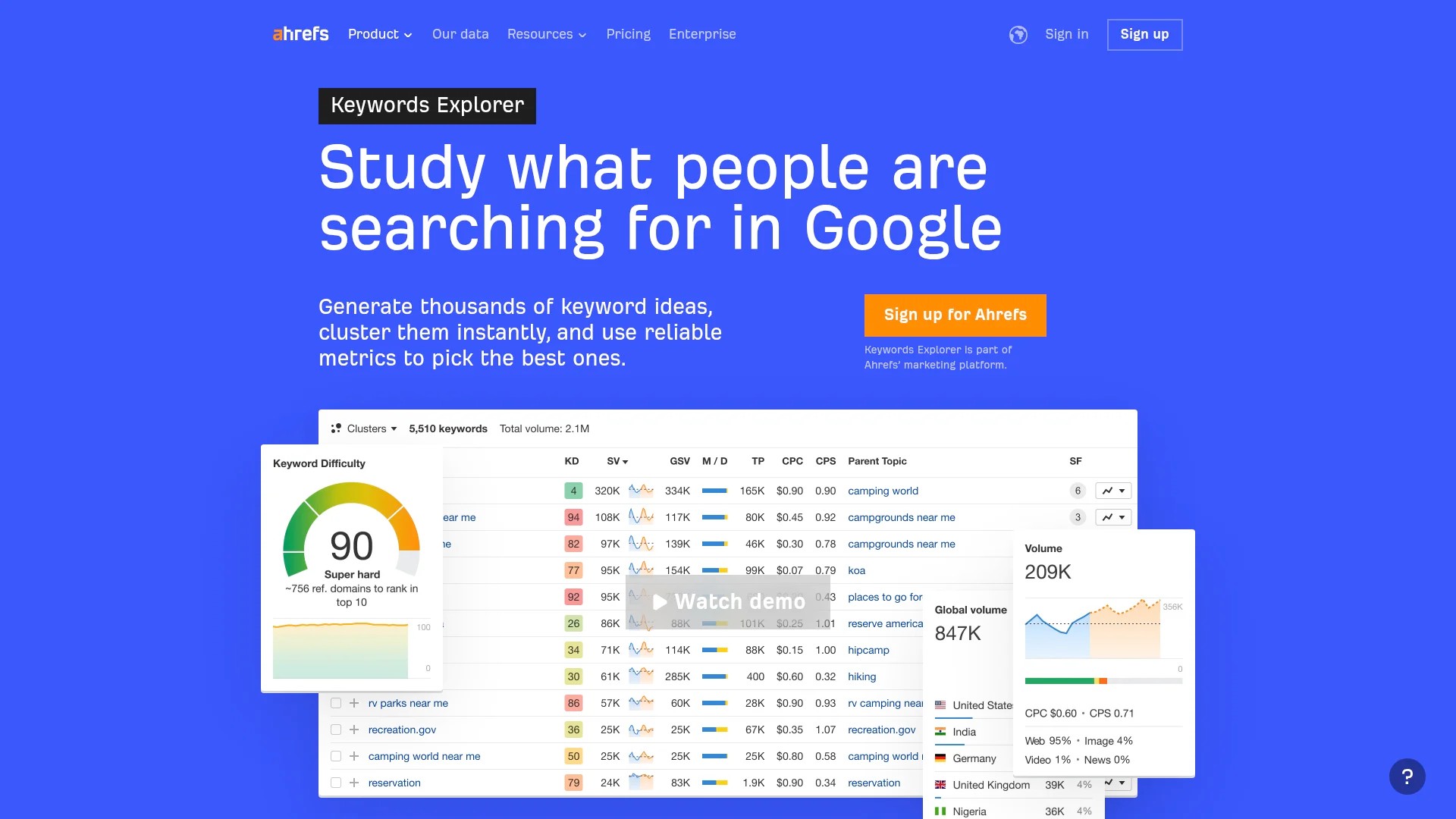
Ahrefs displays traffic potential prominently in Keywords Explorer. The metric appears alongside search volume for every keyword you research.
Start by entering your target keyword into Keywords Explorer. Select your target country to get localised data. The overview screen shows both search volume and traffic potential.
Understanding the Keywords Explorer interface
The main metrics screen shows four key numbers: search volume, traffic potential, keyword difficulty, and cost per click. Traffic potential appears as ‘TP’ with a number representing estimated monthly visits.
Click into the keyword to see the SERP overview. This shows the current top-ranking page and all keywords it ranks for. You’ll see exactly how Ahrefs calculated the traffic potential.
The ‘Also rank for’ section lists related keywords. These are the variations contributing to total traffic potential. Review this list to understand what else you’ll need to cover in your content.
Comparing keywords using traffic potential
Build a keyword list with multiple options. Ahrefs lets you compare traffic potential across all keywords in your list. Sort by traffic potential to see which terms offer the most opportunity.
This ranking often differs dramatically from search volume ranking. Keywords with modest search volume frequently outperform high-volume terms when traffic potential reveals the full picture.
Look for keywords where traffic potential significantly exceeds search volume. This indicates strong opportunity from related keywords and good click-through rates. These terms often represent your best content opportunities.
When to use search volume vs traffic potential
Both metrics serve specific purposes in keyword research. Use search volume for market sizing and trend analysis. Use traffic potential for content prioritisation and SEO planning.
The right metric depends on your question. If you’re evaluating market opportunity, search volume shows total demand. If you’re deciding what content to create next, traffic potential guides better decisions.
Search volume excels for market research
Understanding market size requires search volume. If you’re launching a product or entering a niche, you need to know how many people search for related terms.
Compare search volume across related topics to identify the biggest opportunities. Track search volume trends over time to spot growing or declining markets. This informs business strategy beyond just content creation.
Search volume also helps with keyword grouping. Cluster keywords by search volume to understand primary vs secondary topics. This shapes your information architecture and internal linking strategy.
Traffic potential guides content prioritisation
When you’re deciding what content to create, traffic potential beats search volume every time. It tells you which pages will actually drive visitors to your site.
Build your content calendar around traffic potential rankings. Create comprehensive guides targeting high-traffic-potential keywords first. These deliver the biggest SEO impact for your effort.
Use traffic potential to evaluate existing content too. Compare your current rankings against traffic potential to find optimisation opportunities. Pages ranking fifth could capture significantly more traffic with better positioning.
Combine both metrics for complete analysis
The most effective keyword research uses both metrics together. Start with search volume to identify topics worth pursuing. Then use traffic potential to prioritise and validate your choices.
Look for keywords where both metrics align. High search volume plus high traffic potential indicates strong opportunity with good accessibility. These are your priority targets.
Be cautious of keywords where the metrics diverge dramatically. High search volume with low traffic potential suggests difficult rankings or poor click-through rates. Low search volume with high traffic potential might indicate data quality issues or unique opportunities.
Practical examples: search volume vs traffic potential
Real comparisons show how these metrics differ in practice. Let’s examine scenarios where traffic potential reveals opportunities search volume would miss.
Example: long-tail keyword clusters
Consider ‘how to improve email deliverability’ with 800 monthly searches. Search volume alone suggests modest opportunity. But traffic potential shows 3,200 monthly visits.
This happens because the top-ranking page also captures traffic from related terms: ’email deliverability best practices’, ‘fix email bounce rate’, ‘improve sender reputation’, and dozens more variations. Combined, these drive significant traffic.
If you only looked at search volume, you might skip this keyword for a higher-volume alternative. Traffic potential reveals the true opportunity hiding behind that single search figure.
Example: competitive landscape differences
Compare ‘social media marketing’ at 90,000 searches with ‘social media content calendar template’ at 2,400 searches. Search volume suggests the first keyword offers 37 times more opportunity.
Traffic potential tells a different story. The high-volume keyword shows 15,000 potential visits because of intense competition and SERP features. The template keyword shows 8,000 potential visits from strong click-through rates and achievable rankings.
The lower-volume keyword actually delivers better opportunity for most sites. It’s easier to rank, attracts more engaged searchers, and includes valuable related keywords.
Example: zero-click search impact
A definitional query like ‘what is CTR’ has 12,000 monthly searches. Traffic potential might only show 2,000 visits because Google answers this directly in a featured snippet.
Most searchers get their answer without clicking. The remaining clicks get split between the snippet page and other results. Your realistic traffic opportunity is much smaller than search volume suggests.
Traffic potential prevents wasting effort on these zero-click queries. It guides you toward keywords where users actually click through to websites.
Key questions answered
What is the difference between search volume and traffic potential?
Search volume counts monthly searches for a keyword. Traffic potential estimates actual visitors you could receive by ranking well for that keyword and related terms. Search volume shows demand, whilst traffic potential predicts realistic traffic based on rankings and click behaviour.
What is the difference between traffic and volume?
Traffic measures actual visitors reaching your website. Volume, typically search volume, estimates monthly keyword searches. Traffic reflects real performance, whilst volume indicates potential market demand without guaranteeing visits.
What is traffic potential?
Traffic potential estimates monthly visits a webpage could attract in top positions. It considers search volume, click-through rates, SERP competition, and related keywords, providing realistic traffic forecasts based on ranking position and site strength.
Making smarter keyword decisions
Understanding traffic potential changes your SEO approach. You’ll stop chasing impressive search volumes that deliver disappointing results. You’ll start targeting keywords that actually drive visitors to your site.
Begin with your existing content. Check traffic potential for keywords you currently rank for. Identify pages where better rankings could significantly increase traffic. These optimisation opportunities often deliver quick wins.
For new content, build your strategy around traffic potential from the start. Research keywords using tools that evaluate traffic potential alongside traditional metrics. Prioritise topics where you can realistically compete and capture meaningful traffic.
Track both metrics over time. Search volume trends show market evolution. Traffic potential changes reveal shifting competition and search behaviour. Together, they guide your content strategy with reliable data.
Remember that measuring the right metrics matters more than chasing the biggest numbers. Traffic potential focuses your efforts on keywords that will actually grow your organic traffic.