
Content curation tools have transformed dramatically. The best platforms now combine AI-powered discovery, multi-format optimization, and seamless publishing workflows that save hours of manual work. Content curation tools in 2026 emphasise AI integration for discovery, optimisation, and multi-format content handling, shifting from simple aggregation to intelligent content strategy execution.
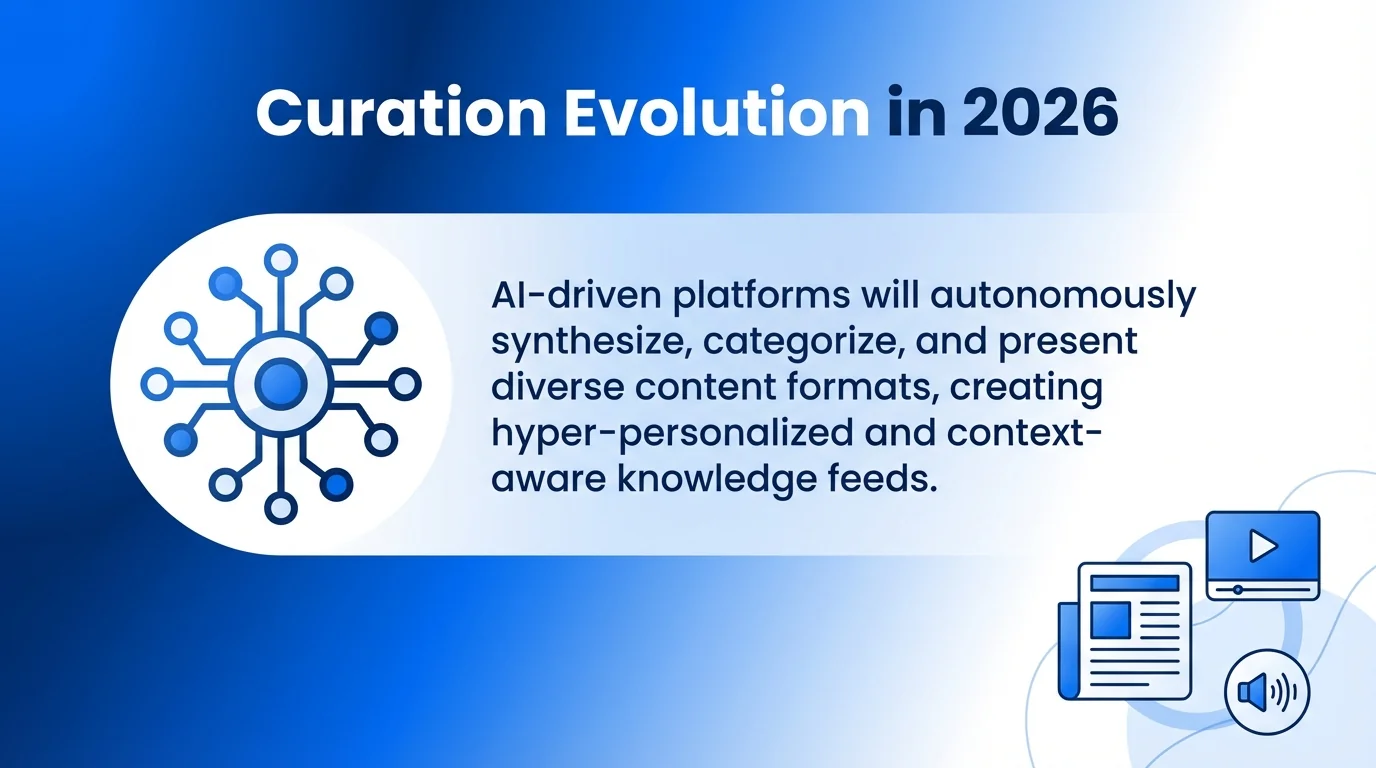
This shift matters because marketers face mounting pressure to produce consistent, valuable content across multiple channels whilst managing limited resources. Traditional manual curation can’t scale with modern audience expectations.
The tools we’ll examine represent current industry standards. Each addresses specific challenges facing marketing teams, from solo practitioners to enterprise operations. You’ll find detailed feature breakdowns, pricing considerations, and clear use-case recommendations to match your specific needs.
We’ve structured this evaluation around practical decision-making. Budget constraints, team size, and technical capabilities all influence which solution serves you best. The goal isn’t identifying a single “winner” but helping you select the right tool for your specific content marketing requirements.
Understanding Content Curation in 2026
Content curation involves discovering, organising, and sharing relevant third-party content with your audience. This practice complements original content creation by providing consistent value without requiring constant production of new material.
The process serves multiple strategic purposes. It positions your brand as an industry resource whilst building audience trust through valuable recommendations. Effective curation demonstrates expertise by filtering signal from noise.
Modern curation extends beyond simple link sharing. Content curation tools in 2026 emphasise AI integration for discovery, optimisation, and multi-format content handling. This includes analysing engagement patterns, optimising posting schedules, and adapting content formats for different platforms.
The Strategic Value of Curated Content
Curated content fills gaps in your publishing calendar efficiently. When production resources run thin, quality curation maintains your publishing momentum and audience engagement.
The practice also builds industry relationships. Sharing others’ work creates networking opportunities and positions your brand within larger industry conversations. This visibility often leads to reciprocal sharing and expanded reach.
Most importantly, curation serves your audience directly. By filtering through massive content volumes, you save your audience time whilst demonstrating understanding of their information needs and challenges.
How Content Curation Differs from Content Creation
Creation involves producing original material from research, experience, and expertise. Curation focuses on discovering, evaluating, and presenting existing content with added context or commentary.
Both approaches complement each other strategically. Original content establishes unique thought leadership. Curated content demonstrates broader industry awareness and provides consistent value between major content releases.
The resource requirements differ significantly. Creation demands substantial time for research, writing, editing, and production. Curation requires strong evaluation skills and strategic selection but consumes fewer production hours.
Key Benefits of Using Content Curation Tools
Manual curation becomes unsustainable as content volumes grow. Tools automate discovery, streamline evaluation, and simplify distribution across multiple channels.
The efficiency gains prove substantial. What once required hours of manual searching and organisation now happens through automated discovery and smart filtering. Teams redirect saved time towards strategy and engagement.
Time Savings Through Automation
Automated content discovery eliminates manual browsing across dozens of sources. Tools monitor RSS feeds, social media platforms, and industry publications simultaneously, surfacing relevant content based on predefined criteria.
Scheduling automation removes the need for manual posting across multiple platforms. Configure your distribution once, then tools handle timing and formatting automatically. This consistency maintains audience engagement without constant manual intervention.
Workflow automation streamlines team collaboration. Content moves from discovery through approval to publication within unified systems, eliminating email chains and disconnected tools.
Enhanced Content Discovery
AI-powered recommendation engines surface content you might otherwise miss. These systems analyse engagement patterns, topic relevance, and source credibility to prioritise the most valuable material for your audience.
Multi-source aggregation provides comprehensive industry coverage. Rather than checking individual sources manually, tools compile content from hundreds of publications, blogs, and social accounts into single dashboards.
Trend identification happens automatically. Systems track emerging topics across your industry, alerting you to conversations gaining momentum before they reach mainstream awareness.
Improved Social Media Consistency
Consistent posting schedules strengthen social media performance. Content curation tools maintain regular publishing cadence even during busy periods or when original content production slows.
Multi-platform distribution ensures presence across channels without duplicate effort. Format content once, then tools adapt and publish to each platform according to its specific requirements and optimal timing.
Analytics integration tracks performance across channels. Understand which curated content resonates most strongly, informing future curation decisions and content strategy.
Essential Features in Modern Content Curation Tools
Not all content curation platforms offer equal capabilities. Understanding essential features helps identify tools matching your specific requirements and workflows.
The most valuable features directly address common curation challenges: discovery efficiency, quality evaluation, team collaboration, and distribution effectiveness. Prioritise tools excelling in your primary challenge areas.
AI-Powered Content Discovery and Recommendations
Machine learning algorithms analyse millions of content pieces to identify material matching your specific criteria. These systems learn from your selections, continuously improving recommendation relevance over time.
Smart filtering removes low-quality content automatically. Systems evaluate source credibility, content depth, and engagement potential before surfacing recommendations, saving evaluation time.
Topic clustering organises discovered content by theme. This organisation helps identify content gaps, spot trending subjects, and plan balanced curation strategies across different audience interests.
Multi-Platform Publishing and Scheduling
Unified scheduling interfaces eliminate platform-switching overhead. Configure posts for Facebook, LinkedIn, Twitter, and other networks from single dashboards, maintaining consistent timing across channels.
Optimal timing recommendations increase engagement potential. Systems analyse your audience activity patterns to suggest ideal posting times for each platform and content type.
Format optimisation adapts content for platform-specific requirements. Tools automatically adjust image dimensions, character counts, and hashtag strategies to match each network’s specifications.
Team Collaboration and Approval Workflows
Multi-user access enables distributed curation responsibilities. Team members contribute content discoveries whilst maintaining quality control through structured approval processes.
Approval workflows prevent unauthorised publishing. Content moves through review stages before publication, ensuring brand consistency and message accuracy across all curated material.
Comment and feedback systems facilitate team communication. Discuss content selections, suggest improvements, and maintain institutional knowledge within unified platforms rather than scattered email threads.
Analytics and Performance Tracking
Engagement metrics reveal which curated content resonates most strongly. Track clicks, shares, comments, and other interactions to understand audience preferences and refine curation strategies.
Source performance analysis identifies your most valuable content sources. Focus curation efforts on publications and creators consistently producing high-performing material for your audience.
Comparative analytics benchmark performance across content types and platforms. These insights guide resource allocation and strategic decisions about channel priorities and content mix.
RSS Feed Aggregation and Management
RSS integration centralises content monitoring from hundreds of sources. Add relevant blogs, publications, and websites to unified feeds, eliminating manual site visits for content discovery.
Feed organisation by topic or priority streamlines content review. Create categories matching your content pillars or audience segments for efficient evaluation and selection.
Keyword filtering within feeds highlights most relevant content automatically. Define terms or phrases triggering notifications when they appear in feed content, ensuring you never miss critical industry developments.
Top Content Curation Tools for 2026
The following platforms represent current industry standards across different use cases and budget ranges. Each offers distinct advantages for specific marketing needs.
We’ve evaluated these tools based on feature comprehensiveness, ease of use, pricing value, and suitability for different team sizes and technical capabilities. Your specific requirements will determine which platform serves you best.
Selection Methodology
Our evaluation considered several critical factors. Feature depth and breadth, user experience quality, pricing transparency, customer support responsiveness, and integration capabilities all influenced these recommendations.
We prioritised tools with proven track records and active development. Platforms receiving regular updates and feature enhancements demonstrate ongoing commitment to user needs and evolving content marketing requirements.
Real user feedback informed our assessments. Customer reviews, case studies, and community discussions provided insights beyond marketing claims about actual tool performance and support quality.
Quuu: Best for Automated Social Media Content Curation
Quuu specialises in automated content discovery and social media scheduling. The platform surfaces hand-curated content suggestions across multiple interest categories, then schedules posts automatically to maintain consistent social media presence.
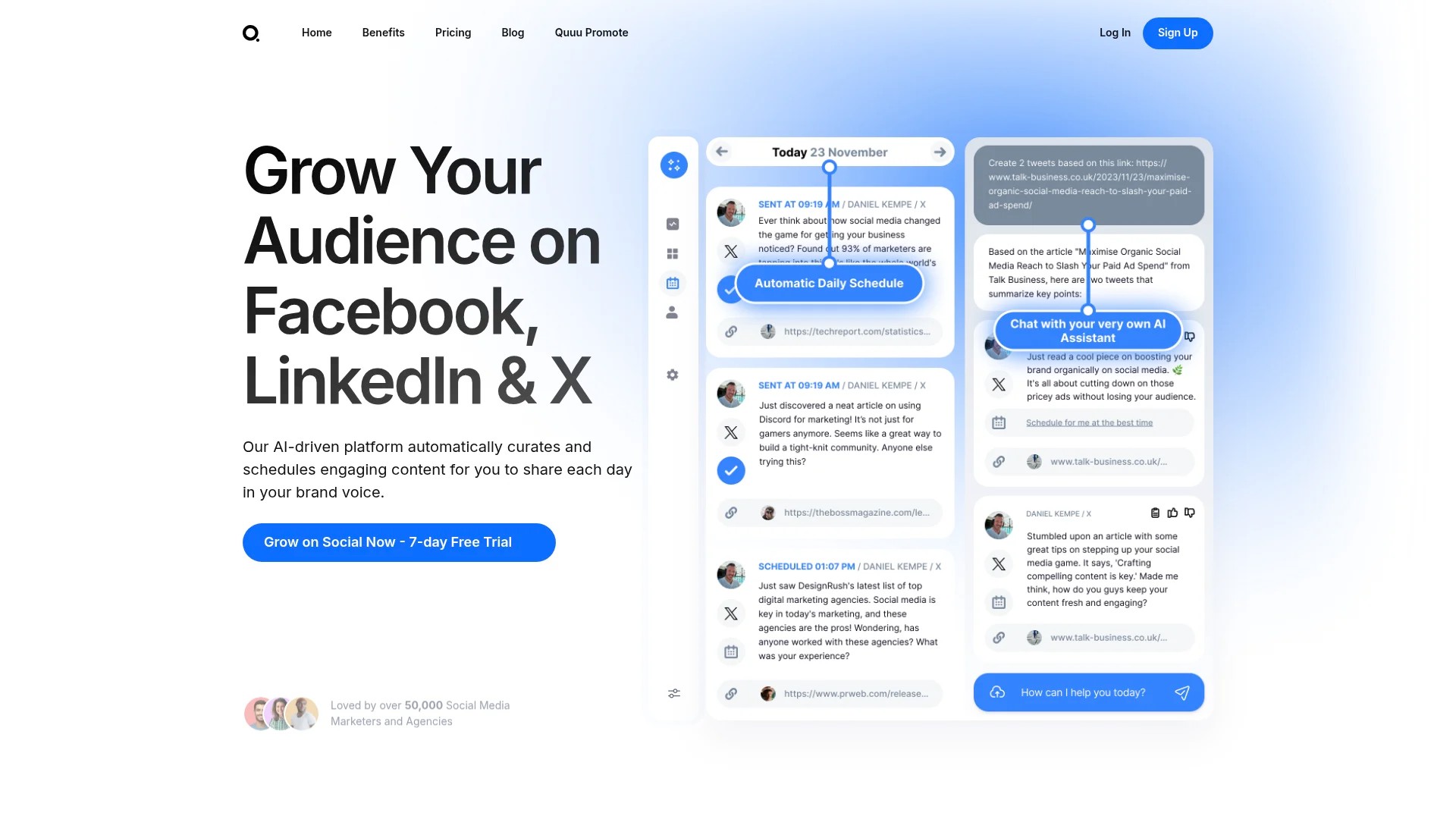
The service particularly benefits small marketing teams and solo practitioners lacking time for manual content discovery. Automation maintains posting consistency whilst freeing time for strategy and engagement activities.
Key Features
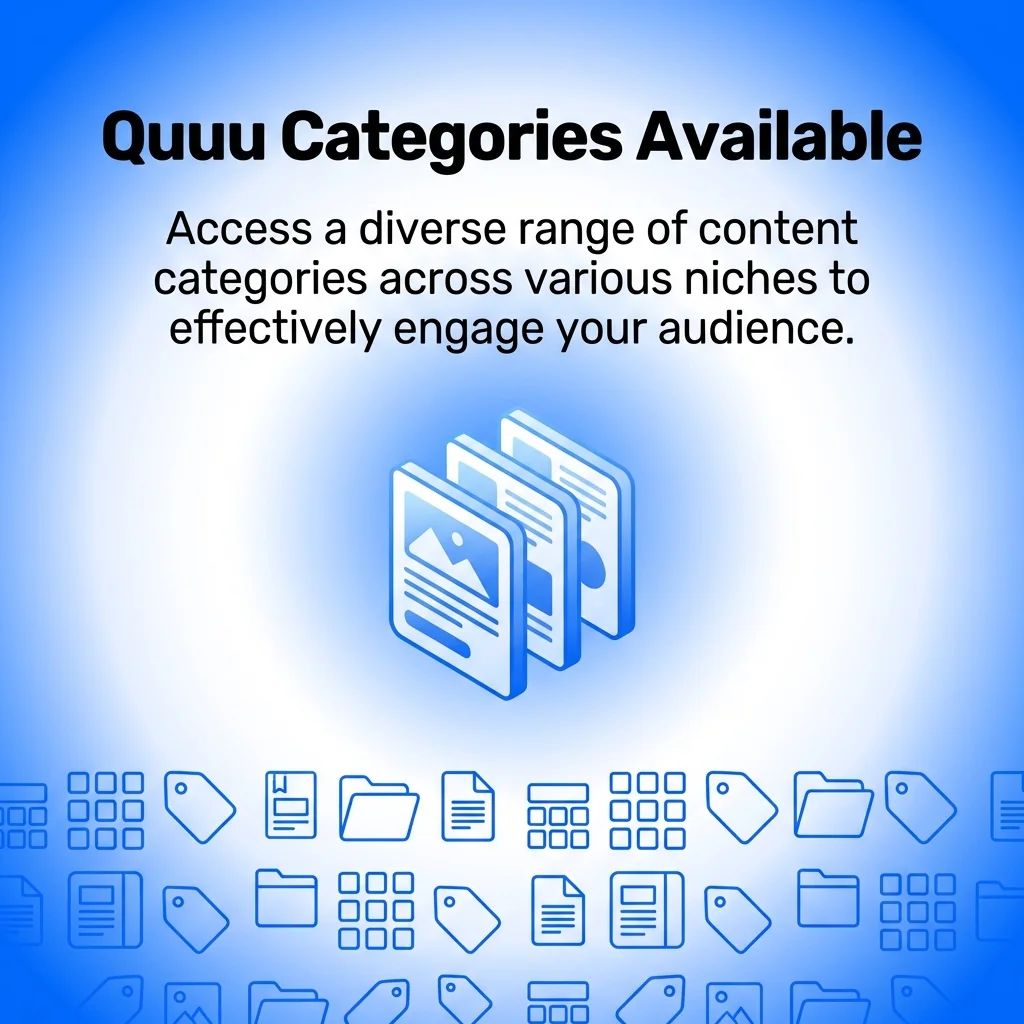
- Hand-curated content suggestions across 500+ interest categories
- Automatic social media scheduling for Facebook, LinkedIn, and Twitter
- Content recycling to maximise evergreen content value
- RSS feed integration for custom source monitoring
- Team collaboration tools for multi-user accounts
- Performance analytics tracking engagement across platforms
Pros and Cons
Advantages: Significant time savings through automation, high-quality curated content reduces manual filtering, easy setup requires minimal technical knowledge, and consistent posting maintains audience engagement.
Limitations: Less control over specific content selection compared to manual curation, and category-based suggestions may not perfectly match niche audience needs.
Pricing and Best For
Pricing starts from affordable monthly subscriptions with free trial availability. The platform suits small businesses, solo marketers, and agencies managing multiple client social accounts who prioritise automation and efficiency.
For more detailed comparisons with other curation platforms, see our comprehensive curation software comparison.
Feedly: Best for RSS Feed Management and Content Discovery
Feedly excels at RSS feed aggregation and content organisation. The platform monitors thousands of sources simultaneously, using AI to prioritise content based on your interests and reading patterns.
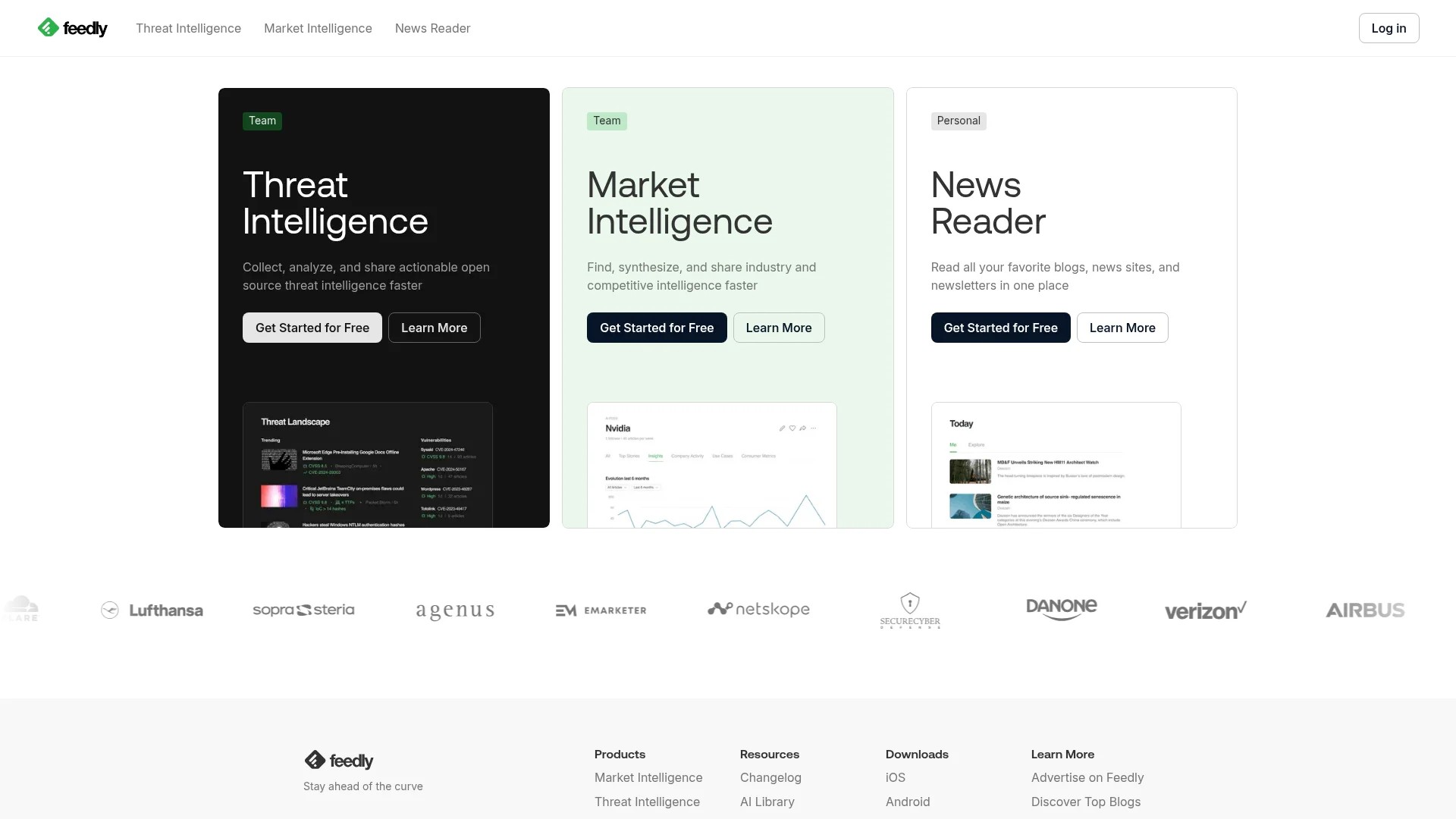
Teams requiring comprehensive industry monitoring choose Feedly for its powerful filtering and organisation capabilities. The platform handles massive content volumes whilst surfacing the most relevant material efficiently.
Key Features
- AI-powered content recommendations learning from reading behaviour
- Advanced filtering by keywords, topics, and source types
- Integration with productivity tools including Evernote, Pocket, and Zapier
- Team collaboration features for shared feeds and content collections
- Mobile applications for content review anywhere
- Leo AI assistant for intelligent content prioritisation
Pros and Cons
Advantages: Exceptional RSS management handles hundreds of sources efficiently, powerful search and filtering save evaluation time, extensive integrations connect with existing workflows, and AI prioritisation improves with continued use.
Limitations: Advanced features require paid subscriptions, and the learning curve for maximising AI capabilities takes time investment.
Pricing and Best For
Free plans offer basic functionality with paid tiers unlocking advanced AI features and team collaboration. Feedly suits content marketers, researchers, and teams requiring comprehensive industry monitoring and sophisticated organisation tools.
Our ultimate guide to content curation tools provides additional context for selecting the right platform.
Scoop.it: Best for Content Marketing and Thought Leadership
Scoop.it combines content curation with publishing capabilities. The platform helps users discover relevant content, add commentary, and publish curated collections to dedicated topic pages that build thought leadership.
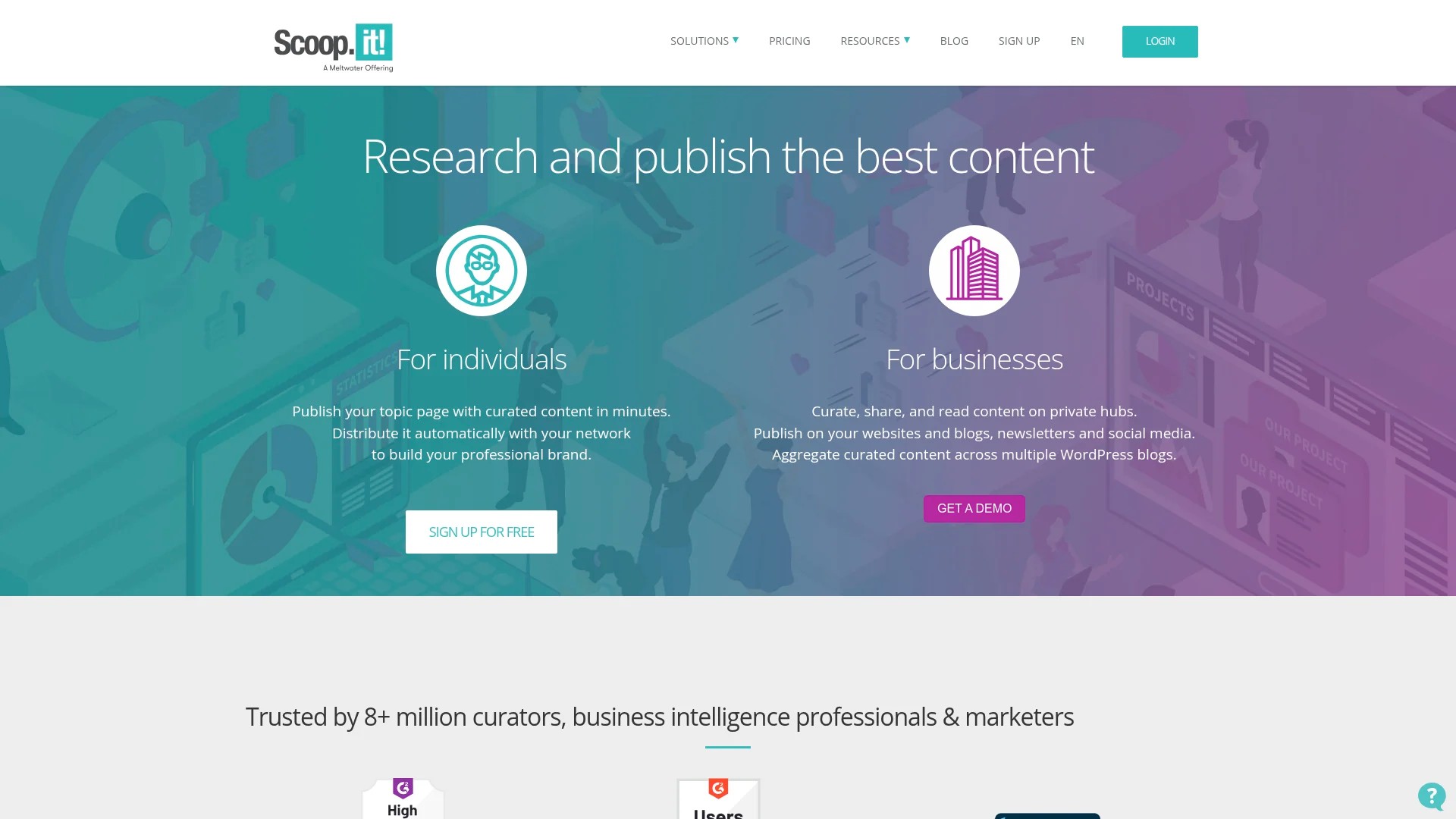
Marketing professionals establishing expertise choose Scoop.it for its publishing emphasis. The platform positions curators as knowledgeable resources whilst driving traffic back to owned properties.
Key Features
- AI-powered content suggestions based on defined topics
- Dedicated topic pages showcasing curated content collections
- Social media scheduling and distribution
- Custom branding for published content pages
- SEO optimisation for topic pages
- Analytics tracking page views and content performance
- Browser extension for easy content capture
Pros and Cons
Advantages: Published topic pages establish thought leadership, SEO benefits from content-rich pages, adding commentary demonstrates expertise, and social distribution amplifies reach beyond owned channels.
Limitations: Published pages compete with owned content properties for search visibility, and setup requires more time than simple aggregation tools.
Pricing and Best For
Free plans support basic curation with paid tiers adding team features and advanced analytics. Scoop.it suits content marketers, consultants, and professionals building personal brands through demonstrated industry expertise.
Curata: Best for Enterprise Content Marketing Teams
Curata serves enterprise marketing teams with sophisticated content curation and marketing workflows. The platform combines content discovery, curation, and publishing within comprehensive content marketing systems.
Large organisations choose Curata for its enterprise-grade features including advanced analytics, team collaboration tools, and integration with marketing automation platforms.
Key Features
- Machine learning content discovery across millions of sources
- Customisable approval workflows for enterprise governance
- Integration with marketing automation platforms
- Advanced analytics and attribution tracking
- Multi-user team collaboration with role-based permissions
- Content library organisation and management
- Email newsletter creation and distribution
Pros and Cons
Advantages: Enterprise-scale capabilities handle large team requirements, sophisticated workflows ensure brand consistency, deep analytics inform content strategy, and integration with existing martech stacks streamlines operations.
Limitations: Enterprise pricing exceeds small business budgets, and complexity requires training investment for effective utilisation.
Pricing and Best For
Custom enterprise pricing based on team size and feature requirements. Curata suits large marketing departments, agencies with enterprise clients, and organisations requiring sophisticated governance and analytics capabilities.
ContentStudio: Best for Multi-Platform Social Media Management
ContentStudio combines content curation with comprehensive social media management. The platform handles discovery, scheduling, publishing, and analytics across multiple social networks from unified dashboards.
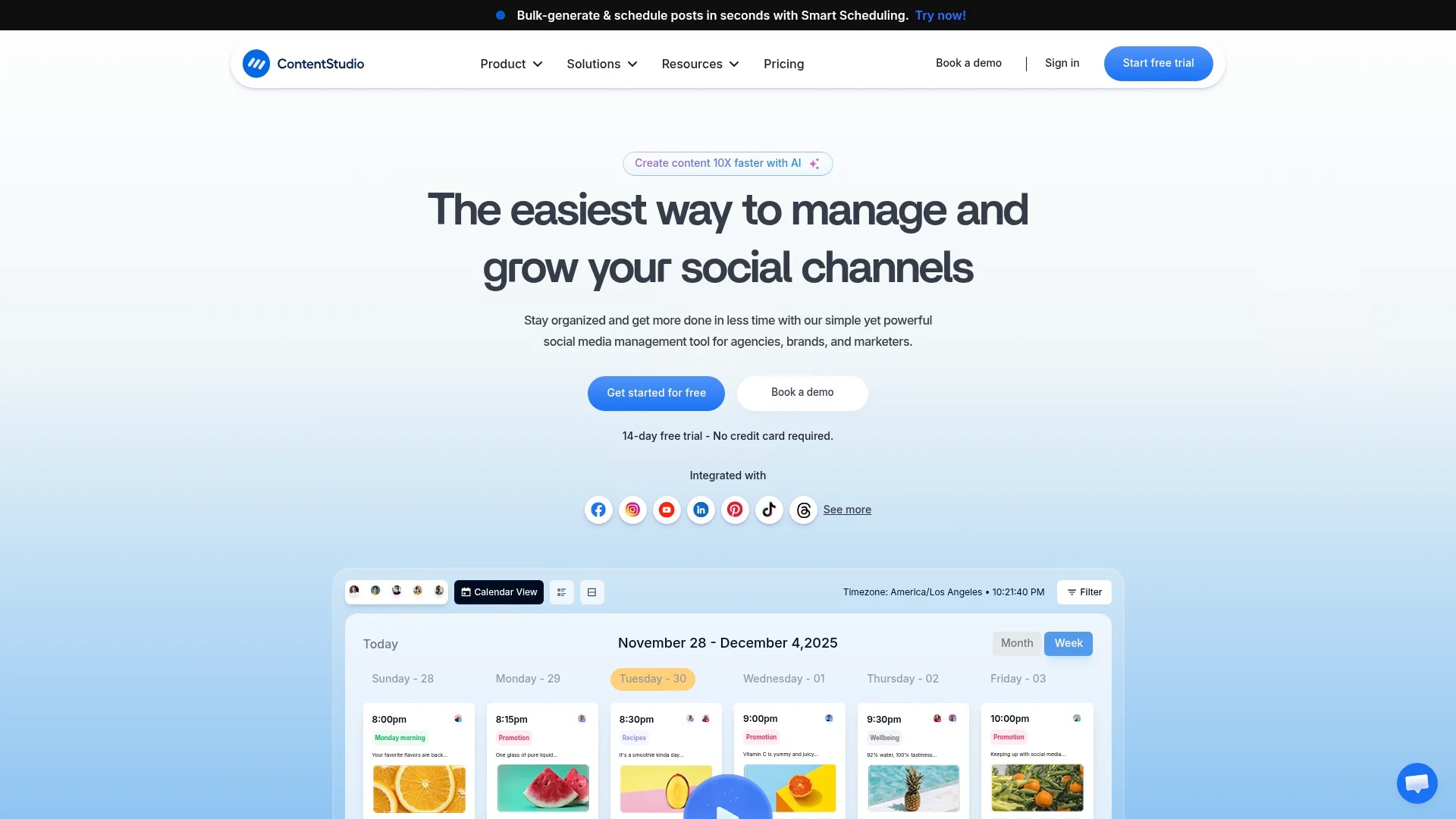
Agencies and brands managing numerous social accounts choose ContentStudio for its multi-platform capabilities and client management features.
Key Features
- Content discovery from multiple sources including blogs and social media
- Multi-platform scheduling for all major social networks
- Visual content calendar for planning and organisation
- Team collaboration with approval workflows
- Client management for agencies handling multiple brands
- Comprehensive analytics across all connected platforms
- Content recycling for evergreen material
Pros and Cons
Advantages: Unified platform reduces tool switching, multi-account management suits agencies, visual planning improves content strategy, and comprehensive analytics inform decision-making.
Limitations: Feature breadth creates learning curve for new users, and pricing tiers based on account numbers can become expensive for large operations.
Pricing and Best For
Tiered pricing based on connected accounts and team members with free trial availability. ContentStudio suits social media managers, agencies, and brands maintaining active presence across multiple platforms.
Pocket: Best for Personal Content Collection and Reading
Pocket focuses on personal content collection and reading optimisation. The platform saves articles, videos, and web content for later consumption with distraction-free reading experiences.
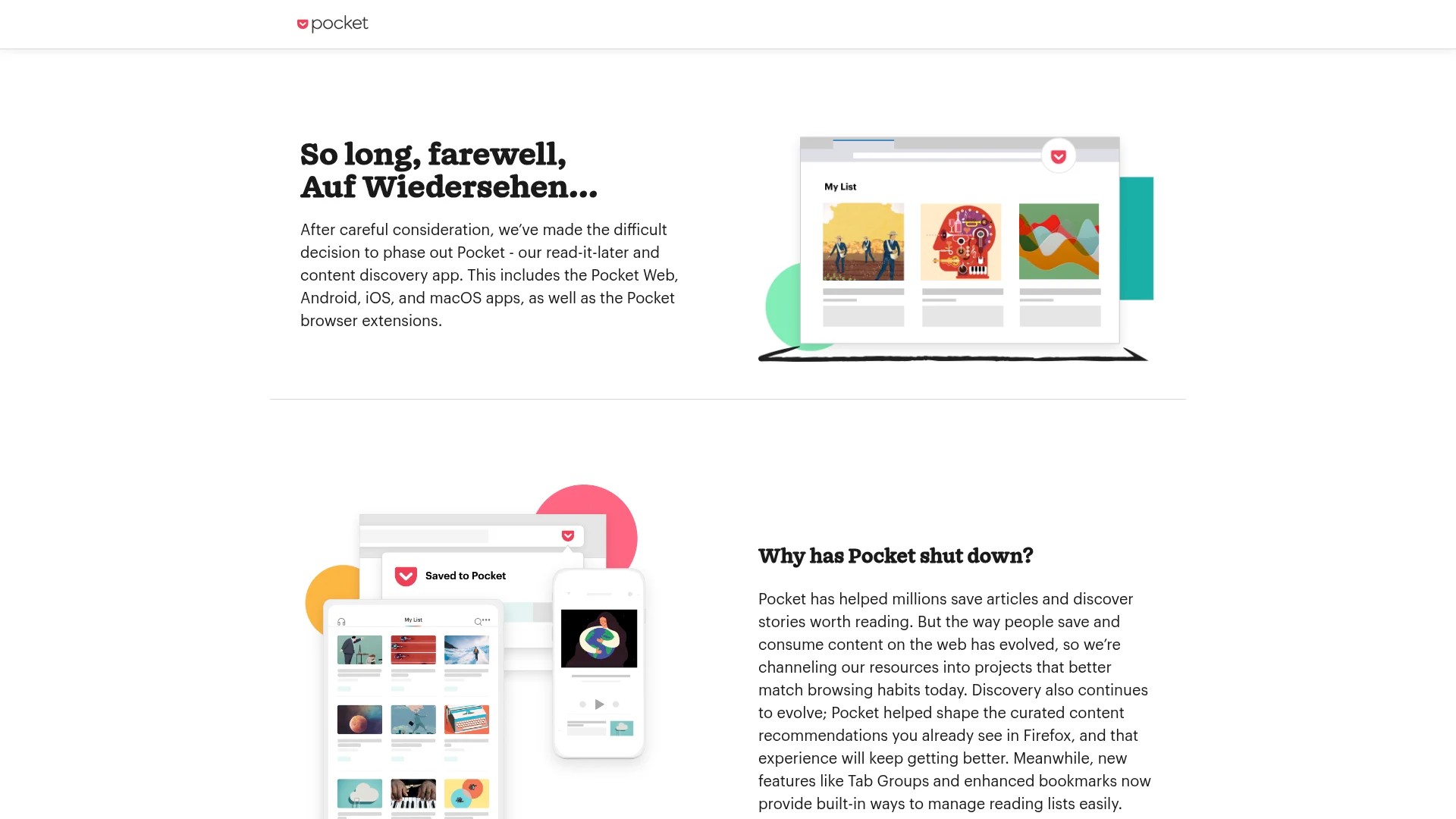
Individual content marketers use Pocket for research and idea generation. The platform helps collect inspiration and industry insights for future content development.
Key Features
- One-click content saving from browsers and mobile devices
- Offline reading access to saved content
- Distraction-free reading view optimised for focus
- Tagging and organisation for content categorisation
- Recommendations based on saved content patterns
- Text-to-speech functionality for audio consumption
- Integration with numerous apps and services
Pros and Cons
Advantages: Simple, intuitive interface requires no learning curve, offline access enables reading anywhere, free tier offers substantial functionality, and reading optimisation improves content consumption efficiency.
Limitations: Limited sharing and collaboration features restrict team use, and focus on personal consumption rather than content marketing workflows.
Pricing and Best For
Free tier with premium subscription adding features like unlimited highlighting and advanced search. Pocket suits individual marketers, writers, and researchers collecting content for personal knowledge development and inspiration.
AI-Powered Content Curation Features
Artificial intelligence transforms content curation from manual discovery to intelligent recommendation. Modern platforms leverage machine learning to automate discovery, evaluate quality, and optimise distribution.
These capabilities matter because content volumes overwhelm manual curation approaches. AI filters signal from noise whilst continuously improving recommendation accuracy based on engagement patterns and user feedback.
Intelligent Content Discovery
Machine learning algorithms analyse millions of content pieces across the web. Systems identify material matching your specific topics, audience interests, and quality standards without manual source monitoring.
Pattern recognition identifies trending topics before they reach mainstream awareness. Early identification enables timely curation that positions your brand at the forefront of industry conversations.
Source credibility evaluation assesses publisher reputation, content quality, and historical performance. This automated vetting ensures recommended content meets your standards before reaching your review queue.
Personalised Recommendations
Recommendation engines learn from your curation decisions over time. Systems track which content you select, share, and ignore, continuously refining suggestions to match your preferences and audience needs.
Audience behaviour analysis informs content selection. Platforms track which curated content drives strongest engagement, using performance data to prioritise similar material in future recommendations.
Topic clustering organises content by theme and subtopic. This organisation helps identify content gaps whilst ensuring balanced coverage across different aspects of your core subject areas.
Automated Content Optimisation
Surfer SEO ranks highly for content optimisation, analysing top-ranking pages to recommend SEO improvements for creators. Similar AI capabilities in curation tools optimise headlines, descriptions, and posting times for maximum engagement.

Format adaptation adjusts content for different platforms automatically. Systems resize images, adjust character counts, and modify presentation to match each network’s specifications and user expectations.
Timing optimisation analyses audience activity patterns to suggest ideal posting schedules. These recommendations maximise visibility by publishing when your audience is most active and receptive.
Budget Considerations: Free vs Paid Curation Tools
Tool selection often depends on budget constraints as much as feature requirements. Understanding the trade-offs between free and paid options helps optimise investment for your specific needs.
Free tools provide entry points for testing curation workflows. Paid platforms unlock advanced capabilities justifying costs through time savings and enhanced results.
What Free Tools Offer
Basic content discovery and organisation features appear in most free tiers. These capabilities support individual users and small teams beginning content curation practices.
Limited social media scheduling allows testing automation benefits. Free tiers typically restrict posting volume or connected accounts but demonstrate workflow improvements before paid commitments.
Simple analytics provide basic performance insights. Free tools track fundamental metrics like clicks and shares without the sophisticated analysis available in premium versions.
When Paid Tools Justify Investment
Team collaboration features require paid subscriptions in most platforms. When multiple team members participate in curation, paid tools streamline workflows and prevent coordination overhead.
Advanced AI capabilities unlock significant time savings. Machine learning that improves over time, sophisticated filtering, and intelligent recommendations justify costs through efficiency gains.
Comprehensive analytics inform strategic decisions. Detailed performance tracking, source analysis, and comparative metrics help optimise curation efforts and demonstrate content marketing ROI.
For detailed analysis of different pricing tiers and their value propositions, review our comparison of free vs paid curation tools.
Calculating ROI on Curation Tools
Time savings represent the most direct ROI measurement. Calculate hours spent on manual discovery, evaluation, and scheduling, then compare against automated tool efficiency.
Engagement improvements demonstrate content quality benefits. Track performance metrics before and after implementing curation tools to quantify audience response improvements.
Team efficiency gains compound individual time savings. When tools enable better collaboration and reduce coordination overhead, productivity improvements multiply across team members.
Emerging Trends in Content Curation Technology
Content curation continues advancing as AI capabilities mature and audience expectations shift. Understanding emerging trends helps future-proof tool selection and curation strategies.
The most significant developments centre on automation sophistication, multi-format content handling, and integration depth with broader marketing technology ecosystems.
Video and Multi-Format Content Curation
Clipchamp offers auto-captions, background removal, beat sync, and script-to-video features. Similar capabilities are emerging in curation platforms as video content dominates social media engagement.
Descript enables text-based editing of audio/video by treating transcripts as editable documents, including AI voice cloning. These innovations demonstrate how curation tools expand beyond text to handle diverse content formats.
Platforms increasingly support podcast episode curation, infographic sharing, and video clip distribution alongside traditional article curation. This multi-format approach matches how audiences consume content across different contexts and platforms.
Deeper Marketing Automation Integration
Curation platforms connect more closely with CRM systems, email marketing tools, and marketing automation platforms. These integrations enable curated content to flow seamlessly into broader nurture campaigns and customer journeys.
Behaviour-triggered curation delivers content based on prospect actions. Systems recommend and share material matching specific interests demonstrated through website visits, email engagement, or content downloads.
Attribution tracking links curated content to business outcomes. Advanced analytics connect content shares with lead generation, pipeline progression, and revenue influence.
Enhanced Personalisation Capabilities
AI-driven personalisation moves beyond basic topic matching. Systems analyse individual user behaviour to recommend and share content tailored to specific interests, consumption patterns, and engagement history.
Audience segmentation enables different curation strategies for distinct groups. Platforms support varied content mixes for different personas, journey stages, or engagement levels within single workflows.
Dynamic content adaptation adjusts recommendations in real-time. Systems respond to trending topics, breaking news, and shifting audience interests without manual intervention.
Stay informed about scheduling tool developments through our analysis of emerging trends in scheduling tools.
Selecting the Right Content Curation Tool
Tool selection depends on your specific requirements, constraints, and strategic priorities. No single platform serves every use case optimally.
Effective selection requires honest assessment of your current situation, future needs, and realistic evaluation of what different platforms offer.
Assessing Your Specific Needs
Team size directly influences platform requirements. Solo marketers prioritise simplicity and automation. Larger teams need collaboration features, approval workflows, and role-based permissions.
Content volume affects necessary capabilities. High-volume publishing requires robust scheduling, extensive source monitoring, and sophisticated filtering. Modest publishing needs permit simpler tools.
Technical capabilities within your team matter. Platforms requiring complex setup or ongoing management suit technically proficient teams. Less technical users benefit from intuitive interfaces and strong support.
Platform and Integration Requirements
Social media platform support varies across tools. Verify your target networks integrate with prospective curation platforms before committing to subscriptions.
Existing marketing technology stack influences selection. Tools integrating seamlessly with your current CRM, email platform, or analytics systems reduce friction and improve workflow efficiency.
API availability enables custom integrations when needed. Platforms offering robust APIs support unique requirements and future flexibility as your technology needs advance.
Trial and Testing Strategies
Free trial availability enables risk-free evaluation. Test platforms with real workflows and content before financial commitments to verify claimed capabilities match actual performance.
Involve actual users in testing. Tools that seem perfect to managers may frustrate team members doing daily work. Gather feedback from everyone who’ll use the platform regularly.
Test support responsiveness during trials. Submit questions and observe response quality and speed. Support quality becomes critical when technical issues block publishing or workflows.
For budget-specific recommendations, explore our guide to content curation tools for every budget.
Building Effective Content Curation Workflows
Tools enable curation, but effective workflows ensure consistent quality and strategic alignment. Establishing clear processes maximises tool value whilst maintaining brand standards.
Successful workflows balance automation efficiency with necessary human oversight. Too much automation risks quality issues. Excessive manual review eliminates efficiency benefits.
Discovery and Evaluation Processes
Define clear content criteria before beginning discovery. Specify topics, source types, quality standards, and audience relevance requirements. These criteria guide both automated filtering and manual evaluation.
Establish source lists matching your content pillars. Identify authoritative publications, thought leaders, and industry resources for each major topic area you cover.
Schedule regular discovery sessions rather than ad-hoc searching. Consistent discovery rhythms prevent last-minute scrambles whilst ensuring steady content pipelines.
Quality Control and Brand Alignment
Create evaluation checklists ensuring curated content meets standards. Consider accuracy, relevance, source credibility, and brand alignment before scheduling any content.
Add context and commentary when sharing curated content. Brief explanations demonstrate why material matters to your audience whilst adding your unique perspective.
Review performance regularly to refine curation decisions. Track which content types, sources, and topics drive strongest engagement, adjusting discovery focus accordingly.
Distribution and Engagement Optimisation
Vary posting times to reach different audience segments. Test various schedules to identify optimal timing for each platform and content type.
Balance curated and original content strategically. Establish ratios ensuring consistent value delivery whilst maintaining thought leadership through original contributions.
Engage with responses to curated content. Monitor comments and questions, participating in conversations sparked by shared material to deepen audience relationships.
Maximising Value from Content Curation
Tools and workflows create curation foundations. Strategic application determines actual business value and marketing impact.
The most successful curation programmes complement broader content marketing strategies rather than existing as isolated activities. Integration with content creation, social media management, and audience development drives results.
Strategic Content Mix
Balance different content types within curation efforts. Mix educational resources, industry news, data-driven insights, and practical guides to serve varied audience needs and consumption contexts.
Align curation with content calendar themes. When original content addresses specific topics, curate complementary material reinforcing those subjects and extending their value.
Create content series around curated themes. Group related curated content into weekly or monthly themes that demonstrate comprehensive industry awareness whilst building anticipation.
Audience Development Through Curation
Use curated content to demonstrate expertise without constant original production. Thoughtful selections with insightful commentary establish authority through demonstrated judgement and industry knowledge.
Build relationships with content creators you frequently curate. Acknowledge sources, tag authors, and engage with their work. These connections often lead to reciprocal sharing and networking opportunities.
Encourage audience participation around curated content. Ask questions, solicit opinions, and invite discussion to transform passive content sharing into active community engagement.
Discover additional strategies in our analysis of AI-powered content curation strategies for social media.
Measuring Curation Success
Track engagement metrics including clicks, shares, comments, and saves. These indicators reveal which curated content resonates most strongly with your audience.
Monitor traffic referrals from curated content to owned properties. Quality curation can drive significant website traffic when audiences seek additional resources after engaging with shared content.
Assess audience growth correlation with curation consistency. Regular, valuable content sharing often accelerates follower growth and strengthens audience relationships.
Conclusion
Content curation tools have matured significantly. The platforms we’ve examined offer sophisticated capabilities addressing real marketing challenges from discovery through distribution and analysis.
Your optimal tool choice depends on specific circumstances. Team size, budget constraints, technical capabilities, and strategic priorities all influence which platform serves you best.
Start by clarifying your primary curation challenges. Need discovery efficiency? Prioritise AI-powered recommendation engines. Require team coordination? Focus on collaboration features and approval workflows. Managing multiple platforms? Emphasise multi-network scheduling capabilities.
Test thoroughly before committing. Most platforms offer free trials enabling real-world evaluation with your actual workflows and content. Involve team members who’ll use tools daily in testing and selection processes.
Build effective workflows around chosen tools. Technology enables curation, but strategic processes ensure consistent quality and meaningful results. Establish clear criteria, maintain quality standards, and measure performance regularly.
Content curation complements original content creation rather than replacing it. The most effective content marketing programmes balance both approaches, using curation to maintain consistency whilst reserving resources for high-impact original material.
The right tools streamline curation dramatically. What once consumed hours of manual work now happens through automated discovery and intelligent recommendations. Redirect saved time towards strategy, engagement, and relationship building that drive real marketing outcomes.