Writing captions that convert with AI combines speed, strategic thinking, and smart editing. Social media posts demand attention in seconds, and AI copywriting tools now handle initial drafts while you focus on refining messaging for your specific audience. These platforms create variations faster than manual writing, test different angles automatically, and free up time for strategy work that actually drives conversions.
But here’s the reality marketers face: AI generates content at scale, yet conversion depends on human judgment.
The best results come from treating AI as your first-draft assistant, not your final copywriter. Tools like Copy.ai, Jasper, and Rytr excel at producing multiple caption options quickly. You select the strongest angle, add brand personality, and optimise for platform-specific requirements.
This guide shows you how AI copywriting works for social media, which tools deliver the best results, and how to edit AI-generated captions into conversion-focused messages. You’ll learn practical selection criteria, integration workflows, and quality control steps that ensure your captions sound authentic whilst driving measurable actions.
What is AI Copywriting for Social Media?
AI copywriting for social media uses machine learning models to generate text for posts, captions, and advertisements across platforms. These tools analyse vast amounts of existing content to understand patterns in language, tone, and structure that typically perform well.
The technology processes your input, brand guidelines, and target platform to produce relevant copy options. You provide a brief description or key points, and the AI returns multiple caption variations.
Modern AI copywriting tools specifically trained for marketing understand persuasive writing frameworks. They recognise call-to-action patterns, benefit-focused language, and platform conventions for Instagram captions versus LinkedIn posts versus Twitter updates.
Most platforms support content generation for Instagram, Facebook, LinkedIn, Twitter, and TikTok. Some tools also handle YouTube descriptions and Pinterest pins.
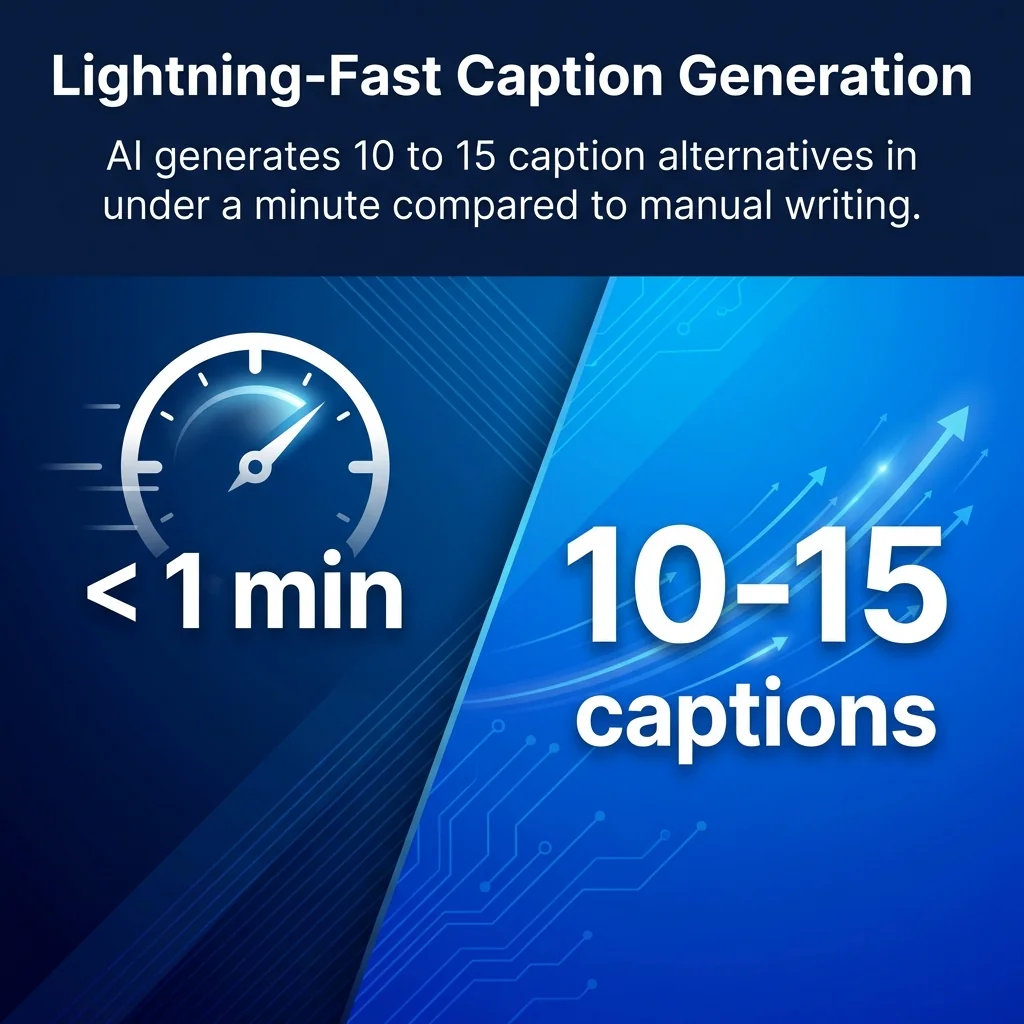
The core value lies in speed and variation. Where manual writing might produce two or three caption options in 20 minutes, AI generates 10 to 15 alternatives in under a minute. You then select and refine the strongest option.
How AI Copywriting Tools Work for Social Media
AI copywriting platforms use natural language processing and machine learning algorithms trained on massive text datasets. When you input a brief description of your post or campaign, the system analyses semantic patterns and generates relevant text.
Most tools follow a similar workflow. You select your social media platform first because each requires different formats, character limits, and tone expectations. Instagram captions allow longer storytelling, whilst Twitter demands concise messaging within character constraints.
Next, you specify content type: promotional post, educational content, engagement question, or announcement. This selection guides the AI towards appropriate language patterns and structures.
You then provide context through keywords, product descriptions, or campaign themes. Better input produces better output. Specific details about benefits, target audience, and desired action improve AI-generated results significantly.
The AI processes this information and generates multiple caption options. Advanced platforms let you adjust tone settings for professional, casual, humorous, or inspirational voices before generation.
Some tools include built-in SEO optimisation and hashtag suggestions based on trending topics and platform-specific algorithms. These features help your content reach beyond existing followers.
After generation, you review options and select the strongest fit. Most marketers edit AI output to add brand-specific language, correct any awkward phrasing, and ensure factual accuracy before publishing.
Benefits of Using AI for Social Media Copywriting
AI copywriting tools deliver measurable time savings for marketing teams managing multiple social media accounts. Creating content for five platforms manually takes hours; AI reduces this to minutes whilst maintaining consistent posting schedules.
Speed matters when responding to trending topics or time-sensitive promotions. AI generates relevant captions quickly enough to capitalise on short-lived opportunities that manual processes would miss.
Increased Content Variety and Testing
AI produces numerous variations from a single brief. This abundance enables A/B testing at scale across different messaging angles, lengths, and call-to-action approaches.
Testing multiple captions reveals which messages resonate with specific audience segments. Data from these tests informs future content strategy with concrete evidence rather than assumptions.
The variation capability also prevents repetitive messaging. When posting daily across multiple platforms, fresh angles on similar topics maintain audience interest better than repetitive manual copy.
Consistent Brand Voice Across Platforms
Tools learn your brand voice through examples and guidelines you provide. Once configured, they generate content matching your established tone across all platforms consistently.
This consistency proves particularly valuable for teams with multiple content creators. AI acts as a baseline ensuring all posts align with brand standards before individual editors add final touches.
Overcoming Writer’s Block
Creative blocks affect even experienced copywriters. AI provides starting points when you face blank screen paralysis, offering angles and phrases that spark ideas.
The AI-generated options serve as creative prompts rather than final copy. Seeing multiple approaches helps you identify the direction that feels right, then refine it with your expertise.
Template-Based Efficiency
Most AI copywriting platforms include templates for common social media formats: product launches, event promotions, educational tips, user testimonials, and seasonal campaigns.
These templates embed proven copywriting frameworks whilst allowing customisation for your specific context. They reduce decision fatigue by providing structure for routine content types.
Limitations of AI Social Media Copywriting
AI-generated captions require human oversight because machines cannot verify factual accuracy. The tools generate plausible-sounding text based on patterns, but they may produce incorrect information confidently.
Always fact-check claims, statistics, and product details in AI-generated copy. Automated content about your offerings might misrepresent features, pricing, or availability if the AI misinterprets your input.
Brand Voice Authenticity
AI approximates brand voice but rarely captures subtle personality elements that make your content distinctive. The generated text often feels competent but generic without human refinement.
Expressions unique to your brand, inside jokes with your community, and current cultural references require human addition. AI produces safe, broadly acceptable copy that lacks edge or memorable character.
Long-term followers notice when content shifts to generic AI patterns. Maintaining authentic connection requires preserving the human elements that built your community originally.
Context and Nuance Understanding
AI tools struggle with subtle context that humans grasp instinctively. They might suggest inappropriate humour for serious topics or miss timing sensitivities around current events.
Cultural references, regional differences, and audience-specific knowledge require human judgment. AI cannot assess whether a phrase resonates positively with your particular community or risks unintended negative connotations.
This limitation becomes critical during sensitive situations or controversial topics. Human editors must evaluate whether AI-generated messaging appropriately addresses the context beyond simple keyword matching.
Platform Algorithm Changes
Social media platforms frequently update their algorithms and content policies. AI tools lag behind these changes because their training data represents past patterns rather than current platform priorities.
Human awareness of recent algorithm updates, emerging content formats, and shifting platform cultures must guide final content decisions. AI provides the foundation, but staying current requires human platform expertise.
Creative Limitations
AI generates variations within established patterns but rarely produces genuinely original creative angles. The most memorable social media campaigns come from unexpected human creativity that breaks conventions strategically.
For breakthrough campaigns, trend-setting content, or brand repositioning, AI serves as a starting point only. Human strategic thinking and creative risk-taking drive the innovative approaches that capture widespread attention.
What to Look for in AI Social Media Copywriting Tools
Platform-specific optimisation separates effective AI copywriting tools from generic text generators. Look for platforms that understand Instagram caption requirements differ from LinkedIn post structures and Twitter character constraints.
The tool should generate content formatted appropriately for your target platform without requiring extensive manual reformatting. Character count awareness, hashtag placement conventions, and platform-specific best practices should be built in.
Integration Capabilities
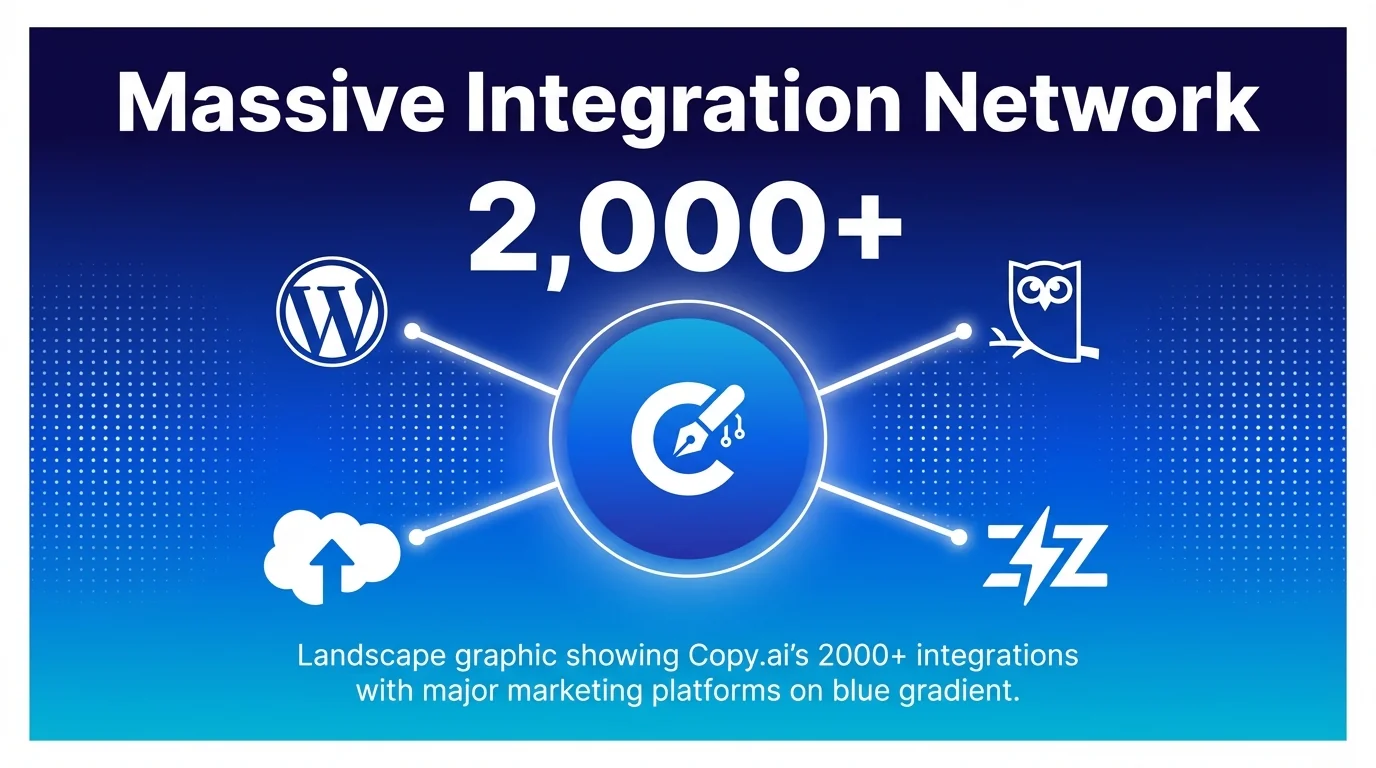
Workflow efficiency depends on integration with your existing tools. According to comprehensive platform analysis, Copy.ai offers 2,000+ app connections via Zapier and integrations with WordPress, Hootsuite, and Salesforce.
Direct integration with scheduling tools like Buffer, Hootsuite, or Sprout Social eliminates copy-paste steps. Content flows from generation through approval to scheduled publishing within a connected system.
API access matters for custom workflows and larger teams with specific technical requirements. Check whether the platform supports your particular tool stack before committing.
Template Library and Customisation
Extensive template libraries speed up routine content creation. Research shows Rytr offers a budget-friendly alternative with an intuitive interface and over 30 templates for content creation, covering diverse social media needs.
Beyond quantity, evaluate template quality and relevance to your industry. B2B service companies need different templates than e-commerce brands or personal influencers.
Customisation options let you adapt templates to your brand voice and specific campaigns. Look for platforms allowing you to save custom templates based on your highest-performing posts.
Tone and Voice Control
Sophisticated tone adjustment controls help AI match your brand personality. Basic tools offer generic options like “professional” or “casual,” whilst advanced platforms provide granular control over formality, enthusiasm, and complexity levels.
The ability to train the AI on your existing content improves output quality significantly. Some platforms analyse samples of your best-performing posts and mimic those patterns.
Multi-Language Support
Global brands or businesses serving diverse markets need multi-language capabilities. The research indicates Rytr supports over 30 languages for multilingual content creation, accommodating international campaigns.
Beyond translation, effective tools understand cultural nuances and platform preferences across different regions. Social media tone varies significantly between markets, and AI should reflect those differences.
Pricing Structure and Free Trials
Pricing models range from per-word charges to unlimited monthly subscriptions. Evaluate costs against your content volume and team size to find the most economical structure.
Free trial availability lets you test platforms with your actual content before financial commitment. Most reputable tools offer at least a seven-day trial or limited free tier.
Consider whether pricing includes all features or gates advanced capabilities behind higher tiers. Some platforms charge extra for premium templates, integrations, or team collaboration features.
Quality Control Features
Built-in quality checks improve output reliability. According to expert tool reviews, Rytr includes a built-in plagiarism checker and provides professional-quality content that barely needs editing.
Grammar checking, readability scoring, and brand consistency analysis help maintain quality standards. These features catch issues before content reaches your audience.
Best AI Copywriting Tools for Social Media in 2025
The right AI copywriting tool depends on your specific social media needs, budget constraints, and existing workflow. Each platform offers distinct strengths for different use cases.
This section examines the leading tools based on platform capabilities, pricing structures, and real-world performance across various social media contexts.
Copy.ai: Go-to-Market Content Platform
Copy.ai positions itself as a comprehensive GTM content platform designed specifically for marketing teams. According to detailed platform comparisons, Copy.ai stands out as a GTM content platform designed for marketing teams, with capabilities for creating short-form copy for blogs, product descriptions, and social media posts.
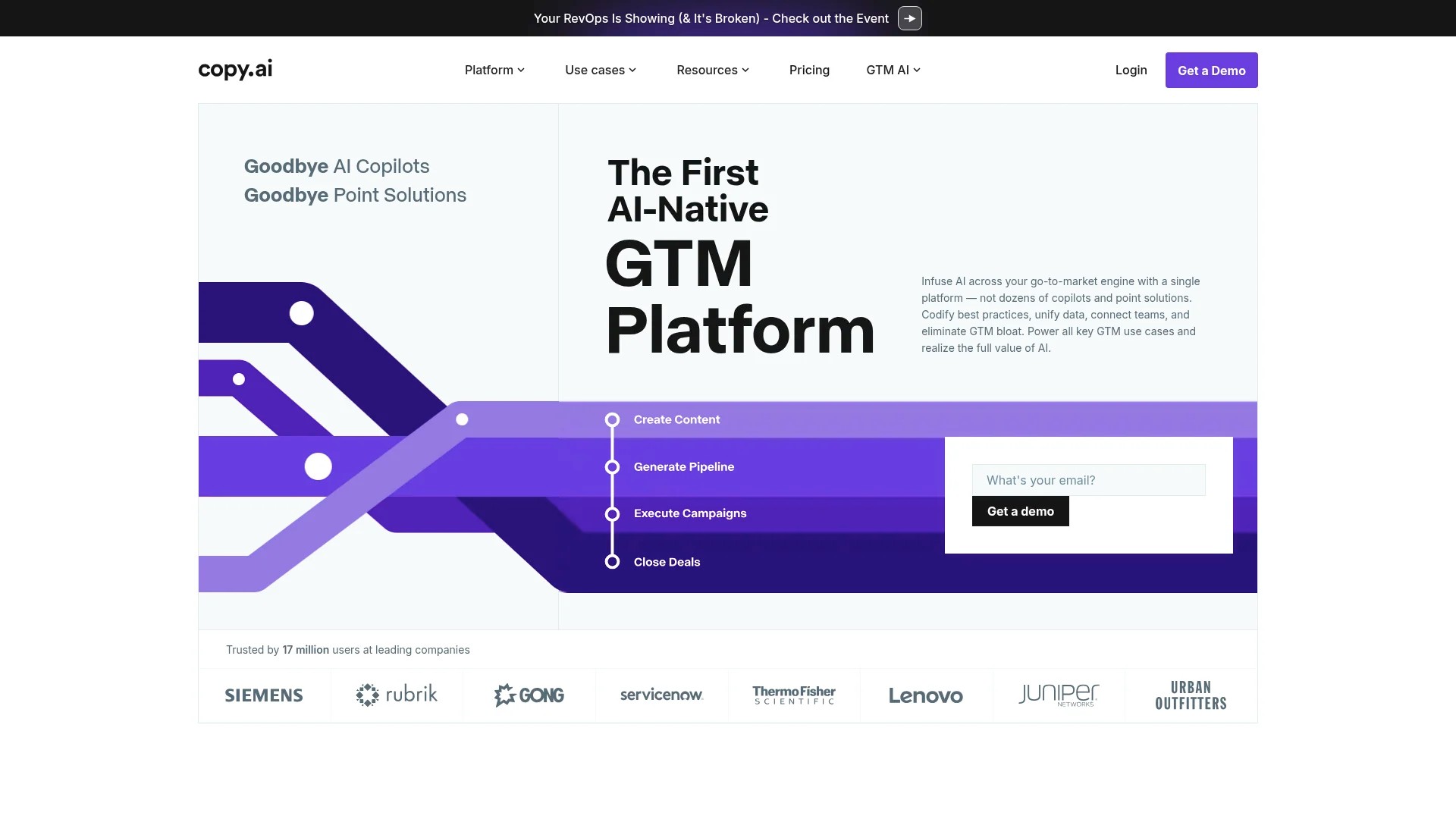
The platform excels at creating short-form copy across multiple formats. Social media captions represent just one capability within a broader content generation system that includes blog introductions, product descriptions, and ad copy.
Key Features
The modern, visually complex interface organises around specific Go-to-Market functions rather than generic writing tools. This structure helps marketing teams find the exact template for their current campaign type.
Multi-channel campaign support lets you generate consistent messaging across social media, email, and landing pages simultaneously. Brand voice settings apply across all content types for unified messaging.
The workflow builder connects content generation with distribution channels. According to research, Copy.ai offers 2,000+ app connections via Zapier plus direct integrations with WordPress, Hootsuite, and Salesforce.
Best For
Marketing teams managing complex, multi-channel campaigns benefit most from Copy.ai’s comprehensive approach. The platform suits organisations needing consistent messaging across social media, advertising, and website content.
B2B companies appreciate the professional tone options and integration with CRM systems like Salesforce. The platform understands longer-form educational content alongside promotional social posts.
Pricing
Copy.ai offers a free trial with limited generation credits. Paid plans start around £36 per month for individuals, with team and enterprise pricing available based on user count and advanced features.
The mid-tier plans unlock unlimited projects, priority support, and advanced integrations. Enterprise customers receive custom training, dedicated support, and API access.
Jasper: Comprehensive Marketing Toolkit
Jasper provides an all-in-one marketing content platform with particularly strong social media capabilities. The tool gained popularity amongst content marketers for producing high-quality output with minimal editing required.
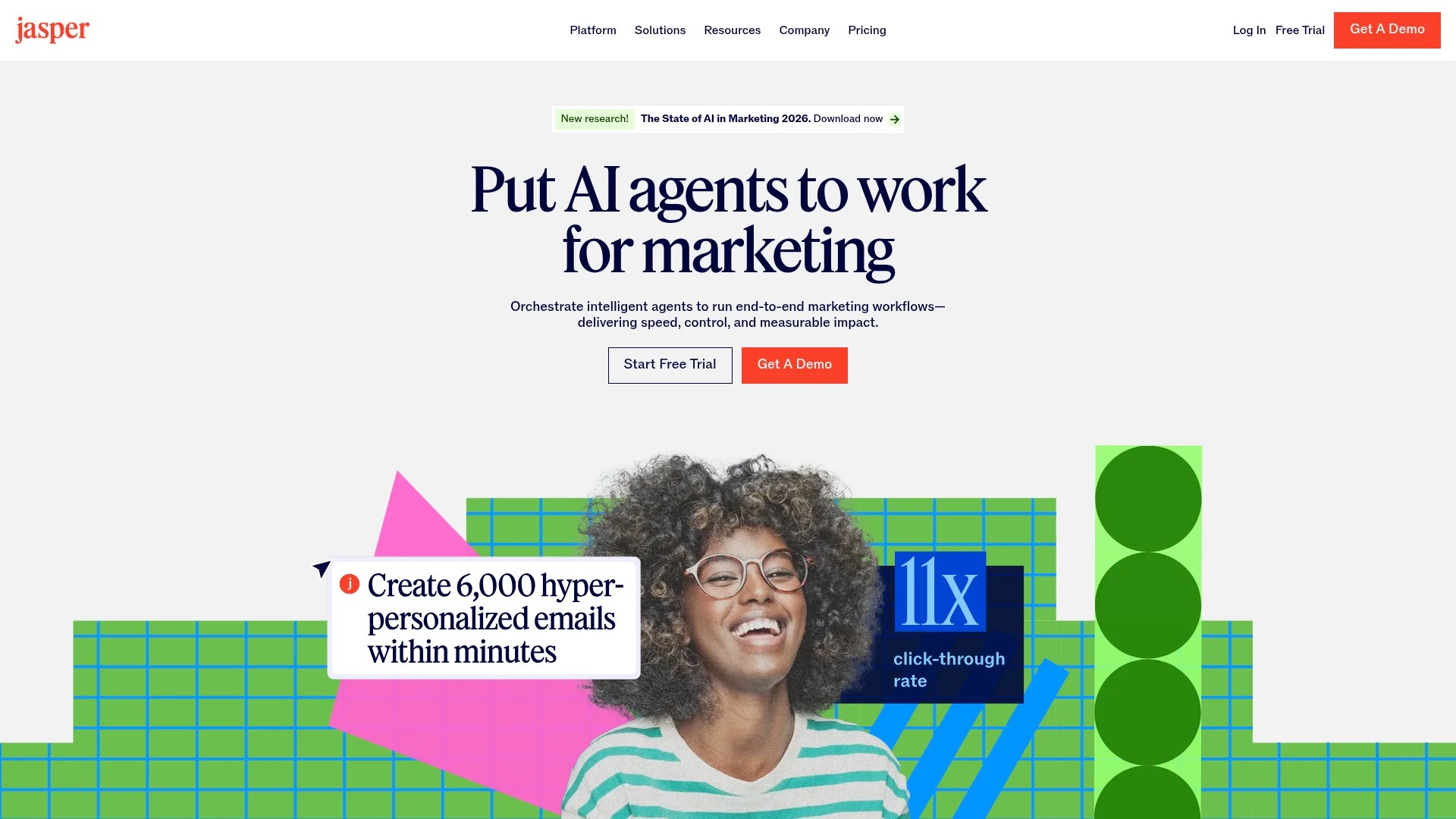
Jasper’s strength lies in understanding marketing frameworks and persuasive writing principles. The AI recognises concepts like AIDA (Attention, Interest, Desire, Action) and applies them appropriately to social media captions.
Key Features
The Boss Mode feature provides long-form content capabilities alongside social media posts. This proves valuable when developing comprehensive campaigns requiring blog posts, email sequences, and supporting social content.
Brand voice training allows you to input examples of your best content. Jasper analyses these samples and mimics the style, producing output that sounds more authentically like your brand than generic AI copy.
The platform includes Jasper Chat, a conversational interface for brainstorming and refining ideas before formal content generation. This feature helps overcome creative blocks and explore different angles.
Template variety covers specific social media needs: product launches, behind-the-scenes content, user-generated content campaigns, and seasonal promotions each have dedicated frameworks.
Best For
Content marketing teams producing high volumes across multiple formats benefit from Jasper’s versatility. The platform suits agencies managing diverse client accounts with varying brand voices and content needs.
E-commerce brands particularly appreciate templates designed for product promotions, discount announcements, and seasonal campaigns. The persuasive copywriting frameworks align well with direct-response marketing goals.
Pricing
Jasper starts at approximately £39 per month for starter plans with word count limits. Unlimited plans run around £99 per month, whilst team and business tiers add collaboration features and higher limits.
A five-day free trial gives access to core features. The platform frequently offers promotional periods with extended trials or discounted first months.
Rytr: Budget-Friendly Writing Assistant
Rytr delivers impressive AI copywriting capabilities at significantly lower price points than premium alternatives. The platform balances affordability with genuinely useful features for social media content creation.
Comparison analysis reveals Rytr feels more focused and purpose-built for writing compared to ChatGPT, shining when you need something formatted, professional, and ready to use with minimal back-and-forth.
Key Features
The intuitive interface prioritises speed and simplicity over advanced customisation. You select your use case, input basic details, and receive polished output within seconds.
Research indicates Rytr offers over 30 templates for content creation, supporting over 30 languages for businesses serving international audiences or multilingual markets.
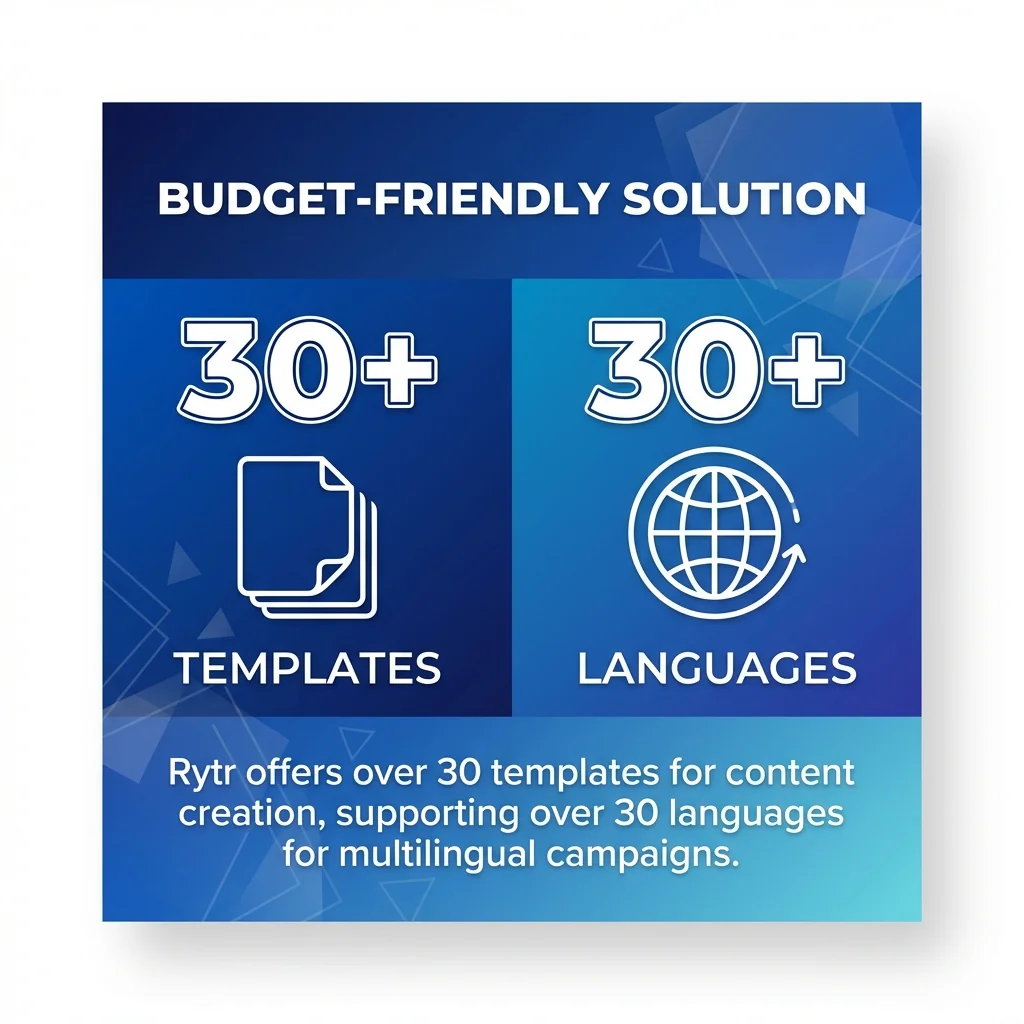
Quality control features include a built-in plagiarism checker, ensuring originality for social media content. The platform produces professional-quality content requiring minimal editing.
Tone options cover 20+ variations from casual and friendly to professional and persuasive. This range accommodates different brand personalities and platform requirements.
Best For
Small businesses and solo entrepreneurs managing their own social media find Rytr’s simplicity and affordability particularly attractive. The learning curve remains minimal even for users new to AI copywriting tools.
Freelance social media managers appreciate the cost-effectiveness when serving multiple clients. The platform handles varied content needs across different industries without requiring expensive subscriptions.
Pricing
Rytr offers a genuinely useful free tier with 10,000 characters per month. The unlimited plan costs approximately £7 per month annually, making it one of the most affordable premium options available.
The premium tier unlocks unlimited character generation, access to premium tones, and priority email support. No hidden costs or feature gates frustrate users at higher volumes.
Writesonic: Real-Time Data Integration
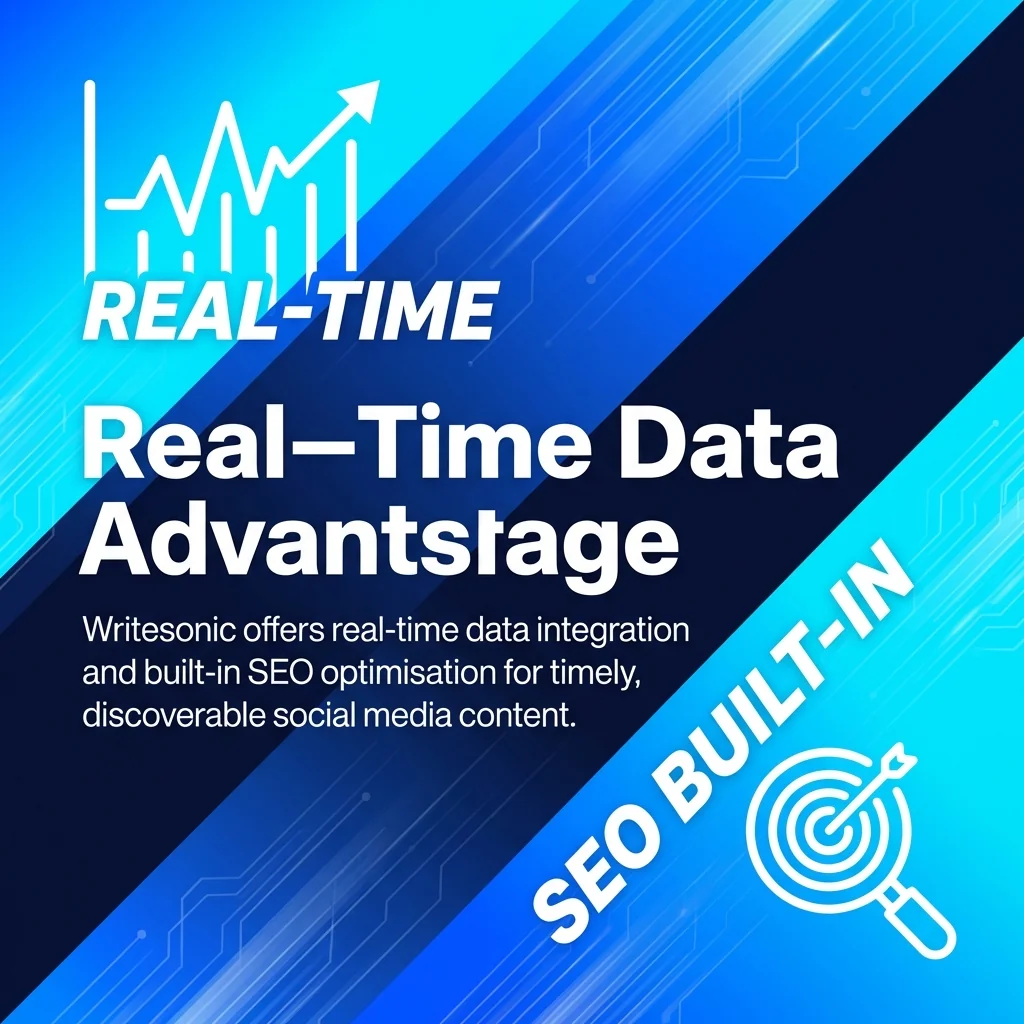
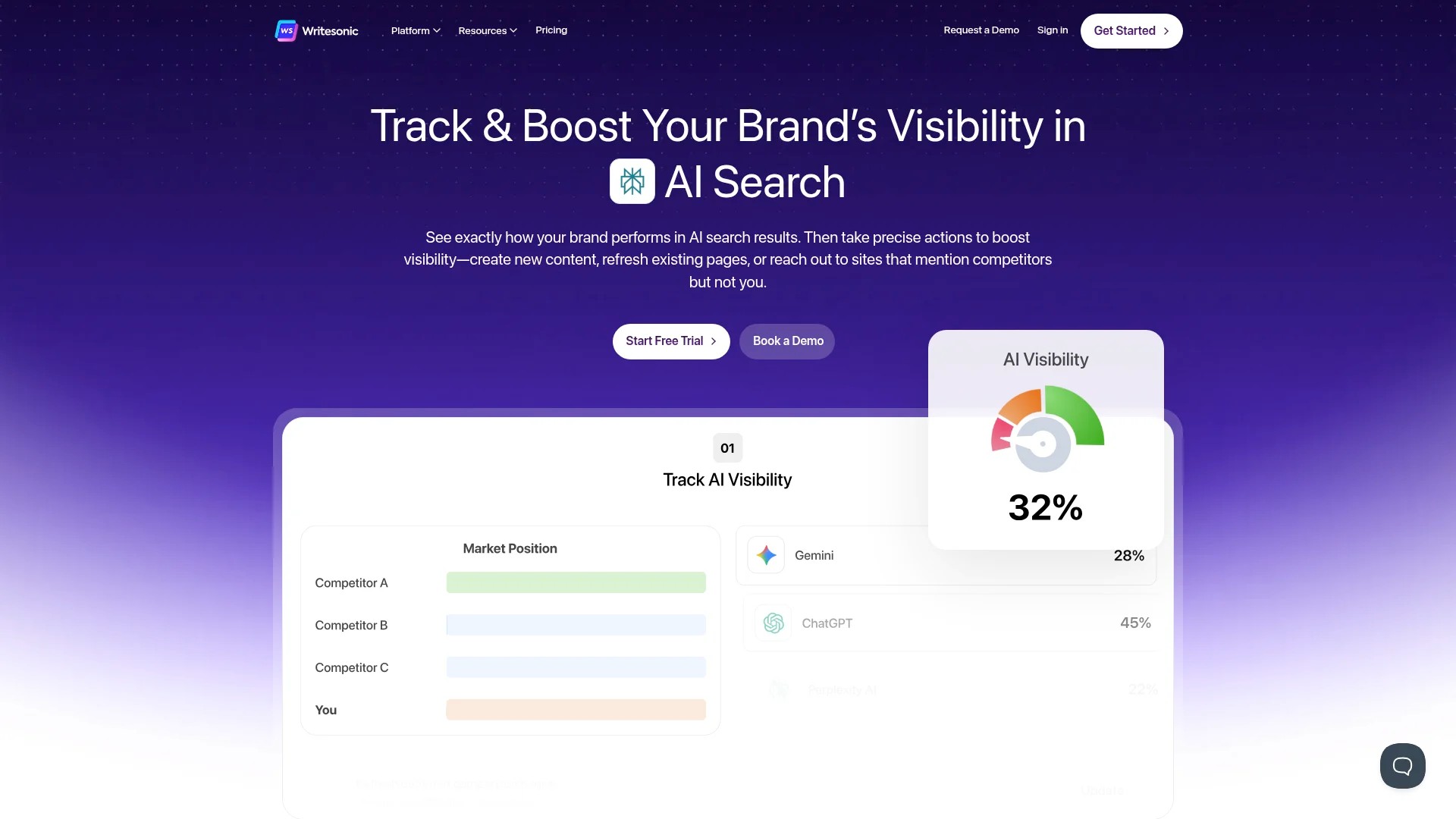
Writesonic distinguishes itself through real-time data integration and SEO optimisation capabilities. According to platform analysis, Writesonic offers real-time data integration and built-in SEO optimisation, with an AI Article Writer particularly strong for blog posts.
Key Features
The Sonic Editor provides a Google Docs-like interface where you write, edit, and generate content seamlessly. AI assistance appears contextually as you work rather than requiring separate generation and editing steps.
Real-time Google integration pulls current information into AI-generated content. Social media posts about trending topics or recent developments benefit from this current data access.
Built-in SEO tools optimise content for discoverability beyond your existing followers. Hashtag suggestions and keyword integration help content reach new audiences through platform search and discovery features.
The platform includes Photosonic, an AI image generator that creates visual content alongside captions. Coordinated text and images speed up complete post creation.
Best For
Content creators focusing on current events, news commentary, or trend-based content leverage Writesonic’s real-time data access effectively. The platform suits users needing factually current information in their social posts.
SEO-conscious marketers appreciate the optimisation features for improving organic reach. Brands building audiences through discovery rather than paid promotion benefit from these capabilities.
Pricing
Writesonic offers a free trial with limited word credits. Paid plans start around £12 per month for basic tiers, with unlimited plans at approximately £16 per month when billed annually.
Higher tiers unlock additional features like priority support, team collaboration, and API access. Enterprise plans provide custom solutions for larger organisations.
ChatGPT: Versatile General-Purpose AI
ChatGPT serves as a versatile general-purpose AI tool that excels at research, planning, and brainstorming alongside content generation. Unlike purpose-built copywriting tools, ChatGPT requires more specific prompting but offers greater flexibility.
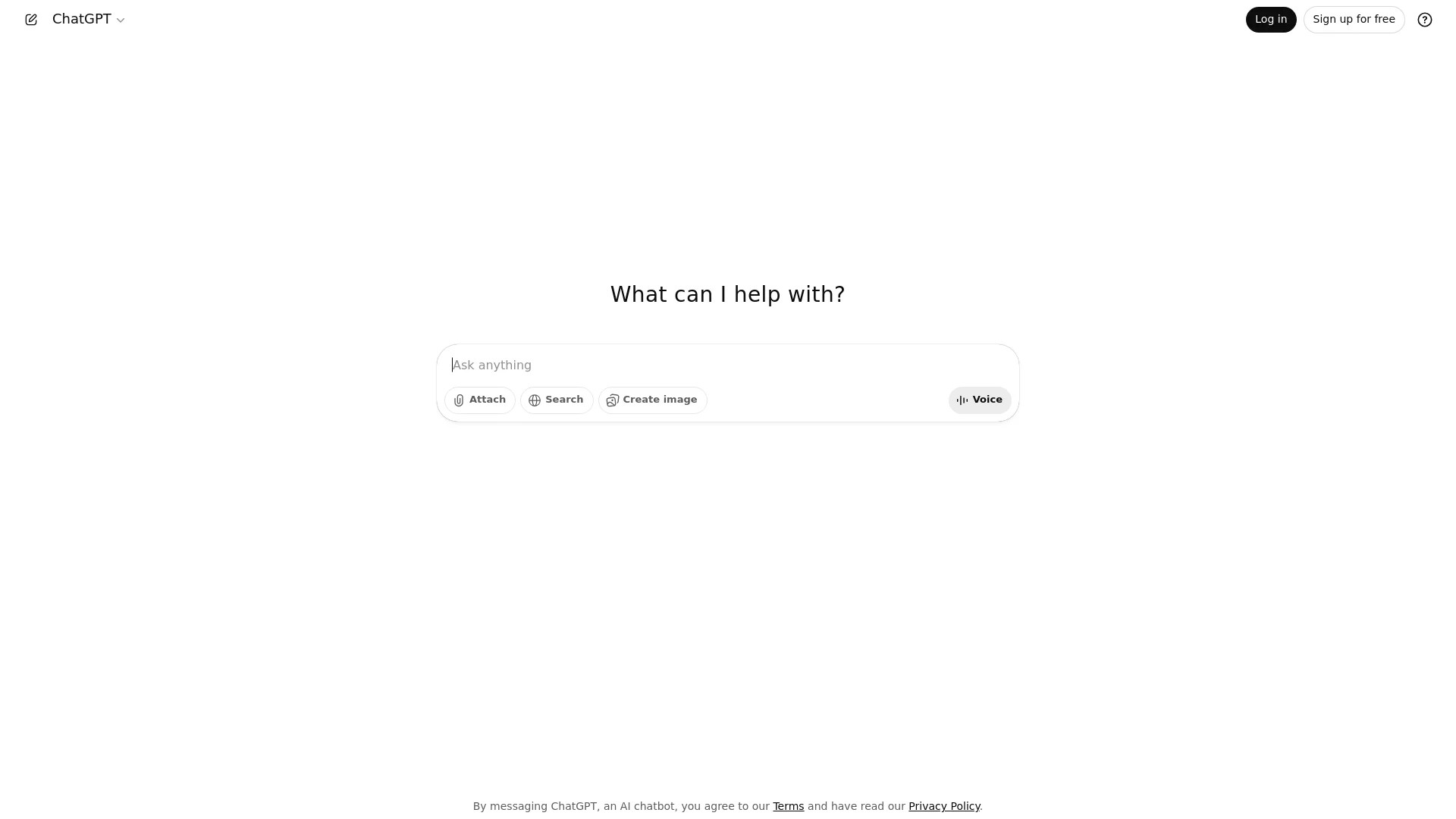
The minimal single-tab chat interface feels like a messaging app. This simplicity appeals to users comfortable with conversational AI but may frustrate those expecting specialised copywriting features.
Key Features
Conversational refinement allows iterative improvement of generated content. You receive initial output, provide feedback, and ChatGPT adjusts the copy based on your comments until it meets requirements.
The platform handles diverse content types beyond social media captions. Strategic planning, audience research, competitive analysis, and campaign ideation all happen within the same interface.
Custom instructions let you set persistent preferences for tone, style, and formatting. Once configured, ChatGPT remembers these settings across conversations, reducing repetitive prompting.
The GPT-4 model available to Plus subscribers produces significantly higher quality output than the free GPT-3.5 version. The investment proves worthwhile for professional content creation.
Best For
Content strategists and marketing managers appreciate ChatGPT’s versatility for both strategic thinking and tactical execution. The platform serves as both brainstorming partner and copywriting assistant.
Users comfortable writing detailed prompts extract more value from ChatGPT than those expecting automated solutions. The tool rewards specificity and clear direction in inputs.
Pricing
ChatGPT offers a capable free tier using GPT-3.5. The Plus subscription costs £16 per month and provides GPT-4 access, priority availability during peak times, and faster response speeds.
Team plans starting at £20 per user per month add collaboration features and administrative controls. Enterprise pricing provides custom solutions for larger organisations.
Creating Effective AI Prompts for Social Media Captions
Prompt quality directly determines output quality when working with AI copywriting tools. Vague inputs produce generic results, whilst detailed prompts generate specific, useful captions.
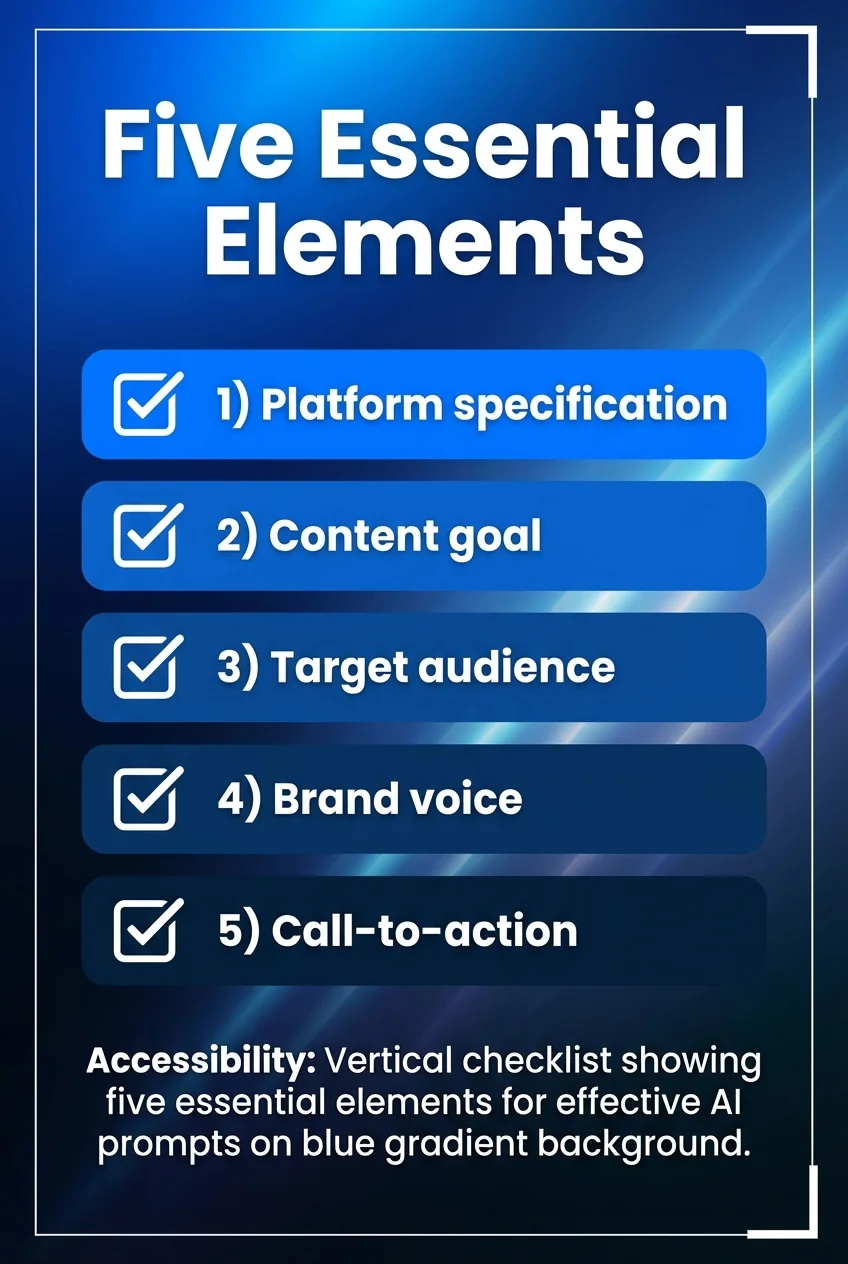
Effective prompts include five essential elements: platform specification, content goal, target audience description, brand voice guidance, and desired call-to-action.
Platform-Specific Prompting
Always specify your target platform first. Instagram captions allow storytelling and emotional connection, LinkedIn demands professional insights, whilst Twitter requires concise punchy messaging.
Include character limit awareness when relevant. Twitter’s constraints require different approaches than Instagram’s generous caption space.
Example prompt structure: “Create an Instagram caption for a fitness brand promoting a new yoga programme. Target audience is women aged 25-40 interested in wellness and stress reduction. Tone should be encouraging and supportive. Include a call-to-action to sign up for a free trial class.”
Providing Context and Details
The more context you provide, the better the AI understands your needs. Include product benefits, campaign themes, seasonal relevance, and any specific points you want emphasised.
Bad prompt: “Write a caption about our product.”
Good prompt: “Write a LinkedIn post announcing our new project management software feature that automatically generates status reports. Target audience is team leaders tired of manual reporting. Highlight time savings and improved transparency. Professional but friendly tone.”
Iterative Refinement
First attempts rarely produce perfect results. Review the initial output, identify what works and what needs adjustment, then provide specific feedback.
Instead of “make it better,” specify exactly what needs changing: “make the tone more casual,” “reduce length by 30%,” “emphasise the price point more strongly,” or “remove the joke and focus on benefits.”
Most AI tools improve dramatically with two or three refinement cycles based on clear feedback.
Editing AI-Generated Captions for Conversion
AI-generated captions provide excellent starting points but require human editing to maximise conversion potential. Raw AI output often lacks the specific elements that drive action.
The editing process focuses on three priority areas: strengthening calls-to-action, adding authentic brand personality, and ensuring factual accuracy.
Strengthening Calls-to-Action
AI-generated CTAs tend towards generic phrases like “check it out” or “learn more.” Replace these with specific, action-oriented directions tied to measurable behaviours.
Weak CTA: “Visit our website to learn more.”
Strong CTA: “Book your free consultation this week and receive our starter kit worth £50.”
Specify exactly what action you want and what immediate benefit readers receive. Remove friction by making the next step crystal clear.
Adding Brand Personality
AI produces competent but generic copy. Layer in expressions, references, and tone elements unique to your brand that create recognition amongst your community.
Review the caption and identify opportunities to add personality. Could you include a brand catchphrase? Reference an inside joke with your audience? Use vocabulary specific to your community?
The goal isn’t making every caption wildly unique but ensuring your regular followers would recognise the content as distinctly yours even without seeing your name.
Fact-Checking and Accuracy
AI confidently generates plausible-sounding information that may be incorrect. Verify all factual claims, statistics, product details, and pricing before publishing.
Check that features mentioned actually exist, benefits claimed are accurate, and any numbers referenced are current. AI may combine outdated information or misinterpret your input.
This verification step proves particularly critical for regulated industries like healthcare, finance, or legal services where inaccurate information carries significant liability risks.
Platform-Specific Optimisation
Adapt caption length and structure for your target platform’s conventions. What works on LinkedIn often fails on Instagram and vice versa.
Instagram allows line breaks and spacing for visual readability. LinkedIn favours structured paragraphs with clear sections. Twitter demands concise punchy statements that communicate value immediately.
Review hashtag placement, emoji usage, and formatting conventions for your specific platform and adjust AI output accordingly.
Integrating AI Copywriting into Your Social Media Workflow
Successful AI copywriting implementation requires thoughtful workflow integration rather than simply adding another tool to your stack. The goal is genuine efficiency improvement, not additional complexity.
Start by mapping your current content creation process. Identify specific pain points where AI provides the most value: idea generation, first drafts, variation creation, or formatting.
Batching Content Creation
Generate multiple posts in single sessions to maximise efficiency. Create a week’s worth of captions at once rather than producing content daily.
Prepare your prompts in advance with campaign themes, product focuses, and content types mapped to your posting calendar. Feed these systematically into your AI tool during dedicated creation time.
Save strong AI-generated captions in a content library for future reference. Successful frameworks and effective phrases become templates for subsequent campaigns.
Team Collaboration and Approval
Establish clear workflows for team review when multiple people contribute to social media content. AI-generated drafts should flow through approval processes before scheduling.
Define who generates initial content, who edits for brand voice, who verifies factual accuracy, and who provides final approval. Clear ownership prevents gaps and duplicated effort.
Use collaborative tools that integrate with your AI platform. Google Docs, Notion, or dedicated content calendars let team members refine AI-generated captions asynchronously.
Scheduling and Publishing
Connect your AI copywriting tool directly to scheduling platforms when possible. Eliminating copy-paste steps between generation and publishing reduces friction and errors.
Tools like Buffer, Hootsuite, and Later often integrate with AI platforms or support automation through Zapier. Configure these connections once, then content flows smoothly through your workflow.
Maintain a buffer of pre-approved content ready for scheduling. This cushion protects against last-minute scrambles when unexpected priorities demand attention.
Measuring AI Copywriting Performance
Track specific metrics to determine whether AI-generated captions actually improve your social media performance. Subjective quality assessment matters less than objective engagement and conversion data.
Compare AI-generated content performance against manually written posts. Look at engagement rates, click-through rates, and conversion metrics for both content types.
Key Performance Indicators
Engagement rate measures likes, comments, and shares relative to follower count. Calculate this for AI-generated versus manually written posts to identify which drives stronger audience response.
Click-through rate reveals whether captions effectively drive traffic to landing pages, product pages, or other destinations. Strong CTAs and compelling copy should increase click rates.
Conversion rate tracks the ultimate business impact. Do AI-generated captions drive newsletter signups, product purchases, or consultation bookings at comparable rates to manual content?
Time savings represent another crucial metric. Calculate hours spent creating content before and after AI implementation to quantify efficiency gains.
Continuous Improvement
Review performance data monthly to identify patterns in what works. Which AI-generated caption styles, lengths, and approaches drive the strongest results for your specific audience?
Refine your prompts based on performance insights. If shorter captions consistently outperform longer ones, adjust your AI instructions to generate more concise options.
Test different AI tools periodically to ensure you’re using the platform that best serves your current needs. The competitive options continue developing new features and capabilities.
Building Your AI Copywriting Toolkit
Creating social media captions that convert requires the right combination of AI assistance and human expertise. The tools covered here provide powerful capabilities, but your strategic thinking and brand knowledge determine final results.
Start with a free trial from one platform that aligns with your primary needs. Test it thoroughly with your actual content before committing to paid subscriptions.
Develop effective prompting skills gradually through experimentation. Save your most successful prompts as templates for future use.
Remember that AI handles speed and variation whilst you contribute strategy, brand voice, and quality control. This partnership approach delivers better results than treating AI as either a complete solution or merely a novelty.
The most successful social media marketers use AI copywriting tools to reclaim time for strategic work, audience research, and genuine community engagement. Generate drafts quickly, refine them thoughtfully, and invest your saved time in activities that truly require human creativity and connection.
Check out our guides on AI social media post generators and harnessing AI for social media posts for deeper insights into building comprehensive AI-powered social media strategies.